Rindis.com

All my hobbies, all the time
  • Home
  • My Blog
  • Games
  • History

Categories

  • Books (491)
  • Comics (10)
  • Gaming (911)
    • Boardgaming (669)
      • ASL (154)
      • CC:Ancients (83)
      • F&E (78)
        • BvR – The Wind (26)
        • Four Vassal War (9)
        • Konya wa Hurricane (17)
        • Second Wind (5)
      • SFB (78)
    • Computer games (161)
      • MMO (76)
    • Design and Effect (6)
    • RPGs (66)
      • D&D (25)
        • O2 Blade of Vengeance (3)
      • GURPS (32)
  • History (10)
  • Life (82)
    • Conventions (9)
  • News (29)
  • Technology (6)
  • Video (48)
    • Anime (46)
  • Writing (1)

Patreon

Support Rindis.com on Patreon!
Become a patron at Patreon!

Other blogs:

RSS Inside GMT

  • Meet The Han: A Civilization of GMT’s Ancient Civilizations of East Asia  March 20, 2026

RSS Playing at the World

  • Playing at the World 2E V2 Arrives May 5, 2025

RSS Dyson’s Dodecahedron

  • Cyberstyle 8.0 March 21, 2026

RSS Quest for Fun!

  • The Myth of Rational Animals November 23, 2025

RSS Bruce Heard and New Stories

  • Preview: The Iron Queen February 9, 2026

RSS Chicago Wargamer

  • The 2 Half-Squads - Episode 310: Cruising Through Crucible of Steel January 27, 2023

RSS CRRPG Addict

  • Star Trail: Sweet Is the Swamp with Its Secrets March 20, 2026
SF&F blogs:

RSS Fantasy Cafe

  • Michael Swanwick Guest Post and Book Giveaway February 23, 2026

RSS Lynn’s Book Blog

  • Booking Ahead/Weekly Wrap Up March 22, 2026
ASL blogs:

RSS Sitrep

  • Cardinal ASL Sins March 18, 2026

RSS Hong Kong Wargamer

  • FT114 Yellow Extract After Action Report (AAR) Advanced Squad Leader scenario April 16, 2025

RSS Hex and Violence

  • This still exists? March 25, 2025

RSS Grumble Jones

  • 2026 Kansas City ASL Club's March Madness Tournament March 16, 2026

RSS Desperation Morale

  • How to Learn ASL March 16, 2025

RSS Banzai!!

  • October North Texas Gameday October 21, 2019

RSS A Room Without a LOS

  • [Crossing the Moro CG] T=0902 -- Rough start July 18, 2015
GURPS blogs:

RSS Dungeon Fantastic

  • What color is paut? Sigh. March 3, 2026

RSS Gaming Ballistic

  • Pigskin project (by Chris Eisert) February 28, 2026

RSS Ravens N’ Pennies

RSS Let’s GURPS

  • Review: GURPS Realm Management March 29, 2021

RSS No School Grognard

  • It came from the GURPS forums: Low-Tech armor and fire damage January 29, 2018

RSS The Collaborative Gamer

  • Thoughts on a Town Adventures System January 18, 2022

RSS Don’t Forget Your Boots

  • GURPS Supers Newport Academy #3: “Season Of The Witch” February 8, 2026

RSS Orbs and Balrogs

  • Bretwalda - Daggers of Oxenaforda pt.4 - Fallen King May 27, 2017

The Roman Empire in the Indian Ocean

by Rindis on March 10, 2019 at 12:00 pm
Posted In: Books

Typically, thoughts about the economy of the ancient world hit a wall of ‘they didn’t have a solid idea of how finance works’. Similarly, talk of the Roman Empire doesn’t generally get any further away than it’s immediate political neighbors.

McLaughlin tackles both of these in a very interesting book. He starts by assembling an idea of how big the Roman budget was during the First Century. This is presented in detail in an appendix, that uses at it’s base current population estimates of the Roman world, makes a high-level assumption of the average amount of tax contributed by the population (based off a couple of reasonably solid numbers given in primary sources), then similarly estimates expenses by knowing how many legions there were, what legionary pay was like, and so on. This is all extremely problematic, but is systematically done, seems to give possible numbers, and moves the discussion into the realm where it’s possible to argue about it.

To some extent, the book was worthwhile to me just for giving a good list of currency conversions up front. I’ve never been able to keep track of the Roman money system, and this also gives conversions to Greek and Egyptian currencies. However, that allowed me to note a place where he converts a figure into Greek talents, but the math says he means Egyptian talents. Combined with another place where he makes a basic interpretation mistake of a source he just quoted shows that this isn’t as thoroughly checked over as it should be. I assume that’s at least partially the fact that Pen & Sword seems to be a smaller publisher, and probably does not have the robust editorial staff of more traditional publishers (nor as wide a circle of pre-readers and consultants as it should).

However, the bulk of the book is McLaughlin looking at the various areas around the Indian Ocean that Rome had contact with, and describing what sort of trade was going on. He actually starts inside the Empire with the grain dole, related trade from Egypt, and some knock-on effects thereof (which seem a bit speculative, but sound reasonable). He then gives an introductory essay on incense and Classical medicines before talking about the production of balsam (an ointment from a now-extinct tree) in Roman-controlled Judea. From there, he tackles Nubia, Arabia, East Africa, India and beyond in turn. The earlier parts are especially interesting as he pulls in a few early Imperial wars in the Roman East that you generally don’t hear much about, but also demonstrate the Empire’s interests in the area.

Pretty much all of this comes out an examination of one source, the Periplus of the Erythraean Sea (Indian Ocean), a very handy guide to trade written in the mid-First Century. There are some other sources which help shore up parts of this, and are notably used for the later parts of the book, though the real annoyance is the author re-introduces us to the Periplus from scratch on a few separate occasions, which shows that this was probably originally formatted as a series of smaller separate works (and one part of this was separately published about four years earlier).

He finishes up with Chinese records of an envoy from the Roman Empire (and since there’s record of this in the Empire, contrary to the author, I suspect, actual official or no, he was acting on his own initiative, which might explain some other oddities), before turning to the Antonine Plague of 165. He posits that this as having created a military and financial crisis… that he doesn’t explicitly say dooms the Western Empire, but it’s not far from what he does say. He points out that the plague apparently shut down the silver and gold mines in Spain, and once spare silver and gold coinage left the Empire to the east in the decades after, Rome’s main export was gone (which is something he refers to during the entire book, and is a concern in some of the primary sources).

McLaughlin is putting up a fairly rickety structure with all the assumptions he has to make to put together a large-scale picture of the Roman economy. But I’m still impressed that he got it to stand up at all. As I mentioned before, this is a needed starting point for further study and argument. Just as a fuller description of the Periplus, and the bits of corroboration of it he provides, it’s well worth a read.

└ Tags: books, history, reading, review, Rome
 Comment 

The Second Crusade

by Rindis on March 6, 2019 at 12:00 pm
Posted In: Computer games

This is the eleventh in a series of reviews of Paradox’s empire management games. See the earlier reviews here:
Europa Universalis II: A Tale of Two Europas
Hearts of Iron: Europa of Iron
Victoria: Nineteenth Century Essay
Crusader Kings: A Dynastic Adventure
Hearts of Iron II: Return Engagement
Europa Universalis III: A Whole New World
Europa Universalis: Rome: Make a Desert and Call it a Game
Hearts of Iron III: One Plus Two Equals Three
Victoria II: Same But Different
Sengoku: Shogun: Only War

Once Paradox had released a Clausewitz-based sequel of Victoria, a similar sequel to Crusader Kings was an obvious project. This turned out to be Paradox’s next project, which was announced in late 2010, and then spent another year-and-a-half in development.

While Victoria II was close to being a ‘cleaned up’ version of the original game, it was quickly apparent that Crusader Kings was being re-thought and developed from scratch. The graphics of the Clausewitz engine got an extensive overhaul, and the new game was powered by ‘Clausewitz 2.0’, and all their later games are easily discernible on the basis of new graphics alone.

Crusader Kings II was released for PC on February 14, 2012, with in-house Mac and Linux versions released later (previously, Mac versions were developed by a third party, and the 2013 Linux release was a first for Paradox). It was highly successful for one of their complex strategy titles, and got attention from a lot of people who ordinarily did not play their games.

CK II has seen extensive changes since release, but this review is about the early versions of the game, specifically patch 1.111 (the earliest version currently available through Steam). By the time this patch came out, five expansions had already come out, and four of them (Sword of Islam, Legacy of Rome, The Republic, and Sunset Invasion) will also be discussed here.

The New Model

That Crusader Kings II was slightly different from the immediately preceding Paradox games was obvious from the outset, as it reached a new height of presentation. The map was fully 3D (only seen in Europa Universalis: Rome and Sengoku before), and looked excellent, with new multi-colored borders that easily show the political situation in the other map modes. Once through the loading screens, the map was highlighted by a low-angle shot that shifted to a higher angle as the menus came up. Selecting various menu options causes the camera to fly around to different points of the map, showing off the new graphics.

While the game was released on several on-line stores and on disk, there were effectively two slightly different versions. One linked into their on-line store, GamersGate, for purchasing optional DLC, and the other was on Steam. Paradox found that they were having to maintain two different versions of the code, and eventually consolidated onto one platform, Steam, which also had good tools for pushing patches out to players.

This caused consternation among fans who preferred Paradox’s own service for any of several reasons. Another matter that gave me concern at the time was the quick release of multiple, small, expansions to the game (the four covered here came out within a single year). I preferred the idea of bigger, less frequent, expansions that packaged a bunch of things together with a longer development time.

In the long run, Paradox was right. The new-style expansions introduce new features, or re-work old systems, and the essentials of these are included for free in a new patch for everyone. This means that those who buy the expansions are funding the continued development of the game for everyone. And in multiplayer it doesn’t matter who has which expansion: not having one may restrict what a player is allowed to do (or play as), but everyone is on the same version of the main game, and not segregated by the expansions for multiplayer or support. Even better, they are not dependent on each other: you can skip boring expansion A, and still get and use exciting expansion B, instead of having to get the first to use the second. Steam’s service then allows them to keep everyone on the most recent patch version, and handles the multiplayer component. (They have also used Steam’s ‘beta’ programs to let people go back to a particular version, generally to finish a long game.)

Paradox had already been offering small DLCs for the more recent titles, consisting of ‘sprite packs’, or unit graphics for various nationalities (not really sprites…). In addition to the bigger ‘expansion’ DLC, Paradox made more sprite packs for CK II, introduced graphical DLC of more portraits for CK II characters (which does take a surprising number of art assets in their ‘layer’ system, and probably needs charging for to do at all), and also music DLC of three to four new tracks that expand the playlist in game, though many are themed and only play (or play more often) under certain circumstances.

Expanded Characters

The essential character of Crusader Kings II did not change at all from the first game. You play as a particular landed noble, who ages and dies, and play passes to your heir, or, in the absence of a landed heir of your dynasty, the game ends.

Unlike the two games in between that had featured characters, CK II expanded, rather than simplified, the system. A fifth primary attribute, learning, was added, to go with the court priest position on the council, that had no matching attribute in the first game. The trait system was retained largely as is, but with even more traits, and a central set of fourteen based on the seven deadly sins and the seven heavenly virtues. These are naturally pairs of ‘opposites’, traits that will cancel each other, and several of them have direct effects on the opinions of churchmen and piety.

A new set of military traits were added that are like the ones from EU: Rome; they don’t have specific in-combat events tied to them, but they do have modifiers to combat (all of which are summarized in a specific spot on the character screen), and change what tactics a flank under his command might use.

Past that, most other earlier details of the system hold true: characters have money, prestige, and piety. Events fire for particular characters, who then must make a decision. A nice addition, from an early patch, was that choices that exist purely because of certain traits or characteristics will have a colored border, and the hoverover will state why it is available.

Holding the Realm

One of the more interesting new ideas of CK II is that it splits up the basic provinces (/counties) of the map. Each county consists of one to seven holdings (usually three), which each have their own liege. There are three different types: castles, cities and temples, and they each have their own type of lord, who is considered unsuited to the other two. Each holding then has a number of buildings, which provide bonuses and can be improved with the expenditure of money.

Castles have barons, who are the next rung down of the normal feudal chain of command. They provide the best fortification values, and the most troops, and a small amount of tax income.

Cities have mayors, who can become lord mayors or grand mayors (or doge) if they control a full county or duchy as a merchant republic. Towns provide the best taxes, and can provide a good number of light troops in musters.

Temples have bishops, who can become arch-bishops and similar, if they hold extensive lands in a theocracy. They provide moderate taxes, and start lightly fortified, but can get good defensive values later in the game, and provide heavy troops.

Within each type of holding, the available buildings are the same, except for (usually) one which is derived from the area’s culture. There’s generally ten different buildings (including the coastal-only shipyard) which can be improved from three to six levels, with each increasing the bonuses of the building. These buildings determine the holding’s fortification level and garrison size (which both make it more difficult to take in a siege), its tax revenue, and the exact composition of its levy.

Generally, one castle holding will be the county capital, and the county title goes with that capital. However, the capital can be changed, and that holding will take over the county title, and change the general type of government, if it isn’t a castle. Also, many counties can have more holdings than they start with (the absolute maximum is six, but not many counties can actually have more than four or five), which costs a lot of money, but can be any type of holding desired.

This is one of the more innovative areas of CK II, as it keeps from making the map any more complicated, but allows things like Venice holding a single coastal city while the local lord holds the area as a whole. There’s an amount of micromanagement in the handling of your holdings similar to the old improvement system, but since you still only have control over your own demense (which is generally just the county capitals), the new system isn’t any harder to administer.

In addition, each realm has its own laws, which determine how succession works, how large levies are, how much is paid in taxes, etc. Kings and emperors have realm laws that hold for everyone below them for clerical investiture (if you’re Catholic), and crown authority, which determines how much freedom of action vassals actually have. This allows for a lot of regional and period differences in feudalism to be represented, and for changes over time. They can be largely ignored without hurting anything, though the AI will probably make demands over the succession sooner or later….

Warfare

As with the first game, there are no standing armies in CK II (…with an exception in the ‘Legacy of Rome’ section below). Instead you raise a levy of your own men, and those of your vassals. How many men your vassals contribute depends on their current opinion of you, and leaving them raised for too long causes a penalty to their opinion (unless on crusade, or in a defensive war) that slowly builds, and only slowly goes away.

In addition, there are also mercenary troops to hire. These are expensive, both to hire and to pay, but are often fairly large units, and someone in a vulnerable position can try to save up money to pay them and inflate the army at a critical time. Some of them can have some very effective troop types, and come with their own commanders. Once religious orders are founded, they may also be hired as mercenaries, but cost piety instead of gold to hire (but require gold to keep on).

As before, there are seven general types of troops, with horse archers being only available to certain cultures. However, combat itself changed from the first game, and does not use the same general system seen in most of the other Clausewitz games.

Combat is broken up into three flanks, which each have their own units allocated to it (this is done by units—individual musters and mercenary bands—so if you only have one unit involved, you only occupy the center), and can have its own commander. These are drawn from your vassals, your marshal, some minor titles, and of course, you can lead the army yourself. The performance of each flank will depend on the troops there, the martial ability and traits of the commander, and his current tactic.

Combat starts at range with skirmishing, and then eventually turns into a melee. Commander traits and ability will determine how long this takes, as an effective commander with lots of archers will actually work to prevent the combat from going to melee and continue the skirmishing, while one with lots of heavy infantry will try to close the range faster. Every day, each flank loses some men, and takes some morale loss. Once morale drops too low, that flank will flee, and the opposing enemy flank will be free to attack an adjacent enemy flank with a bonus. Once all three flanks are fleeing, the enemy will be free to pursue for five days, inflicting a lot of casualties in the process. It’s a big improvement over the original system, and frankly more appropriate, and better presented than the standard Clausewitz system.

Unlike the first game, ships are present here. Instead of just automatically hiring ships to go overseas, you muster your ships and arrange them to ferry your troops over water. They tend to be very expensive to keep mustered, and there is no combat between ships, so there’s still no way to prevent a landing.

Intrigue

A large part of CK II’s success was that it did a good job with the idea of all these people plotting to do underhanded things to each other. It gave the game that extra bit of life, and made sure that ‘peaceful’ times could still be tense. Originally, various things a character got into were all handled through the ‘plot’ interface, but this was split up into plots, factions, and ambitions as of the release of Legacy of Rome.

Ambitions are much like they were in EU: Rome: personal goals, to gain money, fame, get a particular post, etc. One of the early patches added self-improvement ambitions for any primary stats that are too low. These cause a number of events to fire that give opportunities to improve the relevant stat. It’s not a bad idea, but most of the related events feel too artificial, and unlikely for most of the characters to actually take part in. Other ambitions retain the normal idea of providing a reward for completing them, such as getting a +1 to the relevant attribute when gaining a desired office.

Plots are larger goals that affect someone else. Killing someone is the classic example, and there’s usually a few eligible targets for that plot (plotting to kill your spouse is nearly always a valid plot, if not always a desirable one…). As a liege, you can also plot to revoke a vassal’s title; otherwise, you can try to gain a claim on a fellow vassal’s title, or a claim on your direct liege’s title. Unlike ambitions, you can intrigue with other people to help you out. There is always a danger that the plot will be exposed, but as more people are recruited into a plot, it’s power increases, which makes it more likely that it will succeed. (For title plots, certain target numbers must be hit, but for a murder, higher power makes it more likely that some form of ‘death under suspicious circumstances’ will happen to the target.)

Factions are open groups of people who support a change in the realm as a whole, whether that be installing a new ruler, lowering crown authority, or changing the succession. It is possible for there to be two sections in the faction display, one for factions in your liege’s court, and a second for factions in your court. A plot will end if something happens to its leader (death, changing his mind…), but a faction will continue as long as there’s still at least one member. The members of a faction will make their liege unhappy (as it’s all public), but if they can gain enough power, they will give him an ultimatum: accept their proposal (new heir, independence…) or fight. Various lords who wish to be independent of their liege may still rebel on their own, but a faction for (separate) independence allows for a potentially very dangerous unified front.

Religion

Naturally, religion is more fleshed out than in the original. There are three groups of religions (Christian, Islam, Pagan), which then break down into particular religions. To begin with, only Catholic Christianity was truly detailed, but early expansions fleshed out Orthodoxy and the two major branches of Islam.

Like in the first game, a player can only play Christian characters in the base game, though any branch of Christianity is available. Catholic kings and emperors get to decide if they will invest their own bishops, or let the Pope do it (which was a constant struggle during the Middle Ages) as a crown law. In addition to this, rulers can set up antipopes who becomes the head of the church for that realm (keeping the taxes that would normally flow out of the country), and can potentially supplant the current pope.

Each also religion has an authority rating, which abstractly measures just how stable the current structure is, and how likely heresies are to spring up. Holy wars, control of holy sites, conversions, and the like all modify this. It has some important long-term effects, but is not a constant concern most of the time.

And every religious branch has its own heresies. These generally have very poor relations with their ‘parent’ religion, while other branches and religious groups don’t care as much. As authority goes down, AI religious characters have a chance of suddenly ‘seeing the light’, and converting to a heresy, and then trying to convince everyone around them to convert. Usually, they end up being locked up or convinced to convert back (the latter often after the former), but it is possible for a serious heresy to crop up in unusual places.

Sword of Islam

The first expansion for CKII came out in June 2012, and granted the option to play as an Islamic character. The mechanics for them were reworked, and with the accompanying patch, the AI uses those mechanics whether you have the expansion or not.

The most important addition is that all Muslim dynasties have decadence. This is generated by individual members of the dynasty, and there are limited ways of lowering it again. At 25% decadence, a Muslim dynasty acts normally, but as it goes up from there income and troop morale goes down. Actually getting it below 25% provides bonuses to both, so a ‘young’ Muslim dynasty can be very powerful.

Large, successful dynasties tend to settle down and ‘go soft’ (or at the least have more characters who individually might do so), generating decadence each month that slowly erodes its effectiveness. A ruler can tell a decadent relative to ‘shape up’, and even imprison the impious sybarite. Handing out landed titles is the easiest way to lower decadence, and even command in battles will erode it a little.

In addition, there’s lots of other touches: Brothers have a permanent relations penalty with each other, encouraging a lot of infighting in dynasties (and considering that powerful rulers are expected to have several wives… well). There’s traits (Sayyid and Mirza) to indicate descent from Mohammad; there’s no theocracies, instead temples can be freely held by barons; and then there’s the ability to go on Hajj, which puts your realm in the hands of a regent while a number of events play out the journey to Mecca.

Overall, the patch added a lot of flavor to the game even if you don’t get the expansion, and of course it greatly expands the scope of the game.

Legacy of Rome

The second expansion was released in October 2012, and looked at detailing the Byzantine Empire. Some of this (like appointing Patriarchs as an Orthodox ruler) became available to everyone, but most of it was in the form of new events and decisions that are only available by having the expansion active. A lot of it allows for typical Byzantine activities such as blinding pretenders and a ‘born in the purple’ trait is added for characters who are higher in the succession.

And there are some large-scale events, if you gain the power needed. On the secular side, a powerful enough emperor can ‘restore the empire’ and force western Europe to acknowledge the power the Emperor, and change the country tag from Byzantium to Roman. Religiously, you can (forcibly) mend the Great Schism by restoring the Pentarchy and enforce a single church, which turns Catholicism into a heresy of Orthodoxy, instead of a separate branch.

However, the expansion also introduces retinues, or small standing armies. Unusually, it’s a wide-ranging feature, but it only exists (for the player and AI) if the expansion is enabled. A landed noble will have a limit on retinue size dependent on rank and holdings, and adding different types of troops which consume that limit depending on their type. Unlike normal levies, retinues are free under normal circumstances, but cost to initially recruit, and cost money to reinforce back to full, meaning they will cost money when first hired (as they start with one man and reinforce from there), and during a war after taking losses… right when things are expensive from all the mobilized levies.

This is a more problematic expansion. If, for some reason, you’re not interested in the Eastern Empire, the extra content will do no good. The retinues are a nice idea, and fairly period, but there’s been long-term concerns about what they do to the balance of the game, and the stability of larger counties (though I’ll note that I find Hungary is less stable with retinues, as it is more effective at tearing itself apart whenever I have them active). The bad news is that there’s no way to have the content without the retinues.

Sunset Invasion

On Halloween 2012 Paradox announced an unusual DLC that is not always considered one of the expansions to the game. It was developed during the team’s free time, and was released on November 15.

One of the big events in both CK games is the arrival of the Mongols on the eastern edge of the map. The entire point of Sunset Invasion is to shake up the game by providing the same sort of event on the western edge. To whit, sometime after 1200 ‘thousands of ships’ filled with bloodthirsty Aztec warriors land somewhere in western Europe and start conquering things and sacrificing people to their gods.

That’s… pretty much it. It’s tightly focused around that one idea, and the complete ahistoricity of it got a lot of complaints from vocal fans. As a way of completely changing the dynamics of the game, I find it a really fun idea. But one thing that makes it different is that other expansions are typically something you want on all the time (or if you don’t like it, off all the time), while this is one where it should be thought about before beginning each game.

The Republic

The fourth expansion came out in January 2013, and added a new mode of play. Each merchant republic (a realm led by a mayor instead of a count) now has five leading families, who are fully fleshed out (their own courts, and all their relatives, instead of often being automatically promoted from an event or decision to make a new mayor). Each time the doge or lord mayor dies, a new one is picked from the current heads of the five families, who then serves for life.

The families always use seniority inheritance, which means the oldest available male in the dynasty is the patrician, and when a doge is elected it is done as a combination of the candidate’s age, prestige, and the current ‘campaign fund’ (with age being the dominant determiner), with some randomness. Since the doge who just died was the most senior member of that particular family, his heir is unlikely to become the next doge, and the leader of the republic should cycle through the families, though it could easily trade back and forth between two of them.

A new holding slot was added to each coastal province (on a separate tab) for a trading post. These can only be established by the merchant families, and add tax value to the province as well as send money home. Multiple posts in the same sea zone boosts the value of all of them, as does having multiple sea areas connected into one trade zone (all the sea areas dominated by trade posts of a single republic). This allows for wars over trade between republics, and normal realms can raze a trade post, which loses the extra income, but nets a large amount of loot.

With The Republic expansion enabled, you can play as a patrician, which means that at least some of the time you will not be landed at all (since you’re not the current doge). This means that it’s a more limited play style than most, though there’s always the trade posts to manage, and the family’s mansion to improve (basically the family’s permanent holding, which does not appear on the map at all). However, it does do a good job of giving merchant republics much better motivations for their activities.

Conclusion

Crusader Kings II was a new start for Paradox in several ways. It got attention outside of their usual customers. It was the start of what’s been a very successful development model for them (though they’ve toned it down a bit, games aren’t getting expansions at anywhere near the rate CK II did for its first couple of years). And it was the start of Clausewitz 2.0, which is part of what got the attention in the first place.

The game itself is deserving of all the praise and attention it got. As I said about the first game, it’s not often that you get a strategy game that shows the weaknesses of a large organization instead of just its strengths. And many of the extra details this time highlight more of those weaknesses. It’s certainly not a game for everyone, but the extra spark of personality invested by all the plotting makes it a game that some people who don’t care for typical grand strategy games enjoy immensely.

└ Tags: Crusader Kings, gaming, Paradox, review
11 Comments

How to Plan a Crusade

by Rindis on March 2, 2019 at 12:00 pm
Posted In: Books

Despite the title, this is not a how-to book on how to get your own Crusade going. It’s actually a scholarly look at how the planning of the actual Crusades worked. Tyerman identifies broad subjects in planning and looks at each one in turn, discussing what it would have taken to get a crusade to happen at all, and pointing out where we can see those in action in the actual records.

As such, this is not a book for someone unfamiliar with the crusades as a whole. Tyerman discusses all the major Crusades, including the Baltic Crusades and the Albegensian Crusade simultaneously, and without some background in the subject you will be lost.

However, for someone who is familiar with this period, at least in outline, this book is a great supplement to that knowledge. He starts at the basic foundations, ‘reason’, and how the common popular notion of the Middle Ages as an age of unreason simply doesn’t work, and points up that just because the premises and priorities may be different from what we’re used to doesn’t mean that people did not still reason things out.

He builds from here, looking at how the case for war in the Middle East was worked out, how it was promoted and recruited for. How it was all paid for, how plans were laid and coordinated. Supplies were gathered, and successful or not, plans were reviewed to see how it could go better next time.

There were some very interesting points around shipping during the book. Naturally, technology and technique did improve over this period, and one of the major advantages the Crusades for the Middle East had was that Europe was largely back to dominating the Mediterranean at this point. However, Crusades largely went by land until the development of ships that could carry horses, at which point we see Richard I (and others) proceeding to the Levant by ship.

He ends with a look at strategic planning, which ends up circling around to near the beginning of the book. With the end of the Kingdom of Jerusalem after the Third Crusade, some serious reexaminations were made, in which Egypt, and its wealth, are clearly recognized as the key to the entire enterprise (to be fair, this had been noticed even during the First Crusade), and you start seeing the goal for further crusades shift over there. But that brings into question the initial motives for going in the first place. The idea was to hold and control what was seen as the religious center of the world, but if that’s so unimportant as to let Egypt take center stage in planning… it’s part of why the Crusades become less and less popular after that time.

And that effectively wraps up a very interesting look at the process Europe went through, and the innovations that were brought by the stresses of attempting the enterprise. Recommended for anyone who’s willing to give some thought to processes involved, but it does not present ‘history’ as you’d normally think of it.

└ Tags: books, history, middle ages, reading, review
 Comment 

Gears of the Horde

by Rindis on February 26, 2019 at 12:00 pm
Posted In: MMO

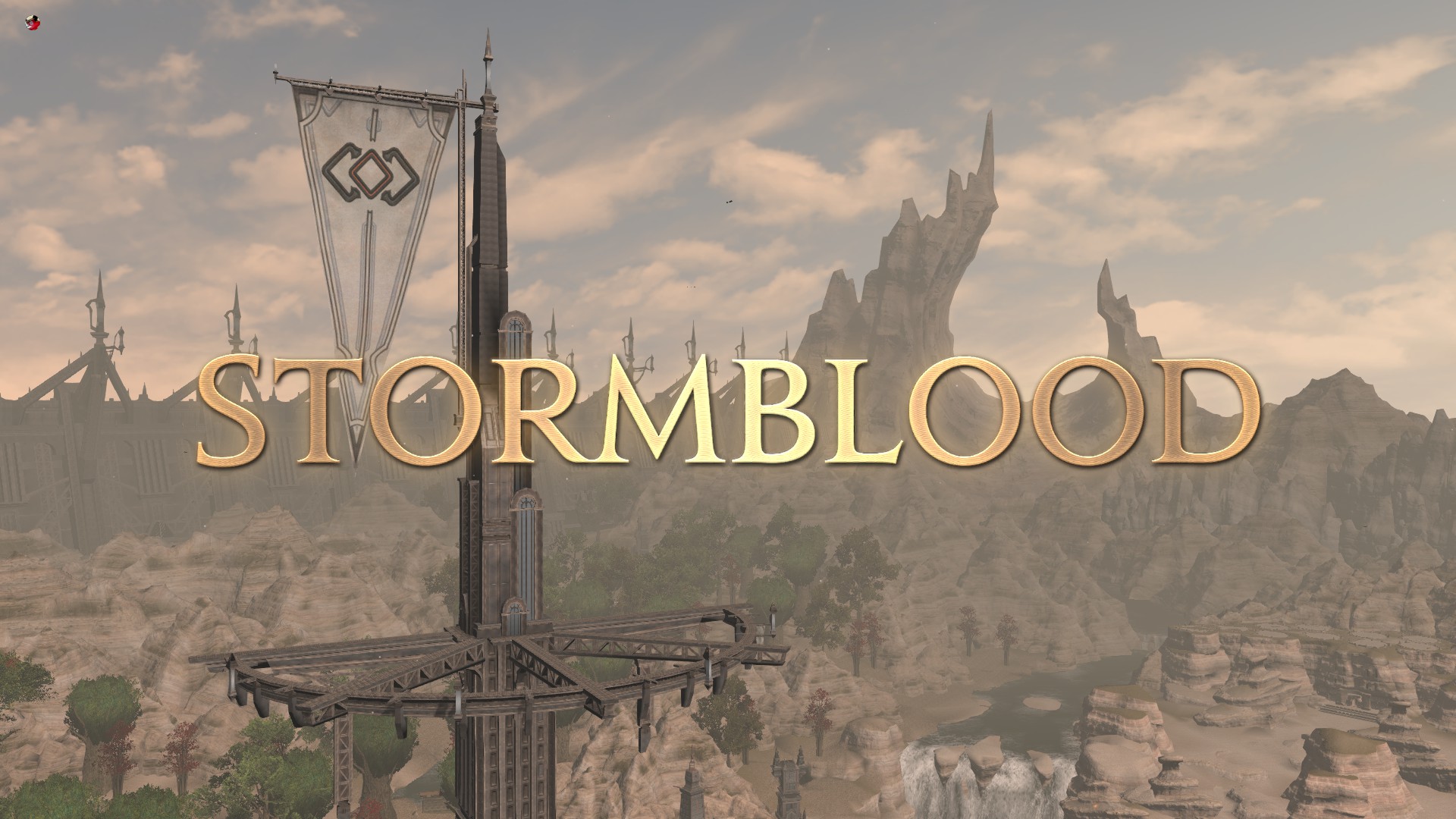
Smudge and I are still going strong on FF XIV, and the last three months has been spent with various tasks, but we’re spending more and more time on the storyline, and are about ready to transition into Stormblood. Overall, there’s been a couple of distinct phases of the story, with the first one covering patches 3.1-3.3. That was a pretty nice end point for business left unfinished at the end of Heavensward.

As usual, there’s a number of different threads going on at once, but the dominant one was actually managing a stable peace (or even cease-fire) between Ishgard and the dragons. Nidhogg is still thirsting for revenge for a thousand-year-old betrayal… and trust does not come easy to a people who’ve been lied to for all that time. Despite the complications, this part remains reasonably straightforward, which works a lot better for SquareEnix than the more complex story they tried leading into Heavensward. It eventually centers around two things: a ceremony to celebrate the peace, and a final confrontation with Nidhogg, which also finishes off Estinien’s story (which started back in the level 30 Dragoon quest). The former involved a new iteration of a piece of art we’ve been seeing around to commemorate Shiva and Hraesvelgr.


↓ Read the rest of this entry…

└ Tags: FFXIV, gaming, Heavensward, MMO
1 Comment

Defense of the Fiddler

by Rindis on February 22, 2019 at 12:00 pm
Posted In: Books

Well, this is different… and yet familiar. The broad action and wider themes of Defense of the Fiddler are fairly familiar Military SF. However, this is done in a script format.

Beyond the oddness of that choice in general, there’s odd things inside of this book in how it’s handled. The prologue and and one transition section are in comic format, so I assume that Hogarth was originally thinking of doing a graphic novel, but realized it’d take too much time out of her other writing projects. So we have a script that looks a bit like a Shakespearian play: scene setting and descriptions are fairly minimal. There’s some notable ones at the beginning, which quickly drops to nonexistent, and then as the book goes on, the descriptions slowly fill out a bit again, and for the climax there’s lots of descriptions of camera angles and pans, and… yeah, this is more cinematic than comics can easily do. So you get an initial few pages of visual reference, and then you’re left on your own to fill in the conversations with appropriate visuals. Once you’ve gotten through the beginning and have established the scene for yourself, then more details slowly start filtering in keep you on track.

It’s an interesting technique, but there are some important details not expressed until well into the book. The action is largely in claustrophobic tunnels, with the enemy ‘crabs’ breaking through the walls as well as using the existing tunnels. What isn’t said is that this is all on a planet with a toxic atmosphere, so everyone’s down below for their own safety. It’s obvious that something like this must be true, but the exact reason isn’t mentioned until late, making it hard to figure out what these tunnels are part of.

The story itself is multilayered, and very effective. It takes its time to get going, but the cast of characters is surprisingly large, partly because they’re introduced to you at a very deliberate pace, and you get to know everyone currently involved before expanding the scope slightly to introduce a couple more. It’s a difficult trick, one that all too many books flub at one point or another, and it’s masterfully handled here. The script format take a bit of getting used to, but you are well rewarded for going with it.

└ Tags: books, reading, review, science fiction
 Comment 
  • Page 133 of 310
  • « First
  • «
  • 131
  • 132
  • 133
  • 134
  • 135
  • »
  • Last »

©2005-2026 Rindis.com | Powered by WordPress with ComicPress | Hosted on Rindis Hobby Den | Subscribe: RSS | Back to Top ↑