Rindis.com

All my hobbies, all the time
  • Home
  • My Blog
  • Games
  • History

Categories

  • Books (490)
  • Comics (10)
  • Gaming (910)
    • Boardgaming (668)
      • ASL (154)
      • CC:Ancients (82)
      • F&E (78)
        • BvR – The Wind (26)
        • Four Vassal War (9)
        • Konya wa Hurricane (17)
        • Second Wind (5)
      • SFB (78)
    • Computer games (161)
      • MMO (76)
    • Design and Effect (6)
    • RPGs (66)
      • D&D (25)
        • O2 Blade of Vengeance (3)
      • GURPS (32)
  • History (10)
  • Life (82)
    • Conventions (9)
  • News (29)
  • Technology (6)
  • Video (48)
    • Anime (46)
  • Writing (1)

Patreon

Support Rindis.com on Patreon!
Become a patron at Patreon!

Other blogs:

RSS Inside GMT

  • Advantages of Space Empires 4X In Digital Form March 16, 2026

RSS Playing at the World

  • Playing at the World 2E V2 Arrives May 5, 2025

RSS Dyson’s Dodecahedron

  • Return to An-Nayyir’s Pyramid – Part 1 of 3 March 16, 2026

RSS Quest for Fun!

  • The Myth of Rational Animals November 23, 2025

RSS Bruce Heard and New Stories

  • Preview: The Iron Queen February 9, 2026

RSS Chicago Wargamer

  • The 2 Half-Squads - Episode 310: Cruising Through Crucible of Steel January 27, 2023

RSS CRRPG Addict

  • Game 572: The Elder Scrolls: Arena (1994) March 14, 2026
SF&F blogs:

RSS Fantasy Cafe

  • Michael Swanwick Guest Post and Book Giveaway February 23, 2026

RSS Lynn’s Book Blog

  • Top Ten Tuesday: Green Book Covers March 17, 2026
ASL blogs:

RSS Sitrep

  • Blockhaus Rock April 1, 2025

RSS Hong Kong Wargamer

  • FT114 Yellow Extract After Action Report (AAR) Advanced Squad Leader scenario April 16, 2025

RSS Hex and Violence

  • This still exists? March 25, 2025

RSS Grumble Jones

  • 2026 Kansas City ASL Club's March Madness Tournament March 16, 2026

RSS Desperation Morale

  • How to Learn ASL March 16, 2025

RSS Banzai!!

  • October North Texas Gameday October 21, 2019

RSS A Room Without a LOS

  • [Crossing the Moro CG] T=0902 -- Rough start July 18, 2015
GURPS blogs:

RSS Dungeon Fantastic

  • What color is paut? Sigh. March 3, 2026

RSS Gaming Ballistic

  • Pigskin project (by Chris Eisert) February 28, 2026

RSS Ravens N’ Pennies

RSS Let’s GURPS

  • Review: GURPS Realm Management March 29, 2021

RSS No School Grognard

  • It came from the GURPS forums: Low-Tech armor and fire damage January 29, 2018

RSS The Collaborative Gamer

  • Thoughts on a Town Adventures System January 18, 2022

RSS Don’t Forget Your Boots

  • GURPS Supers Newport Academy #3: “Season Of The Witch” February 8, 2026

RSS Orbs and Balrogs

  • Bretwalda - Daggers of Oxenaforda pt.4 - Fallen King May 27, 2017

4 En Avant Les Grelus

by Rindis on July 8, 2023 at 12:00 pm
Posted In: Boardgaming

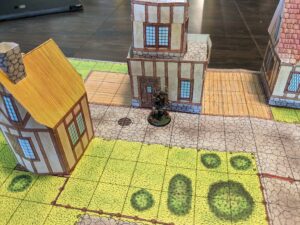
After our ‘current SFB‘ scenario, Mark and I returned to Great War Commander, with scenario 4. This is our second visit to 1915, with action during Vimy Ridge. The Germans start off in trenches with one pillbox and some wire on board 5. The French start with only modest advantage in numbers but do have artillery, and the special rules can cause for some German units to be suppressed and the fortifications reduced, and then the French get three artillery attacks right before play begins. The surrender limits expect a lot of losses, especially for the French, and both sides get reinforcements. Time starts at 0, and sudden death doesn’t get checked until 10, so it’s not a short fight.

Mark had the Germans and set up a nicely protected hard point on the center ridge, with a MG and his best leader at the ‘point’ (with two objectives behind it), while the other MG was at the top edge, a group at the bottom edge, and his heavy mortar in the back, where it might support the top or bottom. The initial SSR did nothing, but the first barrage broke a platoon and reduced a trench to foxholes in F6. Initial objective was Objective 1 (C8) being worth a point.

I started with a Move which came under Fire, which broke almost everyone who moved, generally after the first hex. Events rallied one, killed a ligne platoon that wasn’t even moving, who then returned to the board in the German backfield from another event, and a sniper killed a broken chasseurs. The remaining four platoons went on the Offensive, which came under Fire from the top MG, which immediately jammed, letting me get onto the wire in front of the ridge, after a time trigger. Recover then rallied everyone.

Mark had to discard the remains of his hand, and I put a standing barrage on the ridge, hitting one of my own platoons, forcing me to give up Initiative to keep him from breaking, but eliminating a hex of wire, and reducing another trench to foxholes. The group on the wire then Moved with Assaults to move into the hexes up top. OpFire broke my leader, but not the platoon with him, and an Ambush cleared the hex. Next door we tied, and both lost a platoon.

The main German MG was suppressed, but the top one had repaired, and it killed Lt Violette on Mark’s turn, breaking the platoon with him. He then sent a platoon to reoccupy the empty foxholes, and my OpFire couldn’t do anything. A large attack against the pillbox did nothing, nor a creeping barrage. Mark’s fusiliers Advanced into F6 and eliminated my broken platoon in melee. A second barrage reduced the trench in F7 to foxholes and broke the platoon there, with a large follow up Fire eliminating him.

Mark was finally able to Recover, putting the main MG back into action, and I moved the creeping barrage into the line with the pillbox, hitting my platoon in H5  in the process. Reconnaissance revealed that Objective 4 (F6) was worth a point, Air Support suppressed E7 again, the foxholes in G6 were eliminated, and time advanced to 3, bringing on my second wave.

Further large Fire attacks finally got a good roll against E7, which turned out to have a Hidden Position. Nering and the platoon there broke, but were both saved by Probes. I Moved most of the second wave to go in where my first close attack had been, with no interference from Mark. Another standing barrage nearly did a 21 vs the pillbox, but Mark forced a reroll (negating a time trigger as well), and then used Concealment against another strong roll to keep out of trouble. Then F6 took a 21 (and time trigger) to eliminate the foxholes and break the platoon. The German reinforcements entered on top of the platoon I’d moved over to objective 3, and eliminated him. HMG Suppress put the new artillery piece out of action.

Later Fire finally broke Nering, but the other two units in E7 shrugged off a 24 attack. Mark managed to break my new leader and platoon in E5, while Counter Attack suppressed his men in H4. I Recovered, and broke the platoon in E7 with another large attack. Mark brought a barrage down right in front of my main line, but did no damage, while Fire broke Maran again. I Advanced into the pillbox at last, winning with a better die roll (the actual firepower was 6:5).

Thanks to all the casualties and time, VPs had been 11 in Mark’s favor, and this brought it down to a more manageable 5 with time at 5. Better yet, he was at 6 of a 10 surrender limit, which I figured was a far more likely bet for me. Recover put everything back in good order right before a creeping barrage broke Barnier, and Fire suppressed Maran and gave another time trigger. I called for an all-new barrage, which wandered out of the way.

I Recovered, and Mark Advanced his reinforcements. I Moved the top flank with four platoons breaking, and then the rest Moved towards his bottom flank with another three platoons breaking and a time trigger (7), Recovering all but one platoon (with Maran), but giving up Initiative to avoid a time trigger (and failed rally). The mortar Fired, breaking Ravy and his platoon, and revealing that objective 2 (O6) was worth 2 VP. I finally Advanced into F6, retaking (4) and killing a platoon in melee.

Ravy held out against further Fire, and my HMG Suppressed the bottom line, while I conducted an Offensive around H4. Three platoons broke during the advance, and there was another time trigger (8). Recover brought them all and Ravy back, and an event broke the German platoon in H4. A big attack there next turn failed to do anything (with help from Probe), and Mark Recovered everyone. A barrage reduced the trench in H1 and broke the MG platoon there, at the cost of another time trigger (9). Mark Recovered that, and the mortar crew, who had suppressed to Air Dominance. Another big Fire attack broke the platoon in H4 again, who promptly Recovered again.

Mark had slowly moved his reinforcements, breaking up into individual groups, with Lt Gehr and a platoon finally getting up the slope in between everything, where my Fire broke him, and he Recovered the next turn. An Offensive swept me forward at the bottom, occupying an abandoned trench, but lost that platoon to an event. Only one platoon broke, and he rallied thanks to an event. There was also a time trigger (10), but the sudden death roll was passed. And another event let Mark advance out of H4, killing a platoon in melee, retaking (5). This let me Move into the trench on the ridge, but little else.

I then Advanced into the trenches at the bottom, but the first melee roll was another time trigger, which ended the game at 24 German VP.

Afterword

I didn’t have a bad opening, and Mark couldn’t Recover for a long time, which made the advance on the ridge a lot easier. But after the initial assault (powered by a strategy card), I couldn’t get any more melees, and the very high firepower attacks I put together still couldn’t do much to the occupants of the pillbox, letting my initial advantage slip away. I’m not sure what I could have done if the four card hand hadn’t bit Mark as severely.

As it was, I was still bleeding VPs as time ticked by and losses mounted. My only real chance from early in the game was to put Mark over his surrender limit, and my final Advance had a shot at doing it, as I had the advantage in two melees, Charge for a bonus, and La Force Noire to cause an ambush in one of them. Winning both would kill two platoons and a leader to push him to ten losses and Surrender.

But, I was already on borrowed time after the first sudden death check passed, though the time triggers had been going by a bit fast all along.

└ Tags: gaming, Great War Commander, WWI
 Comment 

Forest Gods

by Rindis on July 4, 2023 at 12:00 pm
Posted In: Books

The second volume of the Fire Bearers trilogy expands the world, and the scope of the plot, with the book jumping up a hundred pages in length to compensate.

The first volume left off in a bit of a quiet moment, but there’s plenty happening out in the world. Doto and Clay’s relationship isn’t settled, but it is established, and this book goes into the process of it turning into a more long-term relationship. At the same time, Clay’s brother, Laughing Dog has returned to the People of the Savanna, who are dealing with the nearby forest suddenly attacking anyone who goes in it. (Yes, the trees and other plants themselves attacking.)

This one took me a bit long to get through. The medicine woman of the tribe, Cloud, becomes one of the viewpoint characters, and there’s a section in the middle where you and she see things going wrong, and can’t do anything about it. It’s much like the middle of A Fire Upon the Deep, important, but not at all fun to read.

Past that problem, it is an excellent middle volume. The problems back home pile up as, unknowing of Ogya’s involvement, Clay pushes Doto out of the forest into the wider world, as they go on a hunt for Sarmu, god of the savanna. Coming home, as always, is rougher than expected, and our two plot lines intersect, merge, and then push off in their own directions again for the climax of the book.

The biggest problem here was that this and God of Clay would sit on my shelf for about a decade, waiting for the third book to come out. Which thankfully it has.

└ Tags: books, fantasy, furry, reading, review
 Comment 

Heart of Production

by Rindis on June 30, 2023 at 12:00 pm
Posted In: Computer games

This is the fifteenth in a series of reviews of Paradox’s empire management games. See the earlier reviews here:
Europa Universalis II: A Tale of Two Europas
Hearts of Iron: Europa of Iron
Victoria: Nineteenth Century Essay
Crusader Kings: A Dynastic Adventure
Hearts of Iron II: Return Engagement
Europa Universalis III: A Whole New World
Europa Universalis: Rome: Make a Desert and Call it a Game
Hearts of Iron III: One Plus Two Equals Three
Victoria II: Same But Different
Sengoku: Shogun: Only War
Crusader Kings II: The Second Crusade
March of the Eagles: A Minor EU
Europa Universalis IV: A Fantastic Point of View
Stellaris: Paradox Among the Stars

On January 23, 2014, Paradox announced that it was working on a fourth Hearts of Iron game, which would bring the series to the Clausewitz 2.0 engine introduced with Crusader Kings II, and, presumably, a more centralized set of mechanics, as seen in Europa Universalis IV.

Development took longer than normal, and the game was not released until June 6, 2016, a month after Stellaris, a game that was not even announced until a year and a half after the announcement of HoI IV. While HoI had traditionally been the big money-maker for Paradox, HoI IV has not generated anywhere near the same number of patches and expansions as Paradox’s three immediately preceding games. This review is specifically looks at the game as of patch 1.2.1, released on September 23rd, before the first expansion.

Overall, the game is similar to the previous entries in the series—a pausable real-time empire-management simulation. Thanks to the tight focus on on about a decade (1936-48) this means that you see hours go by and production and many tasks are evaluated by day (combat and movement is hourly). It is the most “wargamey” of their titles, but as a grand strategy game, combat happens without further input from the player, who is concerned with general orders, diplomacy, and development.

Production

Production in the earlier games had you producing entire divisions at a time, and/or complete air wings. Now, it switched to directly producing equipment. So instead of ordering up an armor division, and the appropriate tanks get produced, you assign an armor division to be formed, and it receives the tanks you have on hand. Or it sits as a ‘theoretical’ formation waiting for appropriate equipment to be produced. This also means that new equipment slowly trickles out to units in the field as it produced, instead of an entire unit upgrading all at once, as in previous games.

Even the basic equipment needed by infantrymen needs to be produced before they can head out. This is largely abstracted, but there are improvements (which need researching) over time. Factories are assigned to each type of production, and each one adds to an overall averaged total. Each production line has a production efficiency that starts low, and builds up over time, representing tooling time and economies of scale. At the start of the game, maximum efficiency is 50% (and a new production line typically starts at 20%), but this also goes up with further research.

A UI element that was lost on me for a while is that the icons of any technology that results in a new type of equipment to produce is given a larger icon than the ones that unlock an ability or extra bonuses. Thinking about it, I think they missed some opportunities here. Infantry equipment comes in four types, with a couple in-between bonuses, and sub-branches for things like anti-tank weapons, and artillery has similar sub-types. I wish there was more of this around other major equipment types.

Factories are divided between military and civilian, with only the military ones producing equipment. Civilian factories are needed to produce abstracted consumer goods, which takes them out of the production pool, and they also behind-the-scenes are used to create materials to pay for resources that you need to import (the list of raw materials is essentially unchanged from III), and if another nation imports some of your resources, you get to use their civilian factory. Remaining civilian factories are used to construct new on-map facilities, including new factories, infrastructure, RADAR stations, fortifications, and the like.

As war approaches, or is declared, you can pass more ambitious draft laws, and you need fewer factories devoted to consumer goods. Instead of all that capacity simply helping build your internal infrastructure, you can convert factories from one type to the other; this takes time of course. Also, there are naval dockyards, which are factories that only produce ships, though they, somewhat strangely, do not use the efficiency system at all; switch a dockyard from a battleship to a submarine, it’s all the same.

This is one of the main elements to HoI IV as a game, and its best feature. No other WWII game has really presented all the various elements that go into the industrial might that determined much of the character of the war. There’s several competing problems and priorities, and they’re fairly well represented here.

Experiencing Templates

Despite building individual tanks and the such, the basic maneuver element has remained the division. Like in the third game, these are made up of sub-units, battalions, which are grouped into regiments inside the division. Also like the last game, each country has pre-made division templates that existing units use. However, you are not free to change them however you like this time.

Instead, changing, or creating a new template, requires the use of army experience. This is something gained by combat or a few other limited sources, and is needed to re-form the army into (hopefully) more effective units. Creating a duplicate of an existing template is free, and the general practice is to create new templates rather than just changing old ones, as that forces every division using that template to undergo an immediate organizational change, impacting training and equipment. And if you want to add that new self-propelled gun to your armor divisions, every one will start clamoring for them while production is just tooling up.

Then, you can tell a division to change which template it’s using. (Even to a completely different type!) So you can pick just a couple units to go to the new style immediately, and wait on the rest until the equipment is ready. Sadly, while it’s not hard to find out how many divisions are using a previous template, finding where they are is not easily done.

Non-Standard Models

As ever, the technology sections for equipment have standard slots for everyone. Overall, it’s been simplified a bit, with (for instance) eleven standard models of tanks. Again, we have cosmetics without meaning, as all the major countries have their own names for each model even though they’re identical for everyone.

Or… are they? Part of the government options is that you can assign design bureaus for the major types of equipment, and those provide bonuses to the various statistics. These are not the same for everyone (except the minor countries all get the same set), so once those are in place, a German Medium Tank I won’t be quite the same as an American one.

Further, you can make improved models of all the tank, aircraft, and ship types through use of the relevant arm’s experience (this is the only use for naval and air experience; only army experience is also used to rebuild larger formations). Switching from a general model of tank to the next technology in line saves some production efficiency, and switching to an improved version saves most of the production efficiency. So, especially once the shooting’s started, you can customize the current models instead of waiting for the next major step to be researched and then do a major re-tooling for that.

At first, I was quite disappointed by another round of different names without difference, but once I saw how much you can change things, and the fact that you could imitate Germany’s constant parade of upgraded models during the war, and the production model ties in with this so well, it became a real plus for the game, even if I still have a bunch of nit-picky reservations.

Military Planning

Unlike in HoI III, there’s no corps or full organizational hierarchy this time. However, theaters and armies were retained in a new interface. Theaters are mostly a convenience, and armies are the only level where you appoint commanders now. Also, the idea of tracking if there’s enough officers to properly administer the units has been dropped.

An army has divisions assigned to it, and then you can assign all, some, or none of those divisions to various battle plans for that army. The most common plan is to assign it a section of the front to man, and then assign a place you want to go on the offensive from that line. You can also have units garrison an area, define a new defense line to fall back to, and the like.

There are a number of problems here. This is obviously intended as a more comprehensive version of the AI control seen in III, and the new order modes help, but the problem of not being able to tell the AI how you want it to do things remains. Worse, the UI is not entirely up to the job. It’s actually a good effort, and I expect in later patches it got better, but it takes a lot of practice to get past the problems (which can be gotten past, which is impressive itself).

You can ignore all this and do everything manually. You don’t have group everything into armies, you don’t have to give the armies any orders, but there are incentives for doing so. First, the AI is pretty good at things like distributing units along a line, though it does occasionally get confused. However, when you put in a plan with offensive lines and the such, not only does the AI put the units where needed, but those units will slowly gain a combat bonus. When you hit the ‘go’ button for the attack, that planning bonus helps them deal with the defenders, and you can’t get that manually, but neither can you get it instantly.

And I should note that I finally understand what the combat markers have been trying to say since HoI III, thanks to Stellaris. The two combat systems aren’t anything alike, but what they’re trying to report is similar. The HoI combat tag is a circle with a number from 1-100, that is green, yellow, or red. The latter tells you if you’re currently winning or losing, and the number should be how far through you are… except you can be 95 and red. Or the predicted time a battle will take differs widely when everything else looks the same. In Stellaris, the main combat display primarily shows the balance of combined hull points on each side. The number here (and a similar bar in the full display) is showing the combined balance of organization (effectively cohesion, and a concept that goes back to the original HoI, though only HoI and Victoria has used it), and the color tells you who, at the current rate of loss, will run out and be forced to retreat first.

Areas of Interest

Like in the previous two games, the world is divided into large zones for purposes of naval and air combat. With the new production system you establish air wings, and give them a maximum size, and planes get transferred to it. Once it has aircraft, you assign it to a region within the aircraft’s operating range, and then set the types of missions it will perform.

This isn’t too different from before, with a need to develop airbases, and assign aircraft, but now you can size them at will… and there’s no real guidance on what a good air wing size is.

Naval missions work much the same way, and now combat works much like it does in V II: Heart of Darkness, where ships go through a process of moving into position and picking a target. Light ships and submarines dart in to engage with torpedoes or take out the enemy pickets while the big ships go after their counterparts with the big guns. It’s a much better combat system, and as well suited to WWII naval combat as to pre-WWI, so this is a good upgrade for the series.

Fight With Power

Politics is nicely more complicated than in previous game. There are the usual three factions (Axis, Allied, Comintern), but not just those. The other possibilities are limited, but Japan, for instance, can form the Greater East Asia Co-Prosperity Sphere as its own faction.

At the same time diplomacy works a bit more like other series from Paradox, so they aren’t quite as necessary, either. All the usual defensive alliances, military access, and the like are options here. Wars are similar in that you need to have a justification to go to war, and you can spend time to make a claim on territory to get that. But the peace negotiations are much different. You have to take most of a country to get them to capitulate, which starts a peace conference where everyone involved can start making demands like the more familiar systems in other games.

Some justifications are found in the national focus trees. These are a new system for the series, where eight major countries each have a specific set of focuses that help with the development of the nation (everyone else gets a generic one). These are arranged in trees, that follow a particular theme or goal. They are similar to ideas from EU IV, but those are sets to be chosen, and come in a straight path, while these are all pre-determined, and can have some complex dependencies (so maybe they’re closer to the national bonuses that ideas in EU IV unlock).

Actually unlocking these bonuses uses political power. The other use of political power is to modify the government. There’s always been a bunch of governmental offices, but they started out filled, and were easy to ignore. This time, they generally don’t start out filled, and you use political power to gain new bonuses (and the only penalty for changing bonuses is paying the power again). This is where the design bureaus come in, as well as ministers and military staff for more general bonuses.

In general, government structure hasn’t actually changed much from any of the previous games, but it has been made easier to deal with. The focus trees are an interesting addition, especially as they can guide the AI down non-historical paths. However, I feel they’re too much interference with the root game systems, and the low number of unique ones undermines the system.

Conclusion

For me, the new production model is the centerpiece of HoI IV, and does a lot to get at the nature of the industrial side of the war. Beyond what I’ve said above, equipment also has reliability, so some of it breaks down and needs replacing in use, in addition to the enemy shooting it up. The need to replace both kinds of losses naturally creates a maintenance drag on the industry of a country, and is a good use of a computer’s ability to track numbers not practical in board games.

My problems on the military side are largely down to correctable problems (the planner is way too likely to “drift” to odd frontages, and empty orders and the like), instead of fundamental philosophical differences. One bit I do miss from the previous game is the full unit hierarchy. It needed some more polish, but I was hoping to be able operate corps as a whole in crowded fronts, rather than the separate divisions. That aside, once you learn how to use the military planner (which is not a quick process), it’s pretty good, and lets you become a lot more hands off. In fact, one of the major challenges with it is to stop micromanaging as much as instinct says.

My biggest problem is the focus trees. They’re a neat idea (possibly with a bit of inspiration from Days of Decision, but that’s an international system of events rather than a purely internal one that very occasionally does something to someone else), but underbaked, with seven unique trees in the base game, plus one for Poland in a free DLC that came out at launch (so why isn’t it just part of the game?), and then a generic one for everyone else. While much bigger and more complex than the national bonuses in EU IV, those still point the way to making this much more palatable. The number of different bonus groups grew over time, but even at the start there were a number of generic sets for use with groups of nations. Having 3-4 generic trees from the start would have helped a lot (say one for Asia, one for Eastern Europe, etc.) to say that countries outside the prime movers had any importance in the game. As it is, only countries touched by an expansion have any unique decisions of their own, and countries like Finland are still stuck with the generic tree. (The upcoming ninth expansion for HoI IV will finally do something with them.)

So, once again, I think Paradox missed some major things with Hearts of Iron IV, but they got a lot of things right, and I think it’s the best iteration of the series. I know there are people who disagree, and they have some good points, but the pluses here are pretty big and try to pull back from the trap of more details for detail’s sake. It is still my least favorite series from them, but it is neck and neck with some of the other current games and I do look forward to playing it again.

└ Tags: gaming, Hearts of Iron, Paradox, review
1 Comment

Two Rounds of Baetis River

by Rindis on June 26, 2023 at 12:00 pm
Posted In: CC:Ancients

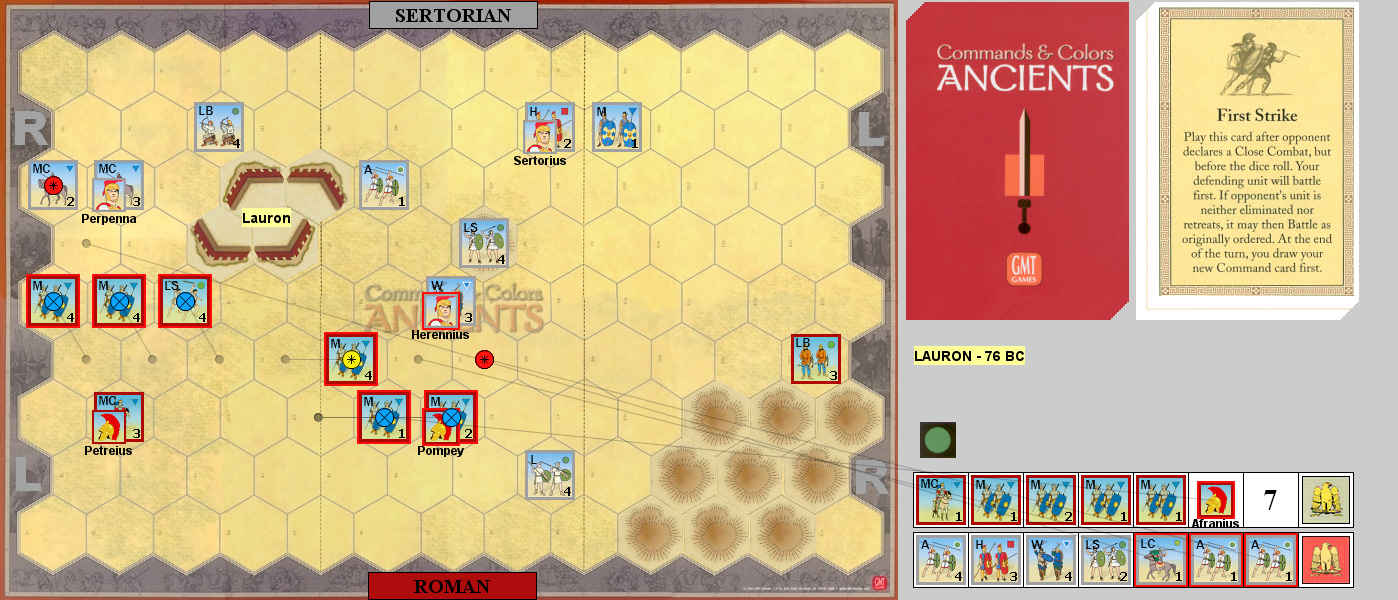
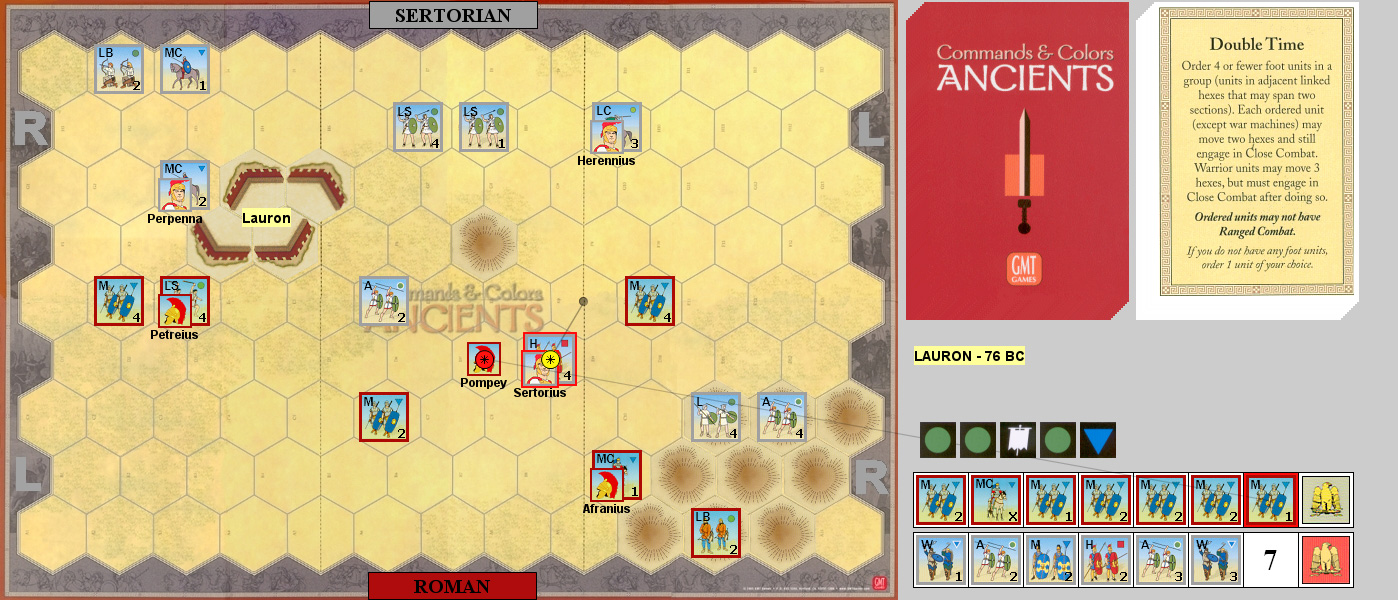
After escaping a supernova, Patch and I did our regular round of Commands & Colors: Ancients, this time playing the Battle of Baetis River from Expansion #3. Along with the Marian Legions rule (for both sides), there’s a fordable river, and a good number of troops on both sides, though Sertorius’ are distinctly lighter.

I had Sertorius first, and led with Order Three Right, doing no damage with ranged combat. Patch played Double Time to crash into my line, forcing a Light to evade with a loss, and doing two blocks each to two more Lights, who did one block in return. I Ordered Lights to try and get a little room, and forced a Medium and LB to retreat. Patch Ordered Mediums to keep his drive going, finished off a Light, knocked out a Heavy, and reduced the other Heavy to two blocks.

Left Leadership let me counterattack, taking out a Medium for one loss on an Aux. Patch Out Flanked to damage an Aux, but took three hits to a Warrior in return. I Ordered Four Left, but merely drove off the Warriors. Patch Ordered Mediums again, closing in the center to finish off the Heavy and kill Sertorius and an Aux, but lost his Warriors in return. Order Three Left let me reorganize the survivors but no more, and Patch Ordered Two Right to trade blocks between an Aux and a Warrior.

I Out Flanked to drive his Warriors away and do a block to a LB, Patch had Center Leadership to drive one of my Lights to the baseline and I crawled away with a Line Command that did a block to his LS (retreated into the baseline), and Patch came back with Order Lights which nearly destroyed a LC. I Counter Attacked, reducing his LB to one block. Patch Counter Attacked for no more effect than driving a LS to the baseline. I then Ordered Lights to drive him back with one loss to a LS. Patch Move-Fire-Moved to finish off my weak Aux. 2-6

Patch started round 2 with Order Two Center to open up his formation with two Lights getting into javelin range, and doing a block to a Warrior. I Ordered Lights to drive off a LS. Patch did the same, and drove back my left flank and did another block to the same Warriors. Line Command put me in contact with the two advanced Lights, one of which evaded with losses and the other was wiped out (Patch didn’t evade with him, probably wanting a path for the Heavies).

Move-Fire-Move let Patch do two hits to a Medium… killing the attached leader, before shuffling his lights to one side. Order Mediums let me drive off some Lights (one down to one block), and Inspired Center Leadership let Patch get his Heavies into action, driving off my Warriors with two banners, and destroying a Medium outright. I Counter-Attacked to do damage to a Light, destroy a Heavy, and do two blocks to the other, but lost a Medium. Patch Ordered Three Center to finish off a Medium, and reduced a Warrior to one block. I Ordered Four Center to finish off an evading Light and the second Heavy.

Patch Ordered Two Center to send Sertorius to an Aux (his third command), I Ordered Two Right for no result while Patch Counter Attacked(!) to finish off my Warriors. I Ordered Three Center to charge Sertorius, driving him off with two losses. Patch Ordered Four Right trouble my weak flank without result, and I returned the favor with Order Two Left. Mounted Charge cost one of my Mediums two blocks, but Patch’s MC lost a block and retreated while he lost his LC outright. Order Lights let me pull back the left, and Order Three Right let Patch do another block to my LS and force my Medium to retreat. Two Center let me charge after Sertorius again, this time finishing off the Aux. 6-5

Afterword

The Romans have a tough time here with Sertorius going first and having one higher command. However, they have a good number of Mediums which start only two hexes away from the main Sertorian line. An early Double Time can be real trouble for them. Sertorius’ line isn’t as heavy, so he needs a bit of finesse here, and some time to make it work.

Patch had good luck (at least better than mine) for almost the entire match. I got some real luck right at the end to get that win after hovering at five banners for too long. I have seen Mounted Charge decide things too often, so this was a double surprise for me. Overall, this goes to Patch, and I can blame some of it on some really bad ranged die rolls and losing Sertorius early.

└ Tags: C&C Ancients, gaming
 Comment 

The Anglo-Saxons

by Rindis on June 22, 2023 at 12:00 pm
Posted In: Books

Marc Morris returns to Dark Ages England with a ‘prequel’ of sorts to The Norman Conquest. This time, he tackles the entire period from Saxons and others legendarily being invited to help defend Britain to the end of Anglo-Saxon rule in 1066.

Everything that you may well expect to be here is here, with a lot more to provide context and framework. Overall, Morris does an excellent job of summarizing about six hundred years, and helping make sense of what can be a very confusing subject. He starts with some of late Roman coin hordes that have been found, and points out the kind of instability those represent, and proceeds from there.

We get the emergence of petty kingdoms, the church, arguments about the church, fluctuations in power, and of course, Vikings. No part of this period was peaceful. Independent rulers a fairly quick jaunt from each other is no way to run a country even without anyone coming over the sea to visit. Information can be a bit sparse in this period, which makes his knowledge of archaeological findings help; he also tends to focus on figures that we know more about (some of which are not well-known) to show the concerns of the day in better light.

One place I’ll disagree is that he dismisses much of Bede’s story of the coming of the Saxons as being unreliable and cliche. He’s generally right, but he points out, “…brothers with alliterative names are another frequent feature of European foundations myths. Hengist and Horsa are no more likely to have existed than Romulus and Remus.” The thing is, Frankish custom of the day was definitely for close relatives to have close variations on the same name, and as another Germanic people, the Saxons could have easily had some form of alliterative naming tradition. Not that that really argues against his point… but then he does pass over a fair number of alliterative names later in the book without comment. I think we should condemn Bede’s history a bit less than Morris does.

Other than that nitpick, it’s a fine book, a very good read, and well worth picking up. And read The Norman Conquest afterwards too, he has a lot more to say about the final century of Anglo-Saxon rule in that book, and has room for details lost here.

└ Tags: books, history, reading, review
 Comment 
  • Page 50 of 310
  • « First
  • «
  • 48
  • 49
  • 50
  • 51
  • 52
  • »
  • Last »

©2005-2026 Rindis.com | Powered by WordPress with ComicPress | Hosted on Rindis Hobby Den | Subscribe: RSS | Back to Top ↑