Rindis.com

All my hobbies, all the time
  • Home
  • My Blog
  • Games
  • History

Categories

  • Books (496)
  • Comics (10)
  • Gaming (915)
    • Boardgaming (672)
      • ASL (154)
      • CC:Ancients (83)
      • F&E (78)
        • BvR – The Wind (26)
        • Four Vassal War (9)
        • Konya wa Hurricane (17)
        • Second Wind (5)
      • SFB (78)
    • Computer games (162)
      • MMO (77)
    • Design and Effect (6)
    • RPGs (66)
      • D&D (25)
        • O2 Blade of Vengeance (3)
      • GURPS (32)
  • History (10)
  • Life (82)
    • Conventions (9)
  • News (29)
  • Technology (6)
  • Video (49)
    • Anime (47)
  • Writing (1)

Patreon

Support Rindis.com on Patreon!
Become a patron at Patreon!

Other blogs:

RSS Inside GMT

  • Iron Triangle #2: Sequence of Play and Decks April 29, 2026

RSS Playing at the World

  • Playing at the World 2E V2 Arrives May 5, 2025

RSS Dyson’s Dodecahedron

  • Colour & Old School Blue Maps April 30, 2026

RSS Quest for Fun!

  • Remotely Managing Your Brick-and-Mortar Hobby Game Store: A 5-Step Guid April 18, 2026

RSS Bruce Heard and New Stories

  • Preview: The Iron Queen February 9, 2026

RSS Chicago Wargamer

  • The 2 Half-Squads - Episode 310: Cruising Through Crucible of Steel January 27, 2023

RSS CRRPG Addict

  • Arena: Won! May 1, 2026
SF&F blogs:

RSS Fantasy Cafe

  • Women in SF&F Month 2026: Thank You and Links April 29, 2026

RSS Lynn’s Book Blog

  • Update: I haven’t disappeared April 15, 2026
ASL blogs:

RSS Sitrep

  • Cardinal ASL Sins March 18, 2026

RSS Hong Kong Wargamer

  • FT114 Yellow Extract After Action Report (AAR) Advanced Squad Leader scenario April 16, 2025

RSS Hex and Violence

  • This still exists? March 25, 2025

RSS Grumble Jones

  • Grumble Jones May Scenario GJ160 Hugo Primozic Living the STUG Life May 1, 2026

RSS Desperation Morale

  • How to Learn ASL March 16, 2025

RSS Banzai!!

  • October North Texas Gameday October 21, 2019

RSS A Room Without a LOS

  • [Crossing the Moro CG] T=0902 -- Rough start July 18, 2015
GURPS blogs:

RSS Dungeon Fantastic

  • GURPS DF Session 222, Felltower 140 - Second GFS Assault, Part II April 27, 2026

RSS Gaming Ballistic

  • Let’s Get This Started Again: Mission X updates coming soon May 2, 2026

RSS Ravens N’ Pennies

RSS Let’s GURPS

  • Review: GURPS Realm Management March 29, 2021

RSS No School Grognard

  • It came from the GURPS forums: Low-Tech armor and fire damage January 29, 2018

RSS The Collaborative Gamer

  • Thoughts on a Town Adventures System January 18, 2022

RSS Don’t Forget Your Boots

  • GURPS Supers Newport Academy #4: “Picnic! at the Disco” April 5, 2026

RSS Orbs and Balrogs

  • Bretwalda - Daggers of Oxenaforda pt.4 - Fallen King May 27, 2017

The Hidden Palace

by Rindis on November 26, 2024 at 5:40 pm
Posted In: Books

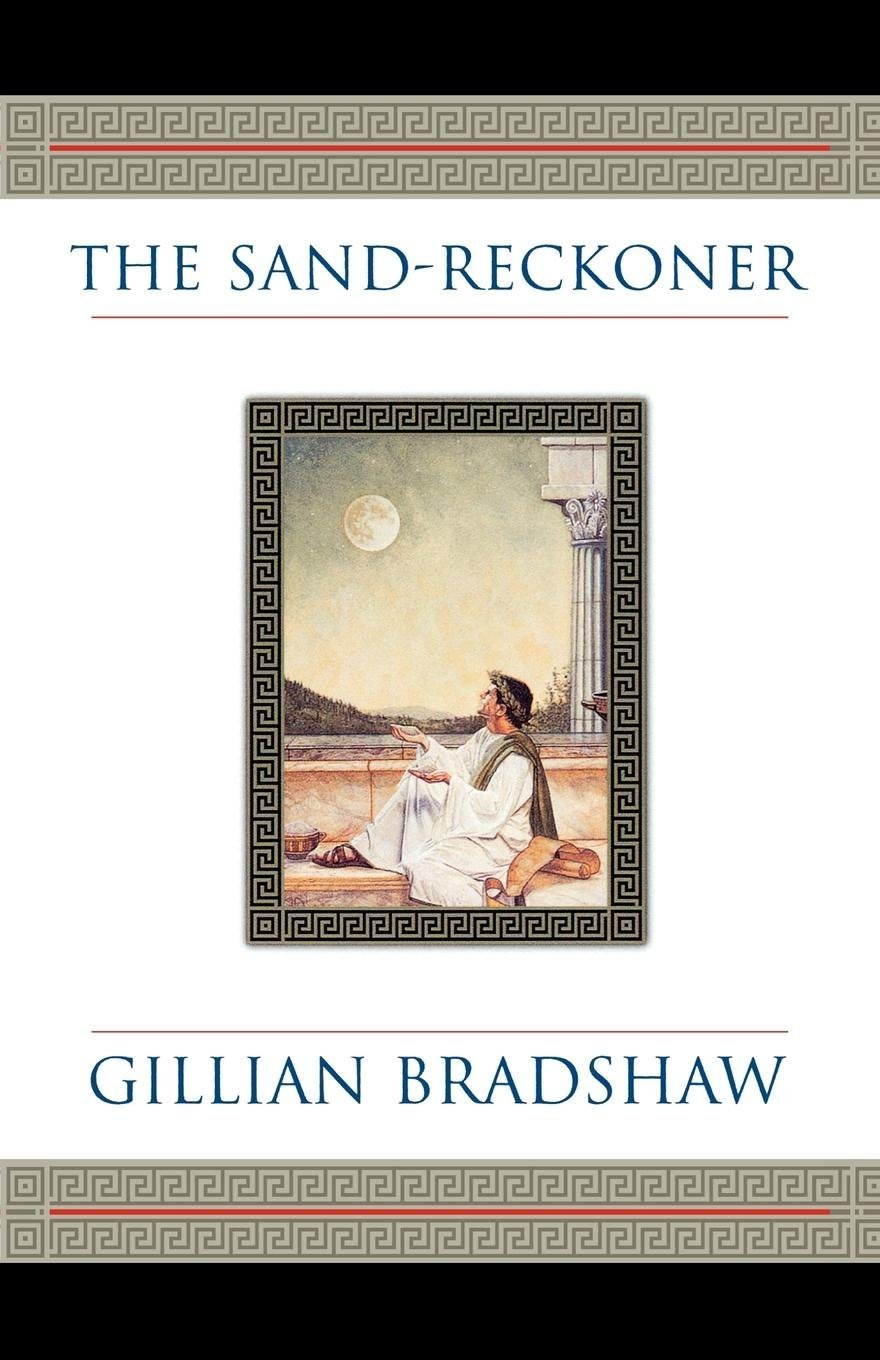
The Golem and the Jinni was a very good historical fantasy with a very character-driven focus.

It also had a very intricate plot with a lot of moving parts that don’t come into alignment until the end. That is still true in the sequel. We have our two main characters, the characters they touched before, a couple new ones… and a new golem and jinni. Just how they will fit in takes some time to be revealed, but it’s obvious that we’ve got some reflections of the main pair being set up.

And time is something this novel spends… pages with. It picks up about a year after the first book, with our happy-ending romance still stable, but they start growing apart as they struggle to hold their own identities, the identities they need in the human world, and their understanding of each other in balance. The last part of the novel is in 1915, but a lot of time is spent showing everyone changing through a decade and a half.

The climax of the novel is a bit like the first one: a cataclysm of magical shenanigans that draws attention, but keeps magic largely hidden from the modern world. The people at the center of it end up changed, but largely in less dramatic ways. The denouement is interesting, and seems like it could lead into a spin-off series. At the least, the door to more in this world is far more open than the end of the first book.

You could probably read this book first and pick up what’s going on. I don’t recommend it: The Golem and the Jinni is very good book and should not be missed. And this delivers the same degree of historical atmosphere, so don’t miss it either.

└ Tags: books, fantasy, history, reading, review
 Comment 

Demon Offensive

by Rindis on November 22, 2024 at 12:00 pm
Posted In: Gaming

After going through First Ypres, Mark and I tried out one of the old Dwarfstar titles, Demonlord. It’s a strategic fantasy game, showing a border clash between the demons and the declining human kingdoms.

You can tell that it’s by the same designer as Star Viking, as the units have a similar set of four factors (missile-melee-morale-movement). In combat, units face off against each other (with someone with more troops doubling up—also limited by the terrain type), for magic, missile, and melee in turn, a little like Federation Space‘s combat. Setup is largely fixed (a few ‘good/human’ forces have variable setup), and there’s a number of neutral factions that both sides can try to get on their side (at a potential cost in victory points), a few units they can invoke (summon; the only units that might return after being killed), and can ask for reinforcements (also at a cost of VPs).

The terrain system is fairly neat, with different movement rates for foot, cavalry, and winged units, and a limit to how big battles are. The depiction of it isn’t. I think the problem is made worse with some suspect color balancing of the Vassal module scan of the map, but it takes some time to figure out what is what on the map. Hills are described as red-brown—they’re an orangeish red. Mountains are listed as dark brown, they’re actually purple. It took a bit to really grasp things, but the primary goal is to take a city or castle from the other side, as that will start tilting the VP balance towards your side. (Well, the primary goal, which it is easy to get mesmerized by, is to take the captials of Timur or Nisshar, which provide an auto-win.)

Mark had Hosar (the human kingdom), which goes first, and he started moving troops from the various temples, while I moved forward to the border river in the south, and started moving troops from Nisshar behind the cover of the central mountains. By the end of the second turn, Timur had a large host encamped in its walls, while I was assembling a small flying strike army at the south end of the mountains. Mark had invoked the light spirit (the only thing they get that way except for a wizard that can be invoked after taking the reinforcements), and I had gotten the main group of five units invoked at the Temple of Ninnghiz.

Mark sent a small force around the northern edge of the mountains, and I quickly pulled back the few forces I had gathering up there, and sent the just-invoked forces that way, causing Mark to pull back again pursued (not really the right word…) by my army. Meanwhile, I had sent a force along the north to feel things out as Mark pulled more garrisons out. Lord Erush finally invoked Yorgash (a large dragon) at the Temple of Yorgash, and set out after the rest of his army, while Yorgash joined my flying force, which was now near my main army.

Mark set out from Castle Lojar, crossing the river flowing south from the great woods, and I retreated back to Taegul while the main army skirted around the woods headed south. (I should have taken Castle Lojar, but at this point we understood taking cities was VPs, but hadn’t really grasped that holding an extra castle was also worthwhile.)

Mark assaulted the castle of Q’Mpika, and we got to see how nasty those are. There’s a penalty the first turn, so Mark merely invested the fortifications, and still lost a unit. On my turn, we both lost a unit, getting the garrison down to a unit of lancers.

Mark pulled out at that point, and finally tried to cover Barthek, which he’d left without a garrison. But he couldn’t get anyone there in one move, and my big army simply sent a couple of dragon riders to take it, while the main force picked off the intended garrison in the field. At the same time, my northern army finally got to Gunthoz Keep, which also had no garrison.

Now that I had a lead in VPs, I started calling for a truce, which took a few turns to happen (need to roll a 6, but it starts the end of game sequence). Mark sent armies from Rabat and Lojar after my major one, and I left a couple slower units to hold Barthek while everything took off after the force from Castle Lojar.

I had a small numeric advantage, and more of the magic-casting characters, which did no good, but the initial missile round routed a Hosar unit, and killed one, and killed two of mine, while also killing the Hosar bishop. Melee routed two of my units, wounded Yorgash and killed the Worm Lord, but routed two of Mark’s. Round 2 was a 4:3 battle, which went entirely my way, destroying two units in melee and killing Count Lojar. Baron Barthek and the horse patrol made a stand of it, routing some dragon riders before being routed themselves, letting me capture four units and the baron.

After that, Mark sent an army towards the center the great woods, and my southern army moved north to intercept with my field army also in pursuit. I rolled for, and got, an alliance with the Great Woods Barbarians. One of the VPs you can get is for having fewer alliances than the opponent, but with the fortifications I’d taken, I could afford to give that to Mark. This put Mark’s army in a bind, but it continued forward into the woods, where I caught up to it with the veterans of the earlier battle and the barbarians, and I took the empty Castle Lojar.

The battle featured better Hosar units, but was 7:5, and Mark withdrew after the first round, after Yorgash destroyed a unit and Wizard Rabat in the magic phase, and another was routed in melee. The army struggled through the forest on Mark’s turn, and a force arrived at my border in the north, and got an alliance with the Principality of Lyung (Cloud Prince). I forced another battle in the woods, this time destroying the army.

The peace talks were finally started, and the game would end after the next turn (13). The Cloud Prince took his two flying units to try a quick siege at Nisshar, which would be an autovictory if it worked (thankfully unlikely, but the best shot Mark had), and Prince Timur besieged Kahama with his small army. He assaulted both, and as it happened, forced Kahama to surrender, but he lost both air legions against the defenses of Nisshar.

Afterword

You get one VP per turn that you don’t call for reinforcements (we never did), one per turn for each enemy city you hold (Temple Ninnghiz also counts for that, which is where Mark was trying to get to—its not fortified—but I took Barthek), and one per turn for holding more of the fortifications than the enemy (…an alliance with someone who has a fortified space would count). Mark got a couple for me having more alliances. All told, the final total was 29 to 17. They don’t go into the nature of the peace afterwords, but I would think we’d trade Kahama and Gunthoz Keep back, and I’d retain my grip on the south with Barthek and Castle Lojar.

So the game is fairly neat, and certainly survived its outing better than my two plays of Star Viking. Mark wonders if it might have limited replayability, but certainly it can hold up to more than we’ve done, and it plays fast. It’s also made me interested in getting my copy of Dragons of Glory back out.

That said, sieges seem off. A little too deadly to the attacker (who certainly should lose units, but probably not at the pace we’ve seen), and there’s no punishment for having a lot of units trapped inside with no food. Also, all units are effectively identical in a siege, so no trying to assault (or defend) with your crack units.

Combat has potential problems of coming down to a few high-morale units that will rout on a 6, and otherwise shrug everything off. That’s not entirely bad, but I could see some combats really dragging out with one or two high-morale units on each side. There’s some nice combat modifiers I didn’t go into, but it took us a bit to really ‘get’ them all. The Demonlord army seems a bit nicer overall, though the part I was using was missile deficient (lots of low ratings, whereas Mark’s units were either ‘0’, or had a rating that could actually hit—despite that, his dice didn’t turn it into a practical advantage). In some ways combat feels like a more primitive version of what is seen in Levy & Campaign.

└ Tags: Demonlord, gaming
 Comment 

Dynasty

by Rindis on November 18, 2024 at 12:00 pm
Posted In: Books

I haven’t read Tom Holland’s Rubicon, but I also know the civil wars period better than the Julio-Claudians (I have to admit that the BBC production of I, Claudius is still the bedrock of my knowledge of the period).

This is still very much popular history, but it’s a very good one. Holland spends one hefty chapter detailing the rise of Rome, up through the assassination of Julius Caesar, with the next going into the Second Triumverate though Octavian being awarded the title “Augustus”, and the third the rest of Augustus’ career. The second half of the book is a second part, with four chapters roughly for the rest of the dynasty (that’s Tiberius, Caligula, Claudius, and Nero if you’re not quite up on your emperors).

Of course, there is much more here. The entire period is of power politics of the most personal kind. So, Holland does his best to introduce us to all the significant pieces, and trace them through to their various ends, often bloody.

There are also excursions to events away from Rome; we get a very good treatment of the Teutoburg Pass (and he thankfully give a footnote on the fact that Tacitus uses the word ‘saltus’, which can be ‘forest’ or ‘pass’, and the latter has been shown a correct by archaeology). And there’s a lot about how the Romans saw the world, virtue, and mores. All of which is needed to understand these figures.

There’s not a lot of hard detail, and away from the central player’s concerns, a lot is left out. But, this is history just about as thrilling as Robert Graves’ novels.

└ Tags: history, reading, review, Rome
 Comment 

SL60 Flight of the Audacity

by Rindis on November 14, 2024 at 12:00 pm
Posted In: SFB

After our Graveyard Shift, Patch and I went on to SFB, where we tried out “Flight of the Audacity” from Captain’s Log #3.

It’s certainly an interesting idea. A Klingon frigate (IKV Audacity, me) works through a large and dense asteroid field to get at a Federation force negotiating with a Neutral Zone planet, kidnaps the native’s diplomat, and then makes off through the same asteroid field. The Klingon is chased by a Fed CA (our friend, USS Kongo, seen in “Rescue the Hostages” and “Coming of the Meteor” and played by Patch), so there’s a vast difference in weight class, helped by the F5C having a better time maneuvering around the asteroids. However, it is an early scenario, never republished, so I had deep concerns about balance (I think much of the trouble it it was written before ‘speed is life’ really became a mantra). To keep you from going too fast, empty space is still considered to have dust, which will cause damage at the end of each turn (up to 7 at speed 31).

It took me a while to realize, but this is the ‘demo’ scenario for the new Klingon F5L introduced in the issue. Before Captain’s Edition, the F5L was a stand-alone command variant of the F5. Captain’s Edition took the separate -C and -L suffixes and made them a unified idea, with the -Ls being the equivalent to the -K refit. The original F5L SSD is pretty much the current F5C (the modern F5L gets improved phasers and drone racks).

Sadly, play of the scenario showed it did not live up to its promise. One of the troubles is that the F5C is an extremely energetic ship. It has a total of 22 power (compared to 34 on a Fed CA, which is twice as big), which turned into a steady speed 27, putting up 5 reinforcement (to counter 5 dust damage at that speed), and charge one phaser per turn. The CA can either go speed 26 and take a point per of dust damage/turn, or go 25 and have one point of power left for a phaser. It also starts at WS-0, and so has to spend the first turn warming up the phasers. (Otherwise, Kongo‘s best move may be to do a turn 1, impulse 1 fire of 6xPh-1s at range 20.) No chance for photon torpedoes as long as the action stays this fast.

So, the ‘special sauce’ of the scenario is that it is a scrolling asteroid field. Audacity must move at least ten hexes towards the upper left corner. Specifically, ‘direction F’. I mentally shorthanded that to just ‘left’, so I possibly violated that (depending on exactly how you want to measure it), though while trying to obey the spirit. Also, I don’t think this makes things any better. Any time a ship enters the topmost or bottommost row of hexes, you scroll everything six hexes away and place seven new asteroid counters, and then roll for a one-hex drift. If a ship enters the leftmost column of the board, you also shift everything six hexes, but place four new counters, and roll two dice each: the first is how many hexes down the column you move the counter, and then the second is a one-hex drift. Neither system really gives the density needed to really cause maneuvering, but the left-hand side version does get a lot more unpredictable (it also tends to clear out the upper left corner, making a purer direction F flight safer).

The large variation in where allows for some interesting dynamics in bunched clusters on the left edge, which did happen. Now, Patch did manage to catch up some during our play (thanks to my attempts to maneuver), but he expended his batteries (without being able to recharge), and was slowly losing the front shield, while I hadn’t taken any actual damage.

This scenario might also work better with a regular F5. It has two fewer APR, getting the power curve down to something less extreme, and has a 9-point #4 shield that it will need to be cautious with (the F5C has the equivalent of the B-refit built-in for a 16-point shield).

We called the scenario after just about four turns because it wasn’t working out. The scrolling asteroid map is still an interesting idea, and I’d like to tweak it some for re-use. Say roll d3 to move the counter from initial position, and then a drift roll. For this scenario, there also needs to be more of them; some way of gradually increasing the number of placements over the first few turns as you get deeper into the field would be nicely thematic, but a lot rougher mechanically.

└ Tags: gaming, SFB, Y162
2 Comments

Lost Module of Calthonwey

by Rindis on November 10, 2024 at 12:00 pm
Posted In: RPGs

One of the lesser gaming hubs of early RPGs was Rockville, Maryland. Little Soldier Games started in a game store there, and Phoenix Games in a book store around the corner. Details are obscure, because there are contradictory statements, but publishing transferred from one to the other in 1979. Supposedly Phoenix was part of Little Soldier, but the title page of Lost Abbey of Calthonwey says Little Soldier is a division of Phoenix. As far as I know, this is R. Norman Carter’s only published work, but cover artist Bob Charette would do work for FGU.

Phoenix Games’ first (of two) adventure module is very early, and needs to be appreciated as such, being contemporary with, say, TSR’s T1 The Village of Homlet. Physically, it’s a great presentation: a 24-page booklet with a full-color cover, and a four-page two-color insert with all the maps. The last is meant to be pulled out for separate reference of the GM. Instead of a proper blurb, the back cover has a full player-facing background story, which is repeated (really, the other way around) at the start of the module, followed by the GM’s version.

The module says it’s for for any fantasy RPG, and lists six of them: D&D, Chivalry & Sorcery, RuneQuest, Tunnels & Trolls, The Fantasy Trip, and Legacy, which certainly covers the majority, if not all, of the systems available in 1979 (I had to look up Legacy myself—there’s a reason you’ve never heard of it). But don’t be fooled, the book is full of circumlocutions of D&D ideas (“a scroll that when read, will heal wounds that are considered serious”), but not ideas from elsewhere. There is a guide to terms that they use instead of various D&D-isms, some of which you wouldn’t need today, but Phoenix was obviously erring on the side of caution for various game terms. A final introductory piece is rather interesting: Each room description has a number next to the name, and that is keyed to a general description of what the walls, floor, and ceiling are made out of. It’s a neat idea, but not the most convenient I think, with eight different numbers to memorize. I think keying a color code on the maps directly (so you can see where the construction types change) would make that a great idea on modern maps, though that would have been a challenge on a two-tone map.

The room key is eleven pages, and generally gives good descriptions. Some places are just “empty”, but of course are keyed for the general construction type. More typical are things like “Bell Tower: The floor is covered with droppings. The rafters are 5 stories above the floor. Although the bells are still there, the ropes have rotted away. Ten large bats lair in the tower. These can deal but 1 point of damage, and will die if struck at all.” Some places could use reorganizing and separating into paragraphs (Chamber of the Head of Novices starts with talking about the ghost of such—important!—and then transitions to talking about the room, with no easy-to-find break to know where to start reading for that part).

There are creatures scattered about, and given short stat listings. However, before the room key, are about two-dozen people given descriptions (this is a bit over four pages). This is great, but also the point at which there are problems. There’s generally a particular place they should be encountered, but this is not attached to their descriptions, and therefore will only come out of the room key. While there are factions, which are nicely outlined, and relationships between people discussed, there’s nothing like an idea of if people venturing into the abbey will encounter them together or separate. Again, the room key helps, but reading through the personalities as prep work doesn’t give you enough.

In 1979 adventures are already starting to reach past dungeon crawls, and this module is no different. The background sets up three different factions in the abbey, and a few other things going on (a ‘pre-human temple’ has been found, with nothing more than a hook for GM expansion), but…. Problem number one: Two hundred years ago, evil got into the abbey, and the Bright Goddess eventually took it out of the world, and it has just returned, to a slightly different location. In one place you find out that there’s a 24:1 time compression going on, so (accounting for time before this happened) maybe five years have passed inside for all this. There’s no discussion of recent events—no sense of what’s happened just recently between the two primary factions. How/when did they notice they’re back in the normal world? How often are they encountering/fighting each other? How many have just been killed? How are they keeping their numbers up? When characters encounter some of these people, how/will they try and talk them into taking their side? It’s mentioned that they’ve reached an impasse, but not how or what has caused it.

In all, it tries to rise beyond the pure dungeon-crawl beginnings of D&D adventures, and doesn’t quite make it. It is, very much, a place like most early adventures. It is a place where things presumably have been happening, but haven’t. On the other hand, there is a page about what may be going on if some adventurers leave, and then come back. But it’s general, and more about moving encounters around.

Still, it’s good enough for a look, which makes it a shame that this has no current path to being republished. I have no idea where the rights to Phoenix Games’ materials ended up, or where the original author is.

└ Tags: gaming, reading, review, rpg
 Comment 
  • Page 27 of 312
  • « First
  • «
  • 25
  • 26
  • 27
  • 28
  • 29
  • »
  • Last »

©2005-2026 Rindis.com | Powered by WordPress with ComicPress | Hosted on Rindis Hobby Den | Subscribe: RSS | Back to Top ↑