Rindis.com

All my hobbies, all the time
  • Home
  • My Blog
  • Games
  • History

Categories

  • Books (503)
  • Comics (10)
  • Gaming (917)
    • Boardgaming (673)
      • ASL (154)
      • CC:Ancients (83)
      • F&E (78)
        • BvR – The Wind (26)
        • Four Vassal War (9)
        • Konya wa Hurricane (17)
        • Second Wind (5)
      • SFB (78)
    • Computer games (162)
      • MMO (77)
    • Design and Effect (6)
    • RPGs (66)
      • D&D (25)
        • O2 Blade of Vengeance (3)
      • GURPS (32)
  • History (10)
  • Life (82)
    • Conventions (9)
  • News (29)
  • Technology (6)
  • Video (49)
    • Anime (47)
  • Writing (1)

Patreon

Support Rindis.com on Patreon!
Become a patron at Patreon!

Other blogs:

RSS Inside GMT

  • Foxes and Lions (Part 3): Military Matters, Captains, and Condottieri June 12, 2026

RSS Playing at the World

  • Playing at the World 2E V2 Arrives May 5, 2025

RSS Dyson’s Dodecahedron

  • Hollowshore Cairn June 17, 2026

RSS Quest for Fun!

  • The Expense Post May 24, 2026

RSS Bruce Heard and New Stories

  • Pain, Exhaustion, and Morale in D&D BECMI June 7, 2026

RSS Chicago Wargamer

  • The 2 Half-Squads - Episode 310: Cruising Through Crucible of Steel January 27, 2023

RSS CRRPG Addict

  • Yendorian Tales: Here There Be Dragons June 15, 2026
SF&F blogs:

RSS Fantasy Cafe

  • The Leaning Pile of Books May 24, 2026

RSS Lynn’s Book Blog

  • Summer of Horror: Can’t Wait Wednesday: Sleepers in the Snow by Joanne Harris June 17, 2026
ASL blogs:

RSS Sitrep

  • Cardinal ASL Sins March 18, 2026

RSS Hong Kong Wargamer

  • FT114 Yellow Extract After Action Report (AAR) Advanced Squad Leader scenario April 16, 2025

RSS Hex and Violence

  • This still exists? March 25, 2025

RSS Grumble Jones

  • YouTube AAR for Critical Hit's Gettysburg Turning Point 1863 - ID4 At Will Fire June 16, 2026

RSS Desperation Morale

  • How to Learn ASL March 16, 2025

RSS Banzai!!

  • October North Texas Gameday October 21, 2019

RSS A Room Without a LOS

  • [Crossing the Moro CG] T=0902 -- Rough start July 18, 2015
GURPS blogs:

RSS Dungeon Fantastic

  • Rules & Rulings from Session 224 June 16, 2026

RSS Gaming Ballistic

  • B-Scale: Damage That Scales from Tardigrades to Kaiju June 5, 2026

RSS Ravens N’ Pennies

RSS Let’s GURPS

  • Review: GURPS Realm Management March 29, 2021

RSS No School Grognard

  • It came from the GURPS forums: Low-Tech armor and fire damage January 29, 2018

RSS The Collaborative Gamer

  • Thoughts on a Town Adventures System January 18, 2022

RSS Don’t Forget Your Boots

  • GURPS Supers Newport Academy #6: “Old Friends, New Again” June 7, 2026

RSS Orbs and Balrogs

  • Bretwalda - Daggers of Oxenaforda pt.4 - Fallen King May 27, 2017

The Hidden Palace

by Rindis on November 26, 2024 at 5:40 pm
Posted In: Books

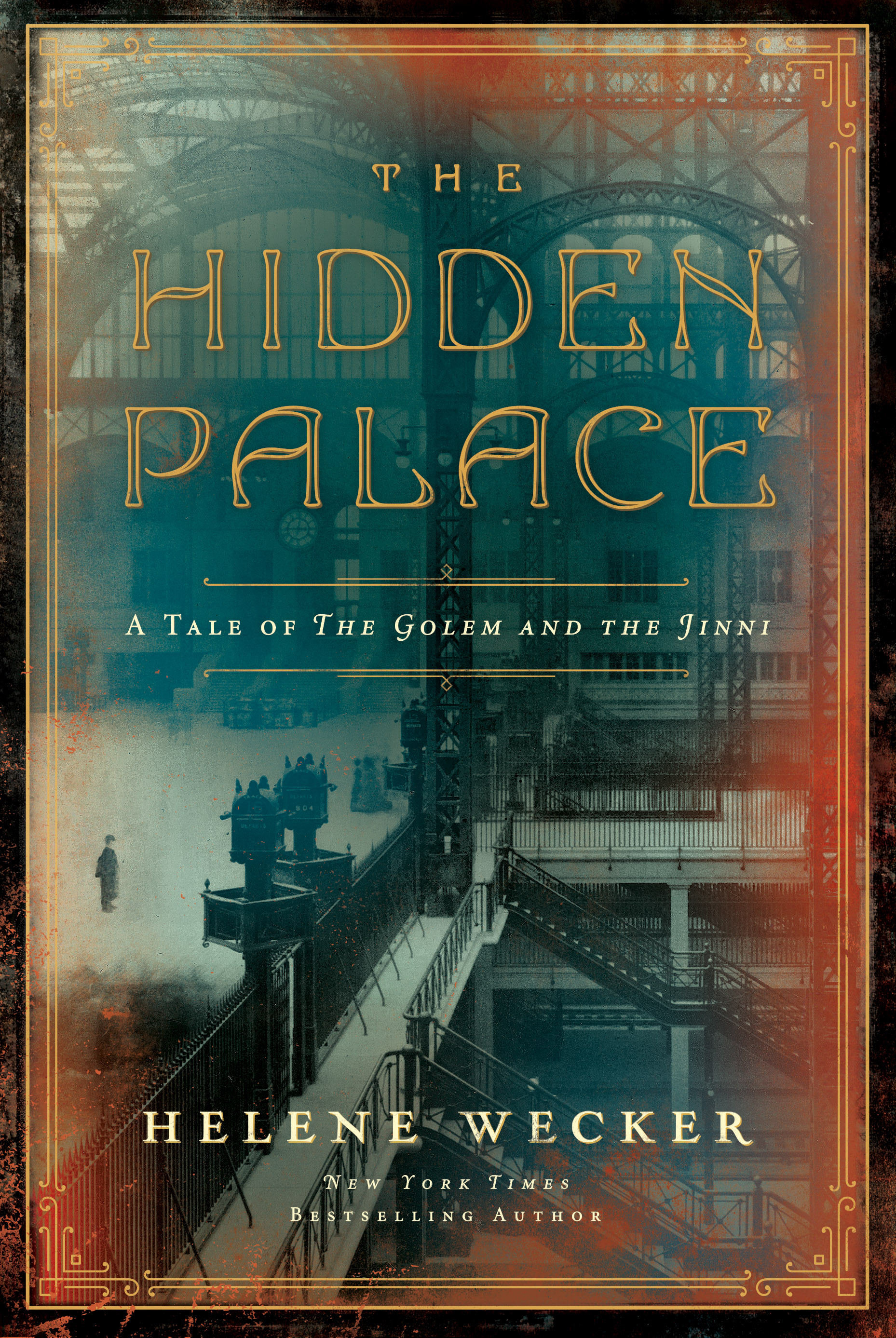
The Golem and the Jinni was a very good historical fantasy with a very character-driven focus.

It also had a very intricate plot with a lot of moving parts that don’t come into alignment until the end. That is still true in the sequel. We have our two main characters, the characters they touched before, a couple new ones… and a new golem and jinni. Just how they will fit in takes some time to be revealed, but it’s obvious that we’ve got some reflections of the main pair being set up.

And time is something this novel spends… pages with. It picks up about a year after the first book, with our happy-ending romance still stable, but they start growing apart as they struggle to hold their own identities, the identities they need in the human world, and their understanding of each other in balance. The last part of the novel is in 1915, but a lot of time is spent showing everyone changing through a decade and a half.

The climax of the novel is a bit like the first one: a cataclysm of magical shenanigans that draws attention, but keeps magic largely hidden from the modern world. The people at the center of it end up changed, but largely in less dramatic ways. The denouement is interesting, and seems like it could lead into a spin-off series. At the least, the door to more in this world is far more open than the end of the first book.

You could probably read this book first and pick up what’s going on. I don’t recommend it: The Golem and the Jinni is very good book and should not be missed. And this delivers the same degree of historical atmosphere, so don’t miss it either.

└ Tags: books, fantasy, history, reading, review
 Comment 

Dynasty

by Rindis on November 18, 2024 at 12:00 pm
Posted In: Books

I haven’t read Tom Holland’s Rubicon, but I also know the civil wars period better than the Julio-Claudians (I have to admit that the BBC production of I, Claudius is still the bedrock of my knowledge of the period).

This is still very much popular history, but it’s a very good one. Holland spends one hefty chapter detailing the rise of Rome, up through the assassination of Julius Caesar, with the next going into the Second Triumverate though Octavian being awarded the title “Augustus”, and the third the rest of Augustus’ career. The second half of the book is a second part, with four chapters roughly for the rest of the dynasty (that’s Tiberius, Caligula, Claudius, and Nero if you’re not quite up on your emperors).

Of course, there is much more here. The entire period is of power politics of the most personal kind. So, Holland does his best to introduce us to all the significant pieces, and trace them through to their various ends, often bloody.

There are also excursions to events away from Rome; we get a very good treatment of the Teutoburg Pass (and he thankfully give a footnote on the fact that Tacitus uses the word ‘saltus’, which can be ‘forest’ or ‘pass’, and the latter has been shown a correct by archaeology). And there’s a lot about how the Romans saw the world, virtue, and mores. All of which is needed to understand these figures.

There’s not a lot of hard detail, and away from the central player’s concerns, a lot is left out. But, this is history just about as thrilling as Robert Graves’ novels.

└ Tags: history, reading, review, Rome
 Comment 

Lost Module of Calthonwey

by Rindis on November 10, 2024 at 12:00 pm
Posted In: RPGs

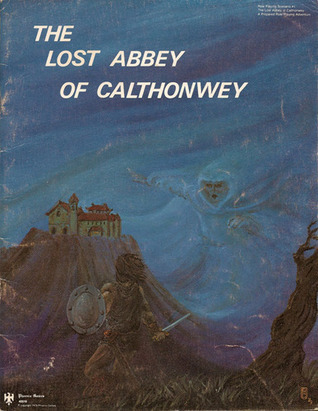
One of the lesser gaming hubs of early RPGs was Rockville, Maryland. Little Soldier Games started in a game store there, and Phoenix Games in a book store around the corner. Details are obscure, because there are contradictory statements, but publishing transferred from one to the other in 1979. Supposedly Phoenix was part of Little Soldier, but the title page of Lost Abbey of Calthonwey says Little Soldier is a division of Phoenix. As far as I know, this is R. Norman Carter’s only published work, but cover artist Bob Charette would do work for FGU.

Phoenix Games’ first (of two) adventure module is very early, and needs to be appreciated as such, being contemporary with, say, TSR’s T1 The Village of Homlet. Physically, it’s a great presentation: a 24-page booklet with a full-color cover, and a four-page two-color insert with all the maps. The last is meant to be pulled out for separate reference of the GM. Instead of a proper blurb, the back cover has a full player-facing background story, which is repeated (really, the other way around) at the start of the module, followed by the GM’s version.

The module says it’s for for any fantasy RPG, and lists six of them: D&D, Chivalry & Sorcery, RuneQuest, Tunnels & Trolls, The Fantasy Trip, and Legacy, which certainly covers the majority, if not all, of the systems available in 1979 (I had to look up Legacy myself—there’s a reason you’ve never heard of it). But don’t be fooled, the book is full of circumlocutions of D&D ideas (“a scroll that when read, will heal wounds that are considered serious”), but not ideas from elsewhere. There is a guide to terms that they use instead of various D&D-isms, some of which you wouldn’t need today, but Phoenix was obviously erring on the side of caution for various game terms. A final introductory piece is rather interesting: Each room description has a number next to the name, and that is keyed to a general description of what the walls, floor, and ceiling are made out of. It’s a neat idea, but not the most convenient I think, with eight different numbers to memorize. I think keying a color code on the maps directly (so you can see where the construction types change) would make that a great idea on modern maps, though that would have been a challenge on a two-tone map.

The room key is eleven pages, and generally gives good descriptions. Some places are just “empty”, but of course are keyed for the general construction type. More typical are things like “Bell Tower: The floor is covered with droppings. The rafters are 5 stories above the floor. Although the bells are still there, the ropes have rotted away. Ten large bats lair in the tower. These can deal but 1 point of damage, and will die if struck at all.” Some places could use reorganizing and separating into paragraphs (Chamber of the Head of Novices starts with talking about the ghost of such—important!—and then transitions to talking about the room, with no easy-to-find break to know where to start reading for that part).

There are creatures scattered about, and given short stat listings. However, before the room key, are about two-dozen people given descriptions (this is a bit over four pages). This is great, but also the point at which there are problems. There’s generally a particular place they should be encountered, but this is not attached to their descriptions, and therefore will only come out of the room key. While there are factions, which are nicely outlined, and relationships between people discussed, there’s nothing like an idea of if people venturing into the abbey will encounter them together or separate. Again, the room key helps, but reading through the personalities as prep work doesn’t give you enough.

In 1979 adventures are already starting to reach past dungeon crawls, and this module is no different. The background sets up three different factions in the abbey, and a few other things going on (a ‘pre-human temple’ has been found, with nothing more than a hook for GM expansion), but…. Problem number one: Two hundred years ago, evil got into the abbey, and the Bright Goddess eventually took it out of the world, and it has just returned, to a slightly different location. In one place you find out that there’s a 24:1 time compression going on, so (accounting for time before this happened) maybe five years have passed inside for all this. There’s no discussion of recent events—no sense of what’s happened just recently between the two primary factions. How/when did they notice they’re back in the normal world? How often are they encountering/fighting each other? How many have just been killed? How are they keeping their numbers up? When characters encounter some of these people, how/will they try and talk them into taking their side? It’s mentioned that they’ve reached an impasse, but not how or what has caused it.

In all, it tries to rise beyond the pure dungeon-crawl beginnings of D&D adventures, and doesn’t quite make it. It is, very much, a place like most early adventures. It is a place where things presumably have been happening, but haven’t. On the other hand, there is a page about what may be going on if some adventurers leave, and then come back. But it’s general, and more about moving encounters around.

Still, it’s good enough for a look, which makes it a shame that this has no current path to being republished. I have no idea where the rights to Phoenix Games’ materials ended up, or where the original author is.

└ Tags: gaming, reading, review, rpg
 Comment 

The Book of Lost Tales (Part 2)

by Rindis on November 2, 2024 at 12:00 pm
Posted In: Books

Despite having its origin in the same writing project as the first part, this is a fairly separate section and the break helps emphasize that.

In-fiction, the bulk of the stories here all intertwine even more than the first part. Out-fiction this is the part where the Tolkien’s writing project came apart, and for the most part we get drafts from separate (but related) notebooks, and papers inserted into the manuscripts. Part six is a delve into the overall scheme for the stories both before and after The Book of Lost Tales (not that this isn’t gone into elsewhere).

We get glimpses of Tolkien’s original thoughts that link elves to fairies, with elves fading, becoming smaller, and less substantial as the power of Men waxes. At various points Eriol, or Ælfwine (elf-friend) as he is later named, is hooked into actual history, early on before the Dark Ages, and later in the Eleventh Century.

All of this disappears later on, after further revisions take him further into his own lore, and away from a mythology that might have historically grown up on its own. This is for the best on many levels. The world and its stories are allowed to grow organically as they must, but there is also a racial snobbery lurking in these early versions where only the English have any true knowledge of the fay folk. The growth of the world also broadened its outlook. (If not as much as some may wish, it’s still a long step up from the Edwardian provincialism it started with.)

Similarly, Eärendil reveals the early roots of the stories. He comes up earlier, but part five is the forever unfinished (in any form) “Tale of Eärendil” which has its earliest seeds, with Eärendil being a Quenya name, but deriving from the Anglo-Saxon éarendil, and his story is decidedly a mythological-mode explanation of the evening star.

All this makes the later parts of the book scholastically interesting, though much of it is so fragmented between various drafts and outlines that pulling anything else out is challenging. Thankfully, Christopher Tolkien is a valuable docent, and guides us through these parts, helping us understand the ideas behind the later First Age.

The earlier parts of the book are far more complete, and would reappear later, and later versions are generally in the eventual Silmarillion. On their own, I found “The Nauglafring” also close its sources, echoing ideas of the Nibelungenlied. Personally, I found “Turambar and the Foalókë” very rough going, and “The Fall of Gondolin” only somewhat better, leaving “The Tale of Tinuviel” as one of the more engaging parts, which makes sense; there’s a lot of The Silmarillion that does not stick in my brain, but parts of the equivalent section do, so it’s a tale that certainly appeals to me more.

└ Tags: books, fantasy, reading, review
 Comment 

A Country of Vast Designs

by Rindis on October 25, 2024 at 12:00 pm
Posted In: Books

The subtitle “James K. Polk, the Mexican War and the Conquest of the American Continent” is on point. This primarily about Polk, and takes the view from the White House for the bulk of the book. After that in importance is the Mexican-American War, and then the dispute over Oregon.

I had initially expected more of a history of the Mexican-American War, but it’s really a political history of Polk. Which is an eminently sensible subject. I can remember him being pointed out in a high-school history textbook in what is usually a fairly ignored stretch. Polk came to office after an unexpected nomination, and had a very clear-cut list of major goals for the US, which he then proceeded to determinedly accomplish.

Merry starts out with background, giving a thumbnail of Polk’s early biography, and then more detail on his political background as a protege of Andrew Jackson. As a true dark horse candidate, the Democratic convention of 1844 is gone into with some detail along with the election, and then the selection of the cabinet.

Once in office, Polk is juggling several things at once, but Merry starts with concentrating on domestic issues, and then on the Oregon Territory dispute, leaving the Mexican-American War to be concentrated on in the later part of the book. All of this is largely told from the political point of view, so while what was going off in such far-off places as California and Veracruz is shown, it is done in sense of detail.

But, the point is to see how Polk went after his goals, and got them. His strategy with Britain and Oregon was one of close-mouthed brinkmanship. It worked, getting a good compromise solution, after scaring the rest of the cabinet with what seemed a likely war first. His reticence makes it much harder to figure out what his plans for Mexico were. It certainly looks to be the same modus operandi, just with an explicit threat of force by sending Zachary Taylor into disputed territory.

This turns into skirmishes, then a battle, and war. Generally, it was a war with popular support in the US, but the political fallout steadily erodes Polk’s influence in congress. This had started strong enough to help him pass his tariff act and other measures, but by the end of the war, ratifying a peace treaty was a very chancy thing. Merry’s evaluation of Mexico’s actions leading to war come rather later in the book, and generally this is one of the friendlier opinions of the US’s actions I’ve seen, but he is correct that Mexico did itself no favors. Of course, things were so unstable that I’m not sure I’d say there was a government you could negotiate with, but what there was refused to even talk. To one extent, it’s tempting to say that the proper course of action is to wait for a stable government, but there were no hints as to how long, if ever, that would take.

Also, the same process of American colonization-via-immigrants that happened in Texas was in the early stages of happening in California and Oregon, and if let drift would have ended about the same way. Polk certainly seemed to be willing to cut to the chase with a large cash payment that could also stabilize any government that accepted it (since it would let them pay troops and functionaries long enough to possibly get some momentum), but he was asking for more than anyone would accept. Worse than just not accepting this as a possible, much less good, idea, the Mexican government responded belligerently to all this. And so war came.

Through all of this is Secretary of State James Buchanan. I knew he was later a terrible president, but to plumb the depths, you need to look at his earlier career. Buchanan is a constant source of conflict with everyone else, and incapable of dropping an argument. After promising that he wasn’t seeking to be president himself, he starts maneuvering for a later nomination, and causes all sorts of extra problems and scandals. Polk’s main failing is that he has no desire for in-person confrontations, and never really brings the boom down on Buchanan, even after incidents where it was richly deserved.

Parts of this book were reasonably well known to me, but there was plenty here that was new. I certainly recommend this as an addition to any study of the Mexican-American War, as there’s a lot here. The writing is good, though the distant perspective sucks the life out of a lot of colorful figures.

└ Tags: books, history, reading, review
1 Comment
  • Page 15 of 96
  • « First
  • «
  • 13
  • 14
  • 15
  • 16
  • 17
  • »
  • Last »

©2005-2026 Rindis.com | Powered by WordPress with ComicPress | Hosted on Rindis Hobby Den | Subscribe: RSS | Back to Top ↑