Rindis.com

All my hobbies, all the time
  • Home
  • My Blog
  • Games
  • History

Categories

  • Books (503)
  • Comics (10)
  • Gaming (917)
    • Boardgaming (673)
      • ASL (154)
      • CC:Ancients (83)
      • F&E (78)
        • BvR – The Wind (26)
        • Four Vassal War (9)
        • Konya wa Hurricane (17)
        • Second Wind (5)
      • SFB (78)
    • Computer games (162)
      • MMO (77)
    • Design and Effect (6)
    • RPGs (66)
      • D&D (25)
        • O2 Blade of Vengeance (3)
      • GURPS (32)
  • History (10)
  • Life (82)
    • Conventions (9)
  • News (29)
  • Technology (6)
  • Video (49)
    • Anime (47)
  • Writing (1)

Patreon

Support Rindis.com on Patreon!
Become a patron at Patreon!

Other blogs:

RSS Inside GMT

  • Foxes and Lions (Part 3): Military Matters, Captains, and Condottieri June 12, 2026

RSS Playing at the World

  • Playing at the World 2E V2 Arrives May 5, 2025

RSS Dyson’s Dodecahedron

  • Hollowshore Cairn June 17, 2026

RSS Quest for Fun!

  • The Expense Post May 24, 2026

RSS Bruce Heard and New Stories

  • Pain, Exhaustion, and Morale in D&D BECMI June 7, 2026

RSS Chicago Wargamer

  • The 2 Half-Squads - Episode 310: Cruising Through Crucible of Steel January 27, 2023

RSS CRRPG Addict

  • Yendorian Tales: Here There Be Dragons June 15, 2026
SF&F blogs:

RSS Fantasy Cafe

  • The Leaning Pile of Books May 24, 2026

RSS Lynn’s Book Blog

  • Summer of Horror: Can’t Wait Wednesday: Sleepers in the Snow by Joanne Harris June 17, 2026
ASL blogs:

RSS Sitrep

  • Cardinal ASL Sins March 18, 2026

RSS Hong Kong Wargamer

  • FT114 Yellow Extract After Action Report (AAR) Advanced Squad Leader scenario April 16, 2025

RSS Hex and Violence

  • This still exists? March 25, 2025

RSS Grumble Jones

  • YouTube AAR for Critical Hit's Gettysburg Turning Point 1863 - ID4 At Will Fire June 16, 2026

RSS Desperation Morale

  • How to Learn ASL March 16, 2025

RSS Banzai!!

  • October North Texas Gameday October 21, 2019

RSS A Room Without a LOS

  • [Crossing the Moro CG] T=0902 -- Rough start July 18, 2015
GURPS blogs:

RSS Dungeon Fantastic

  • Rules & Rulings from Session 224 June 16, 2026

RSS Gaming Ballistic

  • B-Scale: Damage That Scales from Tardigrades to Kaiju June 5, 2026

RSS Ravens N’ Pennies

RSS Let’s GURPS

  • Review: GURPS Realm Management March 29, 2021

RSS No School Grognard

  • It came from the GURPS forums: Low-Tech armor and fire damage January 29, 2018

RSS The Collaborative Gamer

  • Thoughts on a Town Adventures System January 18, 2022

RSS Don’t Forget Your Boots

  • GURPS Supers Newport Academy #6: “Old Friends, New Again” June 7, 2026

RSS Orbs and Balrogs

  • Bretwalda - Daggers of Oxenaforda pt.4 - Fallen King May 27, 2017

The Missouri Compromise and Its Aftermath

by Rindis on August 30, 2024 at 12:00 pm
Posted In: Books

This is a scholarly look at American politics from roughly 1818 to 1832.

Maybe a bit too scholarly for me. Many parts of the book are very finely argued, and I tended to lose track of what the argument was. It is obvious in places that he also arguing for a different interpretation on events than has been common, but I’m not at all familiar with what he’s arguing against.

Even with my limitations, it was a very interesting read. One of Forbes’ main contentions is that President Monroe had more control of events than he is credited with. Apparently the usual look at the era was that he was nearly sidelined while events like the Missouri Compromise were going on. Here, the contention is that Monroe was aware that if he stepped into the debate, it would polarize the sides to the point where compromise was impossible, so he worked entirely behind the scenes to maneuver events to a stand down on all sides.

Forbes presents early American politics as a tension between ideological conflicts (generally, the role of the Federal government), and sectional ones (largely slavery). This is an unstable situation, as in the long run most political conflicts are going to want to turn regional, but the goal of several canny politicians of the era was to keep non-regional issues in play and force the parties into national, instead of regional, systems. This breaks down later, with the demise of the Missouri Compromise, and the rise of the Republican Party, which is strongly regional.

There is also a lot of look into the thoughts behind what is going on and being said, particularly, of course, various defenses of slavery. South Carolina comes in the for extra-special snowflake award as the bigger planters there generally felt that any change to their society would bring about utter collapse. This leads South Carolina to being in the lead of defenses of slavery, and more importantly (to them), the lead in making sure the federal government does as little as possible. It was felt that letting the government go around building roads, improving waterways, and just, you know, making commerce better for everyone would inevitably cause the kind of changes that they were desperate to avoid.

So, while it often looks like the subject of slavery had disappeared from politics in the 1820s, the argument over “internal improvements” and tariffs that lead to the Nullification Crisis are powered by a fear of change in the state with the highest proportion of black slaves to free whites in the country.

This book was a bit much for me as it juggled more things than I could entirely keep track of, but it is decidedly a well done scholarly look at the subject, and worth reading (along with other works) by anyone who wants a better understanding how the initial Founding Fathers’ idea that slavery would go away on its own failed.

└ Tags: books, history, reading, review
 Comment 

Ancillary Mercy

by Rindis on August 22, 2024 at 12:00 pm
Posted In: Books

The third Ancillary book is a direct follow on to Ancillary Sword, picking up very shortly after the that one. The start re-introduces everything going on, which I needed.

However, while much more of a piece with the second book than it was with the first, plot-wise, we do have another change in direction. Ancillary Sword was much about a collision of cultures, and Ancillary Mercy is more about “When in the course of human events….”

This is also effectively circling back to the central points of Ancillary Justice. Much of human space is controlled by the Radch, which is headed by Anaander Mianaai. Multiple Anaanders, as they’re all clones of the original, and also act as provincial governors. And, for an unknown amount of time they’ve been in a violent argument with themself.

One of the results of this argument was a dead military ship, with one part of its AI surviving. A less homicidal part of Anaander put Breq (the surviving part) in charge of the system where the action of these last two books happen, but that background pops back to being important. Breq isn’t cheering for one part of Anaander to win over another, she’s wanting them all gone. Large powerful systems that survive a long time have an intellectual momentum that makes it hard to conceive of life without them. Leckie has done well enough here to give the reader some of the same surprise as the other characters when Breq reveals that her goal is to splinter off this system from control of any version of Anaander Mianaai.

Like the first book, events just go on for about half the book before this comes up. This isn’t to be any great crusade to ‘liberate’ Radch space; Breq’s concerns continue to center on the here-and-now. This also isn’t nearly the revelation that the discussion of personal identity in Ancillary Justice was, so this book holds a lot less weight. That said, it’s closer in spirit than Sword was to the first book, and also refuses to give pat answers to the questions it raises.

└ Tags: books, reading, review, science fiction
 Comment 

Wedding of the Waters

by Rindis on August 14, 2024 at 12:00 pm
Posted In: Books

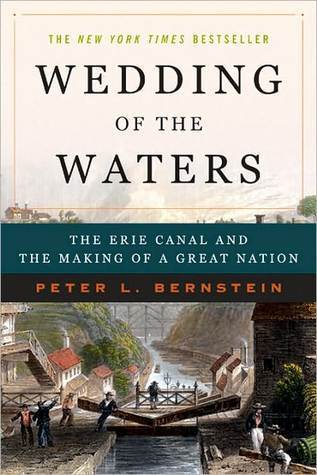
For a long time, waterways were the only meaningful passages from one place to another. Roads might do in a pinch, but water was much faster and easier. Canals have been used throughout history to get this fact to work for you when nature had been ungenerous. The Erie Canal is one of the more spectacular successes of these projects, and important in the early history of the United States. Bernstein’s Wedding of the Waters is a good popular history of the creation of a 363-mile long canal through upstate New York.

He starts out with lots of background, including the general mechanics of canals, how and why locks work, and various high points in the development of canals, including the Manchester Canal in England, which inspired a lot of further canal building at the time. This section is definitely appreciated, but I wished for more. There’s a good map of the canal, and a side elevation of the canal showing how it goes up and down, and where the locks are, but that is it. No general diagrams of a section, or the locks, or illustrations/photographs of some of the more impressive features. And some of it is really hard to picture on your own.

After the introductory parts, Bernstein starts talking about the idea of a canal linking the East Coast with the interior, namely the area across the Alleghenies. The Founding Fathers, and Washington in particular were aware of a need to tie the economy of the area to the east so that there would not be a drift toward independence, or dependence on whoever held the Mississippi. Washington tried a scheme to clear the Potomac towards such a goal, but did not get far. Meanwhile, the fact that there was a practical route across New York to the Great Lakes was becoming more obvious. An initial attempt was to clear the path of the Mohawk River westwards, but the Western Inland Lock Navigation Company soon found it was spending all the money it could raise on trying to keep a relatively short section of riverbed clear. (There was also a Northern Inland Lock Navigation Company to improve conditions between Albany and Lake Champlain, but I can’t find any mention of its fate.)

These false starts, thanks to a number of influential people, fail to stop all support for such schemes, but instead focus support on the most ambitious option of all: Building a brand new waterway the entire length of modern New York state. One of the nice parts of the book is the earlier sections talk about the evolution of these ideas through colonial times as well as post-Revolution. Bernstein even talks about the initial exploration of the Hudson (which was part of looking for the fabled Northwest Passage). But of course the later parts get more detail and attention, as they focus on the actual subject of the book.

Bernstein also points out that there was no one in America at the time who could be termed a Civil Engineer, even by the standards of the day. Other than the politicians working for budget appropriations, everyone involved in the project is an amateur. A number of different technical problems are discussed, and some of them were solved by workers on site, and we’ll never know who came up with the idea.

There is, of course, a lot of discussion of the politics involved. New York had the most developed political scene of the era in the US, so the infighting was also more developed. First, fighting over the proposal, and if it should be funded, then when things went well, fighting over the credit, and who is in charge. As I have been reading a few other books on the era, there are names who appear elsewhere, especially De Witt Clinton, who was the person who pushed through plans for the canal.

There’s also a good amount of material on travel through the area before the canal, and what travel on the canal was like. Finally, there is discussion of the financial implications. The entire motivation for the canal was of course financial, so a good accounting of its effects is essential. Like the technical side of the canal, this is limited by its broad-market aims, and the relative lack of records of the time. There’s good discussion of the flow of goods along the canal, and the fact that England started importing food from the Midwest in a major post-Napoleonic economic shift.

Overall, it’s an informative book, but I did find it lacking, especially on really showing the physical side of the canal. It left me wanting more, which is often a good thing, but here I really felt I’m wanting things that should have been in the book.

└ Tags: books, history, reading, review
 Comment 

Where Are We?

by Rindis on August 10, 2024 at 12:00 pm
Posted In: RPGs

The second Avatar trilogy module came out about a month after FRE1 Shadowdale, and naturally picks up right from the end of that. The party is imprisoned in Shadowdale and accused of murdering Elminster (don’t worry, he’s back as an excessively annoying deus ex machina by the end of the module).

It of course starts with a needed repeat the general information and plot of the first module, including the magical chaos tables, as magic users are still as much a danger to themselves as anyone else. Also, as before it’s a heavy-handed railroad, though there’s a bit more lore this time. The big change that the entire cast from the novels are now important to the module. FRE1 only used Midnight, with the others as backup for small parties. Now they’re all used to move the plot forward. Without the players getting to interfere. Notably, each chapter has “offstage events” to tell the DM what’s going on away from the tracks he’s in charge of; this is nice as it lets DM have these events in mind when these other threads catch up to the players later.

Back to our plot, things start very poorly, with all of Shadowdale baying for the PC’s blood, leading to a kangaroo trial of the PC’s being guilty for being on the scene and a lack of other available suspects. It would be better if the text pointed up that emotions are running high, and everyone is being carried away on a wave of hysteria, including Mourngrym, who should frankly know better. Something about how any explanations the characters try to give get shouted down and “refuted” by emotion. (Also, just how is a party in the 5-8 level region supposed to have killed 26th level Elminster and cleanly disposed of the body….) But no.

So the second real event of the module is two of the novel NPCs helping spring the characters before they can be executed in the morning, and they (hopefully) flee the area on boat going down the Ashaba River; and this trip then consumes too much of the module. Railroading is in full force here, all attempts at alternate plans the PCs may have are smashed away. Now, fleeing by boat is about as logical an idea as there is going to be, since the speed of travel won’t be bad, and the river won’t get tired. I’d think with a bit more work (and page count, admittedly) you could schedule out just how the Shadowdale militia tries to cover the various places the PCs could head for, how long it’d take for the militia to get there ect, and set up a game of cat-and-mouse for this part. Past the immediate ‘get out’ motivation, it is assumed the party (prodded by Midnight, if nothing else) will be hunting the Tablets of Fate, one of which is thought to be in the city of Tantras.

Wait, where?

Tantras is a town on the east shore of the Dragon Reach, just shown on the detailed maps of the original grey box. But there is no write up of the place in the Cyclopedia of the Realms at all. Compared to the instantly-recognizable locales of Shadowdale and Waterdeep for the other parts, why here? Well, a partial answer is that this part was originally meant to go to the city of Ravensgate, just down the coast, but that had just been handed over to the RPGA for development, and wrecking it would be a no-no. That said, while Ravensgate is larger… it also has no entry in the Cyclopedia so it still doesn’t fit with the other two locales. Admittedly, no other cities (as opposed to regions/countries) had any ‘name recognition’ at this point.

To get there, the general idea is the party should go down the river to the port of Scardale, and then cross the Dragon Reach. And despite all the railroading, don’t worry about if they go there, because some high-power assassins show up on pegasi, and there is a forced capture of the party. The assassins then take the party to… Scardale. So the party is imprisoned again, and aided in a jailbreak again, and sneak around an occupied town looking for a way out. (Looking for a way in—to get at a ship—would have also been a good direction. Just sayin’.)

At the end of Shadowdale Bane was “killed”, and now he’s taken over Fzoul Chembryl of the Zhentarim, and is back to plan A: recover the Tablet of Fate he hid in the Temple of Torm in Tantras. To do this, he (as the God of Assassins) kills every assassin in the Realms to power himself up into a kaiju and go stomping off to Tantras. (This is part of the point of the series, as there were to be no assassins in 2e, and instead of just waiting for PHBR2 The Complete Thief’s Handbook next January—with an assassin kit—TSR killed them; in the Forgotten Realms at least. No mention of what to do in the case of one of the PCs being an assassin is made….)

Torm’s avatar is in Tantras, and has his followers power him up for big kaiju fight in the bay (according to the wiki, this kills Torm’s followers, but I didn’t note this being mentioned in the module). Leaving the party to sneak into his temple and find the Tablet of Fate, and then go ring an ancient bell to put up a barrier around the town just as the two kaiju destroy each other in a massive explosion (was TSR getting summer blockbuster envy?).

There’s about two thirds of a page of suggestions on what to do next. The end of it suggests a number of threats to Tantras and how the party could work to keep Tantras an island of stability during the Time of Troubles. Frankly, that sounds more interesting; there’s a lot of work a team of intermediate-level adventurers could do without being bludgeoned onto the tracks every step of the way.

Lore-wise, there’s more here than in Shadowdale. A few locations along the Ashaba river are described, including the Pool of Yeven (marked on the original maps, but given no entry in Cyclopedia of the Realms) which gets some background that I would take notes on for possible use in a regular campaign. We get a map of the Temple of Torm in Tantras, which isn’t a great design, but it will work for the module, and gives an idea of more normal times in it. Two new spells (one unique to Elminster, but it is neat), three new magic items, and one new monster. The poster sheet has a full 3D map of the Tower of Ashaba, and maps of Scardale, Ashabanford, and Tantras (the former two got a column the Cyclopedia, but no maps). They should probably have indicated the limit of the barrier that protects Tantras from being blown away.

Finally, a major problem with this series is alluded to in my previous review, but I only realized while writing this that what was happening is that TSR was in “NO SPOILERS!” mode with DMs here. If elements of the overall plot were not introduced in the equivalent novel, they weren’t revealed in the modules either. This means that a DM running these as they came out had to run them blind (I think the novels were generally simultaneous releases); no knowledge of the overall plot, who’s important, and the actual scheme of the bad guys is given. In Shadowdale, we get told the effects of the Time of Troubles, that the Tablets of Fate were stolen (which list what the jobs of all the gods are; still no idea if you could sneak in some “corrections”, or if it mystically does it automatically, or why there isn’t a backup). Bane is the bad guy, but we don’t find out until Tantras that yes, he did steal them, instead of just taking advantage of the chaos. And we still don’t know the plan. Did he expect Ao to toss everyone to the mortal realms? Is he trying to “edit” the tablets? What’s his goal beyond being an evil bad guy?

└ Tags: D&D, Forgotten Realms, gaming, reading, review, rpg
 Comment 

The Circus of Dr. Lao

by Rindis on August 6, 2024 at 12:00 pm
Posted In: Books

This is a bit complicated.

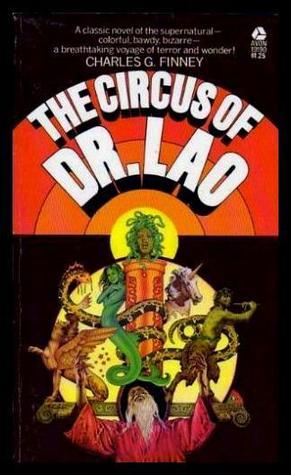
First, at a hundred pages (plus an appendix that really is part of the novel) this is pretty much in novella territory. Really though, it’s a jumble of short stories with the same inciting event.

This is contemporary fantasy (keep in mind, “contemporary” when it was written was 1935), while the Hollywood adaptation The Seven Faces of Dr. Lao was shifted to western/fantasy. (Given everything, it was probably a lot easier to do it as a western than set in 1935 for ’60s Hollywood….) The movie adds an overall plot to tie things together, and sadly, you see all the stitches of the graft clearly, as it feels foreign to a lot of the other incidents that come from the book. But, I’m a very plot-centric person, so I actually do appreciate that attempt.

That makes this a really hard book to talk about. Dr. Lao’s circus arrives, seemingly out of nowhere, in a small Arizona town, various people decide to visit this small show, and react to what they encounter there. That’s nearly the entire book. The secret is what all those interactions are, and frankly, few of them have any kind of closure, making much of the book to feel like jumbled incidents.

It does seem like Finney had a few things to say, but I’m not entirely sure what, though much revolves around the inability to recognize the fantastic when it comes knocking on your door. A screed against a lack of sense of wonder in this materialistic world.

└ Tags: books, fantasy, reading, review
 Comment 
  • Page 17 of 96
  • « First
  • «
  • 15
  • 16
  • 17
  • 18
  • 19
  • »
  • Last »

©2005-2026 Rindis.com | Powered by WordPress with ComicPress | Hosted on Rindis Hobby Den | Subscribe: RSS | Back to Top ↑