Rindis.com

All my hobbies, all the time
  • Home
  • My Blog
  • Games
  • History

Categories

  • Books (503)
  • Comics (10)
  • Gaming (917)
    • Boardgaming (673)
      • ASL (154)
      • CC:Ancients (83)
      • F&E (78)
        • BvR – The Wind (26)
        • Four Vassal War (9)
        • Konya wa Hurricane (17)
        • Second Wind (5)
      • SFB (78)
    • Computer games (162)
      • MMO (77)
    • Design and Effect (6)
    • RPGs (66)
      • D&D (25)
        • O2 Blade of Vengeance (3)
      • GURPS (32)
  • History (10)
  • Life (82)
    • Conventions (9)
  • News (29)
  • Technology (6)
  • Video (49)
    • Anime (47)
  • Writing (1)

Patreon

Support Rindis.com on Patreon!
Become a patron at Patreon!

Other blogs:

RSS Inside GMT

  • Foxes and Lions (Part 3): Military Matters, Captains, and Condottieri June 12, 2026

RSS Playing at the World

  • Playing at the World 2E V2 Arrives May 5, 2025

RSS Dyson’s Dodecahedron

  • Barrow of the Great Mothers June 16, 2026

RSS Quest for Fun!

  • The Expense Post May 24, 2026

RSS Bruce Heard and New Stories

  • Pain, Exhaustion, and Morale in D&D BECMI June 7, 2026

RSS Chicago Wargamer

  • The 2 Half-Squads - Episode 310: Cruising Through Crucible of Steel January 27, 2023

RSS CRRPG Addict

  • Yendorian Tales: Here There Be Dragons June 15, 2026
SF&F blogs:

RSS Fantasy Cafe

  • The Leaning Pile of Books May 24, 2026

RSS Lynn’s Book Blog

  • Booking Ahead/Weekly Wrap Up June 14, 2026
ASL blogs:

RSS Sitrep

  • Cardinal ASL Sins March 18, 2026

RSS Hong Kong Wargamer

  • FT114 Yellow Extract After Action Report (AAR) Advanced Squad Leader scenario April 16, 2025

RSS Hex and Violence

  • This still exists? March 25, 2025

RSS Grumble Jones

  • YouTube AAR for Critical Hit's Gettysburg Turning Point 1863 - ID4 At Will Fire June 16, 2026

RSS Desperation Morale

  • How to Learn ASL March 16, 2025

RSS Banzai!!

  • October North Texas Gameday October 21, 2019

RSS A Room Without a LOS

  • [Crossing the Moro CG] T=0902 -- Rough start July 18, 2015
GURPS blogs:

RSS Dungeon Fantastic

  • Rules & Rulings from Session 224 June 16, 2026

RSS Gaming Ballistic

  • B-Scale: Damage That Scales from Tardigrades to Kaiju June 5, 2026

RSS Ravens N’ Pennies

RSS Let’s GURPS

  • Review: GURPS Realm Management March 29, 2021

RSS No School Grognard

  • It came from the GURPS forums: Low-Tech armor and fire damage January 29, 2018

RSS The Collaborative Gamer

  • Thoughts on a Town Adventures System January 18, 2022

RSS Don’t Forget Your Boots

  • GURPS Supers Newport Academy #6: “Old Friends, New Again” June 7, 2026

RSS Orbs and Balrogs

  • Bretwalda - Daggers of Oxenaforda pt.4 - Fallen King May 27, 2017

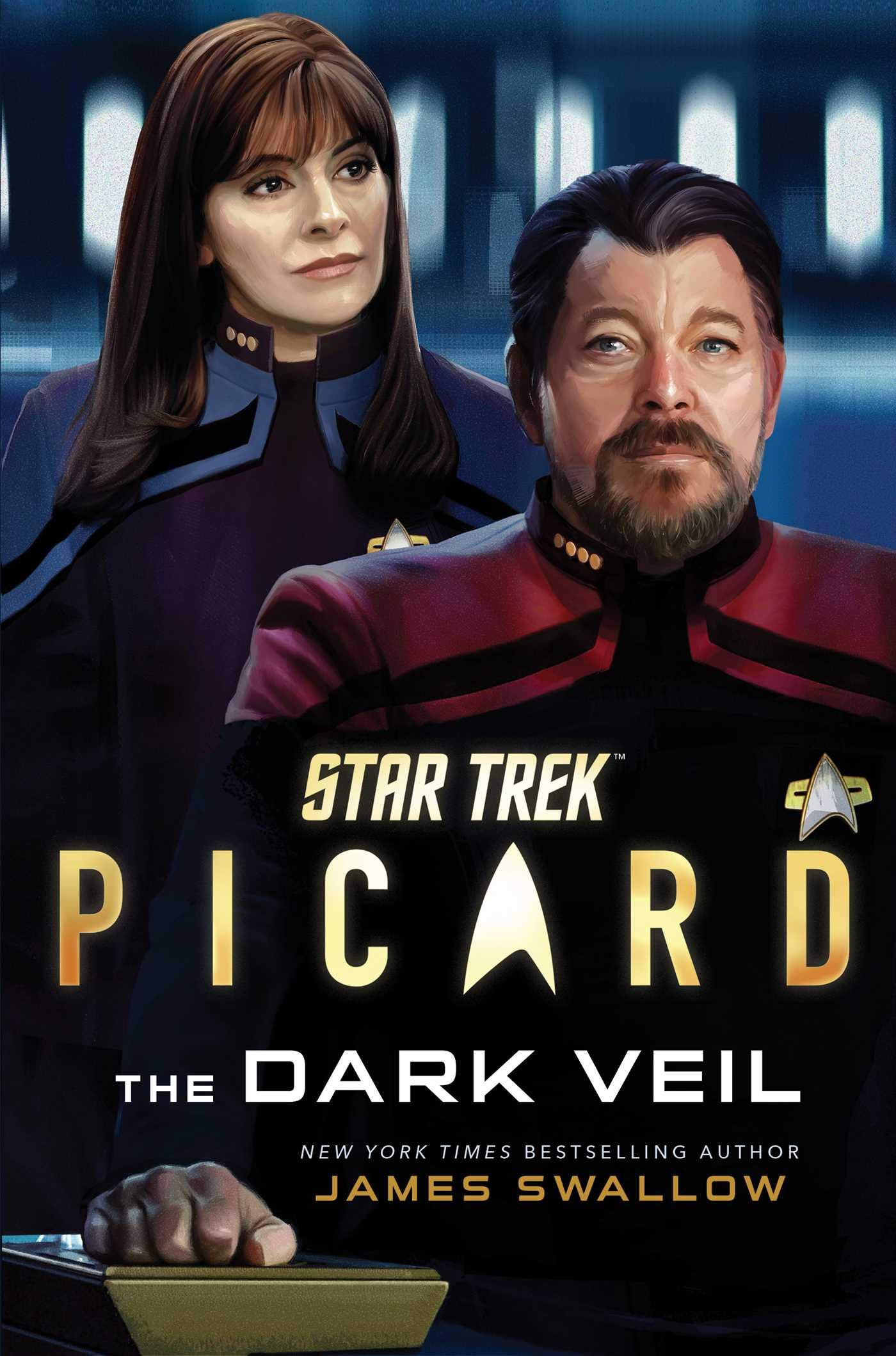
The Dark Veil

by Rindis on August 31, 2025 at 12:00 pm
Posted In: Books

The second Star Trek: Picard novel is more successful as a story, but this is at the price of it being less successful as a prequel.

For those who kept up with post-series novels over the last twenty years (I haven’t), there is apparently much familiar here, as characters and elements are taken from the Titan novels. This explains why some characters seemed to be a bit glossed over, as they’re guest-starring here. And this is in the revised continuity, so it’s not entirely tied in with those.

This is 2386, a year after the synth revolt on Mars, and thirteen years before season 1 of Picard. Riker is captain of the USS Titan, and dealing with the Romulans. That had me thinking it would explain just why there’s a wrecked Borg cube in Romulan space, but no. It does tie in with Picard, but the threads are more tenuous, and in keeping with the Romulans, the real tie in does not show on the surface.

The good news is that it feels like a fairly strong Star Trek adventure. Seeking out new worlds and new civilizations. Encountering the unknown, and getting to know a bit more about ourselves. In general, the Romulans are well handled here, from the honorable and professional Captain Medaka to the Jazari. They’re a MacGuffin alien of the week in one sense, but given the length of a novel, Swallow does a good job giving a bit of depth, and are really well handled.

If you’re looking for explanations of the background of Picard, this novel will disappoint. It doesn’t more than hint at Riker and Troi’s decision to retire to a largely uninhabited planet, nor get at some of the bigger parts of the series, though it does borrow one to use as a natural part of the novel, though the explanations are all in the series itself. But it is a satisfying novel of Riker at his prime as an independent captain.

└ Tags: books, reading, review, science fiction, Star Trek
 Comment 

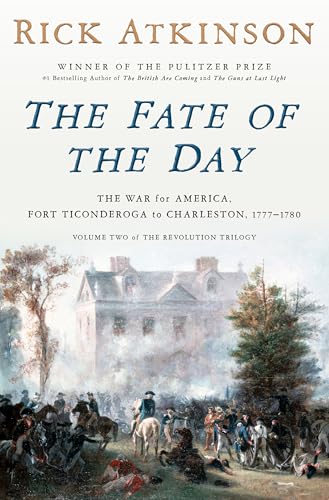
The Fate of the Day

by Rindis on August 23, 2025 at 12:00 pm
Posted In: Books

The second book of the Revolutions trilogy is a rarity for me. I actually read the first book early enough to be eagerly anticipating the release of the second.

In general, it has lived up to the anticipation. It does give me some feel of disjointedness, compared to the first book. The secondary reason for that is probably just my own memory of the first book cutting things out to make more sense of it.

The primary reason is of course that the war continues to expand. More people and more places are continually being drawn in, pulling you ever farther away from the nominal centers of gravity of Washington and the Continental Army, and the two Howes.

We start at one of those far-distant places on the fringe of events: France. The curtain rises on the court of Versailles, then moves over to Benjamin Franklin, ensconced in Paris, making a memorable impression, and helping slowly convince France that the war in America is worth intervening in, lastly, we go to Bordeaux, where an excitable young Lafayette is preparing to join the war personally.

French, and Spanish, involvement in the revolution is a continuing thread through the entire book. But, the full scope of this isn’t explored, only what is directly pertinent. We get a one-sentence notice of the loss of all French holdings in India. But there is more on the various campaigns going down into the Caribbean, and a bit on Spain’s desire to get a couple of treasure fleets in before risking any sort of action, and their desire to regain certain territories… which would turn into a problem later. Now, it’s more a passing mention.

The main action starts up at Ticonderoga, the fort successfully taken and held by the Continentals earlier. Now, there’s a new British army coming down from Canada, and the defenses are woefully ill-prepared. Compared to the desperate struggle a year ago, Fort Ticonderoga falls easily. The way is open to go down the Hudson River and join up with the forces already in New York.

This does not happen, for reasons given in almost any history of the war, as it’s one of the critical points of the war. Burgoyne is now at the end of a very long supply chain, and help is not coming from the south, as Howe is off in Pennsylvania, driving the rebels away from their capital of Philadelphia. The reasons for this… are hard to understand, since a link up was approved as part of the plan in advance, but so was the offensive out of New England, and no one seemed to really think about the fact that the two goals were at odds with each other.

Germain’s success turns into one of the two real rebel successes in this volume, with his side operations being beaten back, and then his stalled army finding itself sieged and forced to surrender. The other success is getting France to join in; overall even more significant, even if the immediate effects look like a number of missed opportunities and failed naval operations. The fact is that Britain now had to protect itself on both sides of the Atlantic, seriously hampering its naval position, and worry about the various sugar islands in the Caribbean, spreading troops afield just when they need to be concentrated in the colonies.

Covering from 1777 to 1780, the later parts of the book cover the switch to “Southern Strategy” by the British. With every move in the northern colonies stymied by Washington’s army, it is one of the few ways to conduct an offensive, especially with the shortage of troops with which to conduct an offensive. I’m used to hearing about the fall of Charleston (which is the end of this book) as the opening of the Southern Strategy, but here we get to see the seizure of Savannah the year previous. D’Estaing tries to retake it, but that is one of the missed opportunities. The real point is that taking Savannah is nearly synonymous with taking Georgia as a whole, and Charleston/South Carolina is just rolling up from that flank, and Washington’s army is a long ways away. Now, if the British can just get the Loyalists armed and organized, and pointed in the right direction….

Outside the military plans, maneuvers, successes, failures, and many excellently described battles, we also get to see the Continental Army start to turn into a real organization. Money is an ever-mounting problem, and that is gone into as well. But we see a disastrous supply situation at Valley Forge get reformed, and the troops start getting drilled. Both of these are because of characters who are generally remembered today, at least by any Revolutionary War buff, and Atkins does well with them, and everyone else he touches.

There is more than a bit of “middle book syndrome” going on here. It is nicely bookended by events with major repercussions, and plenty of importance happens in between. But the book does feel like it doesn’t quite gel into a whole. As mentioned at the beginning, that’s because the scope has widened, and while Atkinson is successfully keeping a lot of balls in the air, there’s a lot of balls to keep track of. Still, it’s an enjoyable read, and recommended to get more detail on a period of military stalemate.

└ Tags: books, history, reading, review
 Comment 

The Indignation of Haruhi Suzumiya

by Rindis on August 15, 2025 at 12:00 pm
Posted In: Books

The eighth Suzumiya book is structurally different from before. The series has been a combination of short story collections and novels. This time, we get two novellas.

The first one circles back around to the start of the series and the fact that the SOS Brigade is using the Literature Club’s room, and Nagato is the only member of the club. So, the student council suddenly pays attention to them again, and the SOS Brigade has to do something literary. From the notes, it seems like part of the inspiration was to present some writing by Nagato that Tanigawa had already done once. Overall, that and Kyon’s story are nice, but I didn’t care that much for the overall story.

The second novella is a bit more typical, if there is such a thing for this series. The mystery of dogs suddenly avoiding an area is presented to the characters, and the mystery goes through different beats, as answers do not immediately present themselves. Not that the story really gets a chance to pick up much weight. After a bit, there’s another go around, and we get to the heart of the matter, and the fact that there will be a solution is obvious, and that solution follows very quickly.

Still, everyone is nicely in character, and neither of these were expanded to a full novel which they couldn’t support. Generally, I’m happiest with the novels, and this continues with the trend.

└ Tags: books, contemporary fantasy, reading, review
 Comment 

Spice and Wolf 2

by Rindis on August 7, 2025 at 12:00 pm
Posted In: Books

The second book of Spice and Wolf is also the second half of the first season/cour of the original anime adaptation (I haven’t seen the recent one yet), and again that follows this pretty closely.

The central plot once again centers around medieval monetary shenanigans. Instead of money changing, our duo gets into gold smuggling. In essence, this is a “caper” story, though it’s not allowed to really operate as such, and the style and mood stay rooted in Lawrence’s merchant ethos and financial worries.

And utter financial ruin is the motivation here. A good deal goes very sour, a merchant house is on the verge of ruin, and may well take Lawrence with them.

Meanwhile, we get more elaboration, rather than change or progress on the relationship between Lawrence and Horo. For reading, start at the start, not here, but if you’ve seen either anime series, I’m sure everything will be familiar enough to be able to drop in and see Norah.

└ Tags: books, fantasy, reading, review
 Comment 

The Prize

by Rindis on July 30, 2025 at 12:00 pm
Posted In: Books

I never got to see all of it, but the 1992 PBS miniseries on The Prize was very good, and was part of what launched this book to superstar status. That, and coming out right after the First Gulf War didn’t hurt at all.

In fact, a little too close to the war. The end of the miniseries actually a very good section on fighting all the oil well fires Saddam Hussein left behind when forced out of Kuwait. The book talks about the destruction, but doesn’t actually get to the recovery effort. I get the idea that largely happened between the writing of the book and the production of the series.

What we do get is a history of big companies and bigger personalities from about 1846 to the Gulf War. As you might expect, this history breaks into several sections, and Yergin does a good job of presentation of them. Thanks to touching on other subjects of long fascination and study, his five chapters on World War II were something of a highlight, especially since he takes a long hard look at Germany and Japan’s pre-war maneuvering around something that had already been made abundantly clear was essential. Particularly interesting was the Roosevelt administration’s internal struggles over when and if to subject Japan to an embargo. Naturally, as with anything with this much infighting, the eventual answer is not what you’d expect. Oil wasn’t embargoed, but all Japanese assets in the US were frozen, and they had to apply to the government for concessions to be allowed to use their own money (after stating what it would be used for). Since the man in charge of letting the concessions was a big proponent of an embargo, he didn’t let them use their assets for anything.

The chapters on the ’50s and ’60s are more laying the groundwork for the part on the ’70s, which of course is one of the big centerpieces of the book. After WWII there is a continual glut of oil on the market. Oil (gasoline) consumption is shooting up, and everyone’s afraid of existing, and necessarily finite, production fields running out, but exploration for new oil fields keeps finding more faster than demand can go up. Everyone (especially new Middle Eastern countries) want in on the money to be made producing something everyone wants, so supply stays high, and the various producers are fighting to provide the best deal.

This eventually changes; OPEC isn’t any better at controlling production when formed, but eventually agreement comes together, and then Arab-Israeli Wars provide the will. Also, the glut has come to an end. Enough oil is still being produced, but just barely, and the various threats to supply have an immense effect. Supply and demand being what it is, this provides incentive for further exploration and production, and Alaska and North Sea oil prevent the Iran-Iraq War from derailing global supply security again.

While Yergin does provide some good numbers as he goes, I really wish he’d sprinkled a few charts and graphs around, especially for this part. Being given a number at one point, and then another a chapter or two later, and knowing that yes, they are different, isn’t enough. I’d like to see some more compiled statistics as we go for where oil was coming from at certain times, where it was going, and how long reserves were expected to last. Similarly, the wild swings in oil supply and prices in this period drove a lot of inflation, and I’d have appreciated it if he went into that a bit more. I can’t really blame him for not doing so, 900 pages is big enough, and it’s getting further from his field, but I would like to see some analysis on how all this interacts.

Back on continuing themes, I should note that Yergin is decidedly pro-big business. This generally only has a distant effect on his narrative, but while he mentions the conservation and ecological movements, and how they curtailed demand during the ’70s, he never does talk about the ecological effects of emissions, or even drilling, at all. He does talk about the switch over of power generation from coal to oil, and the fact that helped pollution levels, but gives no details. (And the balance of energy sources at various times is another set of charts I’d like to see.)

More noticeably, Yergin casts a distinctly jaundiced eye on the late Nineteenth Century Progressive movement. Standard Oil is something of a flawed hero in his telling, and Progressivism a nearly incomprehensible movement that tore it apart as a byproduct. Certainly, he makes no effort to understand it.

But, this is a big important book both because of and in spite of its unstated viewpoint. And adding in the bits I’d like to see would make it a better history, but detract from its appeal to a broader audience, and it is more than good enough to deserve that audience.

└ Tags: books, history, reading, review
 Comment 
  • Page 9 of 96
  • « First
  • «
  • 7
  • 8
  • 9
  • 10
  • 11
  • »
  • Last »

©2005-2026 Rindis.com | Powered by WordPress with ComicPress | Hosted on Rindis Hobby Den | Subscribe: RSS | Back to Top ↑