
Rindis.com

All my hobbies, all the time
  • Home
  • My Blog
  • Games
  • History

Categories

  • Books (503)
  • Comics (10)
  • Gaming (917)
    • Boardgaming (673)
      • ASL (154)
      • CC:Ancients (83)
      • F&E (78)
        • BvR – The Wind (26)
        • Four Vassal War (9)
        • Konya wa Hurricane (17)
        • Second Wind (5)
      • SFB (78)
    • Computer games (162)
      • MMO (77)
    • Design and Effect (6)
    • RPGs (66)
      • D&D (25)
        • O2 Blade of Vengeance (3)
      • GURPS (32)
  • History (10)
  • Life (82)
    • Conventions (9)
  • News (29)
  • Technology (6)
  • Video (49)
    • Anime (47)
  • Writing (1)

Patreon

Support Rindis.com on Patreon!
Become a patron at Patreon!

Other blogs:

RSS Inside GMT

  • Foxes and Lions (Part 3): Military Matters, Captains, and Condottieri June 12, 2026

RSS Playing at the World

  • Playing at the World 2E V2 Arrives May 5, 2025

RSS Dyson’s Dodecahedron

  • Barrow of the Great Mothers June 16, 2026

RSS Quest for Fun!

  • The Expense Post May 24, 2026

RSS Bruce Heard and New Stories

  • Pain, Exhaustion, and Morale in D&D BECMI June 7, 2026

RSS Chicago Wargamer

  • The 2 Half-Squads - Episode 310: Cruising Through Crucible of Steel January 27, 2023

RSS CRRPG Addict

  • Yendorian Tales: Here There Be Dragons June 15, 2026
SF&F blogs:

RSS Fantasy Cafe

  • The Leaning Pile of Books May 24, 2026

RSS Lynn’s Book Blog

  • Booking Ahead/Weekly Wrap Up June 14, 2026
ASL blogs:

RSS Sitrep

  • Cardinal ASL Sins March 18, 2026

RSS Hong Kong Wargamer

  • FT114 Yellow Extract After Action Report (AAR) Advanced Squad Leader scenario April 16, 2025

RSS Hex and Violence

  • This still exists? March 25, 2025

RSS Grumble Jones

  • YouTube AAR for Critical Hit's Gettysburg Turning Point 1863 - ID4 At Will Fire June 16, 2026

RSS Desperation Morale

  • How to Learn ASL March 16, 2025

RSS Banzai!!

  • October North Texas Gameday October 21, 2019

RSS A Room Without a LOS

  • [Crossing the Moro CG] T=0902 -- Rough start July 18, 2015
GURPS blogs:

RSS Dungeon Fantastic

  • Rules & Rulings from Session 224 June 16, 2026

RSS Gaming Ballistic

  • B-Scale: Damage That Scales from Tardigrades to Kaiju June 5, 2026

RSS Ravens N’ Pennies

RSS Let’s GURPS

  • Review: GURPS Realm Management March 29, 2021

RSS No School Grognard

  • It came from the GURPS forums: Low-Tech armor and fire damage January 29, 2018

RSS The Collaborative Gamer

  • Thoughts on a Town Adventures System January 18, 2022

RSS Don’t Forget Your Boots

  • GURPS Supers Newport Academy #6: “Old Friends, New Again” June 7, 2026

RSS Orbs and Balrogs

  • Bretwalda - Daggers of Oxenaforda pt.4 - Fallen King May 27, 2017

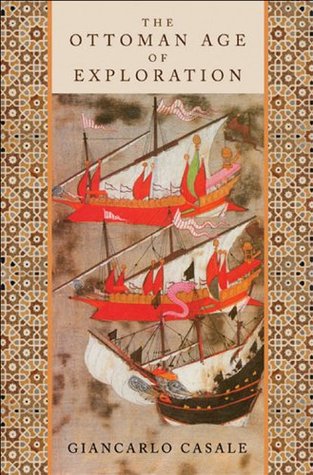
The Ottoman Age of Exploration

by Rindis on June 13, 2015 at 11:22 am
Posted In: Books

Everyone knows of the Age of Exploration, and the Portuguese efforts to find a sea-route around Africa to India. If you know a little more history, you know something of their efforts related to controlling trade in India and the Indian Ocean.

What is even less known is the efforts the Ottoman Empire expended in controlling the Indian Ocean. We mostly remember the Ottoman Empire as a land power. But it controlled the bulk of the Mediterranean for quite a while, mostly during the 16th Century, and the celebrated defeat at Lepanto was celebrated because it was in the face of heavy naval superiority, which Lepanto did not affect. What almost no one remembers is that the Ottoman Empire gained control of the Red Sea and Persian Gulf during this period and challenged Portugal for control of the Indian Ocean.

Part of this might be because both powers were operating far from home at the end of administrative and logistical support. There’s not a lot of huge conflicts here—there are some important ones, but the size of the forces involved tends to be much less than we are used to thinking in terms of. Casale’s book is a very enlightening look at this entire situation from the Ottoman point of view.

The main focus of the book is a group that he calls the “Indian Ocean Faction” in the Ottoman government. I think he presents them as a more coherent and unified group (partially through use of that name) than I guess they really were, but it looks pretty evident that they did help and promote each other as they could, and were a legitimate faction. In general, Casale covers the Ottoman “discovery” of the Indian Ocean (an area that they didn’t know much more about than Western Europe for some time) through an attempt to draw the eastern Muslim world into the Ottoman political orbit, policy changes, and the end of both Ottoman and Portuguese efforts at taking the entire pie.

As if politics, war, negotiations, and trade aren’t enough, Casale also talks about maps and mapmaking. After reading The Fourth Part of the World this was very welcome, and also well handled, though I think there a need for better analysis.

One thing I wish, is that the book tied in events elsewhere better. Lepanto is mentioned, and conquest of Cyprus, but other major events, such as the siege of Malta, are not mentioned, nor is their possible impact on other projects examined. Still, this is a very important book for gaining a better appreciation of the period from 1512 to 1589.

└ Tags: books, history, reading, review
 Comment 

In the Shadow of Empires

by Rindis on May 14, 2015 at 8:39 pm
Posted In: Books

Sir Jens’ (‘Sir’ seems to be his first name…) In the Shadow of Empires is an amateur history book about Vlad Dracula (as opposed to a sensational book about the fictional ‘Dracula’). It shows its amateur status in some uneven editing, and problems keeping tense and subject-verb agreement under control.

Once past that, it is a well-written introduction to a part of history that just isn’t well enough known, and is crowded with all sorts of modern myths stemming from a century-old bestselling novel. It is a very nice step-by-step walkthrough of eastern European politics in the 15th century. He first points out that Vlad Dracula (‘of the dragon’) was from Wallachia, not Transylvania, proceeds into Wallachia’s troubled politics from being a buffer state, his father, Vlad Dracul (‘the dragon’), and then his ever-shifting fortunes from Ottoman ‘guest’ to Voivode (roughly ‘prince’) to prisoner of Hungary, to backed by Hungary, to his death in a skirmish in 1476.

Along the way, there’s a number of interesting observations, the last of which being that the four principle movers of the book (Vlad Dracula, Ottoman Sultan Mehmed, King Mathias of Hungary, and Stefan of Wallachia) are all men who’d be unhesitatingly convicted by a war crimes tribunal today. But all four are heroes in the eyes of the people (well, their descendants) they ruled over.

In all, it’s a very readable amateur book with some good history in it. Something I’d like to see more of.

└ Tags: books, history, review
 Comment 

Stolen Songbird

by Rindis on May 13, 2015 at 9:08 am
Posted In: Books

Danielle Jensen’s first novel reads fast, but has quite a bit going on in it. At the start of the story, the main character (Cécile) is kidnapped, and taken to a hidden city of trolls, where she is ‘bonded’ to a prince to fulfill a prophesy. The first part of the book is recognizably a “Beauty and the Beast” romance after that, but the plot soon outgrows that tale. Even in the first few chapters, quite a bit is going on.

Overall, the worldbuilding overshadows the characters a bit, most of whom go by fast enough that they never become fully-realized characters, but are drawn broadly enough that you still know exactly who they are when they show up again. Of course, this is a function of there being a good number of secondary characters in a fast-paced book. The plot itself is well-done, and small things early on in the book are important later. This is the first book of a trilogy, and the end of the book is very much not The End, but it does end the current equilibrium, and the next book will be very different than this one.

This is the first time in quite a while that I’ve gotten into a series just as it’s beginning, and I’m looking forward to the next two books!

└ Tags: books, fantasy, reading
 Comment 

Thirty Years of War

by Rindis on May 6, 2015 at 12:00 pm
Posted In: Books

Published by Didactic Press, Gardiner’s The Thirty Years War is another cheap ebook of a public-domain work. The normal price seems to be a buck or two, and I think I picked it up for free. In general, this is one of the better put together cheap OCR-derived ebooks I’ve seen. Editing problems are minimal, with only a tendency towards two words being run together as a recurring flaw. The book is marketed as ‘illustrated’, and it is, with a number period paintings, that do help some with getting the right feel, however, with few captions, and battle scenes when there is no fighting going on, and so forth, it’s hard to tell what the point of some of them is. A few portraits are included, which is nice, and I wish there were more of those.

Samuel Rawson Gardiner was a 19th-century historian known for his work on the English Civil War. This shows through from time to time here with a number of parallels and contrasts given between that and the Thirty Years War. In all, it still makes a good and readable overview of the subject today. I haven’t read much on the Thirty Years War (yet), but can recommend it as a light, short work (estimated at 200 pages) available for cheap.

└ Tags: books, history, reading, review
1 Comment

Siege Warfare in the Roman World

by Rindis on May 3, 2015 at 10:33 am
Posted In: Books

I’ve generally been liking Osprey’s turn towards specialized subjects in their Elite line, and this is no exception. The book takes a look at what is known of Roman sieges from the fall of Carthage to the siege of Cremna (no, I hadn’t heard of it either). The bulk of the book is taken up with recounting what sieges we know something of, and points out the large number of cases where the Romans simply stormed the town as fast as possible (as opposed to the usual impression that every Roman siege was a big, lengthy production such as at Alesia). Along the way, there is some reconsideration of the archaeology at Numantia and Dura Europos.

There’s no strong theme to the book, but it makes a good survey of the subject. I wish more attention had been given to Dura Europos, as only a couple parts of the fortifications are shown in diagrams and illustrations. On the other hand, apparently there’s no good theories as to just what happened (and in what order) there, and it is a large site, so presumably a detailed look could take up most of the book without saying anything conclusive. There’s also reproductions of some older (18th and 19th century) diagrams of some of the sites with short critiques.

└ Tags: books, Elite, history, Osprey, reading, review
 Comment 
  • Page 85 of 93
  • « First
  • «
  • 83
  • 84
  • 85
  • 86
  • 87
  • »
  • Last »

©2005-2026 Rindis.com | Powered by WordPress with ComicPress | Hosted on Rindis Hobby Den | Subscribe: RSS | Back to Top ↑