Rindis.com

All my hobbies, all the time
  • Home
  • My Blog
  • Games
  • History

Categories

  • Books (503)
  • Comics (10)
  • Gaming (917)
    • Boardgaming (673)
      • ASL (154)
      • CC:Ancients (83)
      • F&E (78)
        • BvR – The Wind (26)
        • Four Vassal War (9)
        • Konya wa Hurricane (17)
        • Second Wind (5)
      • SFB (78)
    • Computer games (162)
      • MMO (77)
    • Design and Effect (6)
    • RPGs (66)
      • D&D (25)
        • O2 Blade of Vengeance (3)
      • GURPS (32)
  • History (10)
  • Life (82)
    • Conventions (9)
  • News (29)
  • Technology (6)
  • Video (49)
    • Anime (47)
  • Writing (1)

Patreon

Support Rindis.com on Patreon!
Become a patron at Patreon!

Other blogs:

RSS Inside GMT

  • Meet The Northern Wei: A Civilization of GMT’s Ancient Civilizations of East Asia  June 19, 2026

RSS Playing at the World

  • Playing at the World 2E V2 Arrives May 5, 2025

RSS Dyson’s Dodecahedron

  • Blog Updates June 20, 2026

RSS Quest for Fun!

  • The Expense Post May 24, 2026

RSS Bruce Heard and New Stories

  • Pain, Exhaustion, and Morale in D&D BECMI June 7, 2026

RSS Chicago Wargamer

  • The 2 Half-Squads - Episode 310: Cruising Through Crucible of Steel January 27, 2023

RSS CRRPG Addict

  • The Search for Freedom: Our Repeated Petitions June 20, 2026
SF&F blogs:

RSS Fantasy Cafe

  • The Leaning Pile of Books May 24, 2026

RSS Lynn’s Book Blog

  • Summer of Horror: Can’t Wait Wednesday: Sleepers in the Snow by Joanne Harris June 17, 2026
ASL blogs:

RSS Sitrep

  • Cardinal ASL Sins March 18, 2026

RSS Hong Kong Wargamer

  • FT114 Yellow Extract After Action Report (AAR) Advanced Squad Leader scenario April 16, 2025

RSS Hex and Violence

  • This still exists? March 25, 2025

RSS Grumble Jones

  • YouTube AAR for Critical Hit's Gettysburg Turning Point 1863 - ID4 At Will Fire June 16, 2026

RSS Desperation Morale

  • How to Learn ASL March 16, 2025

RSS Banzai!!

  • October North Texas Gameday October 21, 2019

RSS A Room Without a LOS

  • [Crossing the Moro CG] T=0902 -- Rough start July 18, 2015
GURPS blogs:

RSS Dungeon Fantastic

  • GMing Shortcuts in Felltower June 17, 2026

RSS Gaming Ballistic

  • B-Scale: Damage That Scales from Tardigrades to Kaiju June 5, 2026

RSS Ravens N’ Pennies

RSS Let’s GURPS

  • Review: GURPS Realm Management March 29, 2021

RSS No School Grognard

  • It came from the GURPS forums: Low-Tech armor and fire damage January 29, 2018

RSS The Collaborative Gamer

  • Thoughts on a Town Adventures System January 18, 2022

RSS Don’t Forget Your Boots

  • GURPS Supers Newport Academy #6: “Old Friends, New Again” June 7, 2026

RSS Orbs and Balrogs

  • Bretwalda - Daggers of Oxenaforda pt.4 - Fallen King May 27, 2017

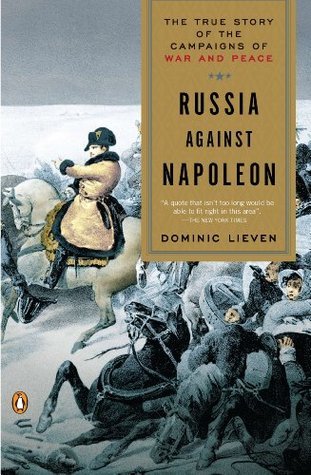
Russia Against Napoleon

by Rindis on November 7, 2022 at 12:00 pm
Posted In: Books

Dominic Lieven’s position as a professor of Russian studies shows clearly in this book. He clearly knows whereof he speaks as he tackles the last stages of the Napoleonic Wars from a Russian perspective. And he is quite right in that this is an overdue work. Russian histories of the period have been overshadowed by Tolstoy, and tend to focus on 1812 to the detriment of the following two years, when Russia led a coalition from its borders to Paris.

Russia was by far the main power involved in 1813 and 1814, and if they don’t bother to talk about it, who will? I personally hadn’t realized much had gone on then, much less the very contested campaigning of 1813 until I recently read Chandler’s The Campaigns of Napoleon.

So, this book is excellent just for providing a good focus on that action. Of course, he talks about the earlier war (ending with the Treaty of Tilsit) somewhat briefly, and then spends a lot of time going in-depth with Russia’s preparations over the next five years, and all the fighting in 1812. Those of you who are familiar with Tolstoy also get a parenthetical ‘reader’s guide’ to War & Peace, as he points the people who are the basis of major characters of the novel.

And not only is this book informative on two different levels, it is well-written. Not stellar prose, but still very clear, and well put together. There is a lot packed into the book, and it is highly recommended.

└ Tags: books, gaming, history, reading, review
 Comment 

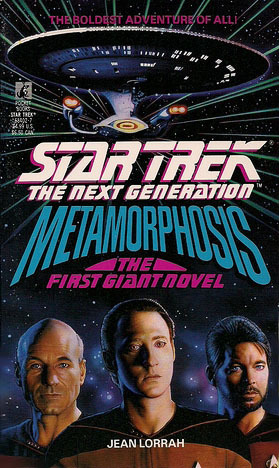
Metamorphosis

by Rindis on October 30, 2022 at 12:00 pm
Posted In: Books

The “giant” novels were Pocket’s stepping stone to hardcover Star Trek novels, which took over the ‘premium’ slots in the production of way too many novels at the start of the ’90s. They were longer, more involved stories, and the three Original Series giant novels were excellent. I’d heard good things about Metamorphosis, the first (of two) TNG giant novels, at the time, so I was happy to finally get to read it.

Now, I’m frustrated. This novel is well written, but has a big glaring problem.

Now, this isn’t a spoiler, this is the high-concept of the entire novel, stated clearly in the blurb: Data is turned into a human. The core tension of his character is that while as an android he is superhuman in many ways, there is much he is missing, and he longs to understand just how organic sentient life, and humans in particular, work. This is 1990, the series is still airing, so you know going in there’s going have to be a big reset button in there somewhere. If Data is still human at the end of the novel, then it’s not going to fit with anything else, and therefore he won’t be.

In fact, this novel is placed explicitly as happening right after “The Measure of a Man” in second season. (Which, by the way, is a very good episode, and well worth reviewing. Especially as it is the first appearance of Bruce Maddox, who shows up again in the first season of Picard.) Everyone is still feeling the emotional effects of the trial to determine if Data could be considered property, or an actual person. The Enterprise moves on to it’s next mission which is very interesting in and of itself.

In fact, given the prominence of that high concept, the plot does quite well without it. I won’t spoil that, but we are fairly deep in before the magic happens. Which, from our viewpoint, it might as well be, since Data is turned into an ordinary human down to the last detail (if perhaps with an uncanny resemblance to a 27-year old Brent Spiner). And we get treated to Data’s viewpoint as he discovers all he’s been missing. Sleep, eating (and the complexities of the human perception of taste), emotions, not being superhumanly strong and durable…. And, this is well done, and well thought through, and well presented.

This also serves as something of a bridge to a completely new plotline in the novel, as the Enterprise finishes up its mission, and goes on to the next, which, in the ordinary, run-of-the-mill, aired episodes scheme of things would be another episode entirely. Of course, Data (newly re-qualified for most of his duties) is different, and that ties in intimately with what’s going on here.

And here’s where we run into trouble. The big reset button that you know must be in here somewhere shows up. I do think it’s a little more forced than the change itself, and a bit more abrupt, pacing wise. But the big problem of the novel is here: the reset is basically going back in time so that Data never becomes human, and in so doing, he also loses all memories having been human. (Technically, he has the memories, just sealed away, so he gets a couple bouts of deja vu as we go through the finishing leg of the time loop.)

Plots are the general ‘engine’ of a story. The mainspring that serves it is that the main character will learn (or occasionally, spectacularly fail to learn) something by the end of the story. This is often subtle, but robbing the character of his memories at the end makes them unable to do this at all, and spells danger to the plot as a whole. I particularly find this irksome, and I am put out by any story that does this (the end of Silver on the Tree wrecked an entire series for me).

That said, Data does get to save the day at the end, and does learn something related to the main theme here anyway. But… we still have nearly two hundred pages that might as well not exist as far as any of the characters are concerned. I still give a limited recommendation to this novel because it is well written, and if you want to see how Data handles being human, this is a good presentation of it.

└ Tags: books, reading, review, science fiction, Star Trek, TNG
 Comment 

The Battle of Trafalgar

by Rindis on October 22, 2022 at 12:00 pm
Posted In: Books

Bennett’s book on Trafalgar is fairly typical of such books. As a popular history book, it wisely starts with a couple chapters of background, including how naval combat worked in the Age of Sail, and after that he moves on to more direct backgroud, with one chapter dedicated to discussing the personalities and careers of the various commanding officers involved.

Bennett occasionally takes time out to present important dispatches; for instance, between chapters 6 and 7 he inserts Nelson’s (abridged) memorandum to his fleet as they crossed the Atlantic in pursuit of Villeneuve, and then gives an important paragraph of Villeneuve’s instructions as a comparison. Near the end, he gives Collingwood’s two main dispatches after the Battle of Trafalgar. I found the latter to be bit much, but it is certainly good to have them available in the book, which also quotes from a variety of sources throughout the main text.

For anyone familiar with the battle, all the main elements you expect are here, and told quite lucidly. This isn’t a book to discover new insights with, but that isn’t what’s needed for the intended audience. If you only know the highlights of the battle (spoiler: Nelson dies), this is a good telling of the entire battle. I would recommend Alan Shom’s Trafalgar: Countdown to Battle instead of this book, as it is more comprehensive than this, and Bennett doesn’t gain anything with his slightly tighter focus, though this is a shorter read.

My version of this book is no longer available (dead ASIN), but there is still a Kindle version with the same cover (and I believe, publisher) currently available. Hopefully, it’s a cleaned up copy of my version, which is already in fairly good shape, though there are some notable OCR goofs (one nonsense sentence becomes clearer if you substitute “15” for “is”, and a ‘go-gun’ ship is… startling). If the current version got another pass through edit, it should be in good shape.

└ Tags: books, history, reading, review
 Comment 

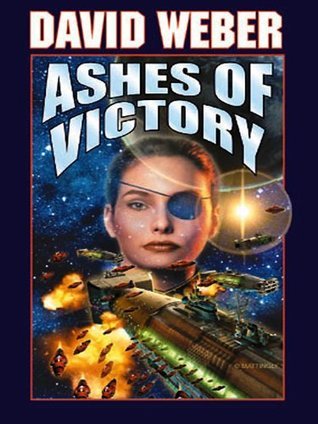
Ashes of Victory

by Rindis on October 14, 2022 at 12:00 pm
Posted In: Books

It’s been quite a while since I’ve gotten back to the Honor Harrington series. It’s been more than long enough for me to forget a number of details, and anything more than the bare outlines of the plot of previous book. Thankfully, Weber provided a fair number of nudges to help with that, though there certainly were a number of places where I was a bit lost.

Overall, we’ve got a number of different major threads running here. The dominant one of course is Honor Harrington’s life, which here is complicated by the fact that she was supposed to be dead, and there’s already been a grand funeral, monuments, and a new ship named after her. Even being alive, there’s been a fair amount of abuse to her body, and that gets taken care of with the latest round of super-science, and she is largely out of action for the book. The requisite action scene in exactly in place at the end, and Harrington stars in that, but it’s also a somewhat unusual one, though still filled with Clancy-esque detailed fictional engineering.

In between, Honor nearly disappears in the middle of the book, even though she may be doing one of the most important things of her life. Since she’s out of front-line duty, she ends up teaching tactical classes at Saganami Island for a semester, helping shape some of the brightest of the new cadets the expanding Mantacoran Navy needs (and cadets from allied navies). Unless a story is really ready to focus on this, it would get dull fast, so wisely, not much is shown. But we do get enough to see some of the teaching methods, and get a very good feel for the proceedings.

Meanwhile, the war with the PRH continues. The previous book put the Mantacoran alliance on the back foot, and the opening parts of the book nicely re-establish the current strategic situation, as both sides work up their plans. This kicks off the introduction of political infighting between Saint Just and the Haven Navy after climatic battle of the previous book, which becomes one of the major backbones of the novel.

The last major plot thread starts with the opposition on Grayson, and surveillance on one of the major movers in that. Much of it feels like it’d belong in a Tom Clancy novel again, and I worried that it would be an inconvenient throw-away plot, like in some of Clancy’s more bloated writing, but it’s there to show how we got to the point of the ending action scene.

Overall, another good book in the series, with decent pacing considering the strain of being its own story, and setting things up for further books. The bad part is, the fact that Weber is working towards ways to keep this entire thing going as long as it sells is too evident. I’d much prefer a series that had some form of initial structure in place. It might be planned to be a long series, as long as it has a defined end to move towards, instead of this struggle between making sure things move forward, and wrecking the good guys just enough to make sure there’s room for a few more books after that success.

└ Tags: books, reading, review, science fiction
 Comment 

The Islamic Enlightenment

by Rindis on October 6, 2022 at 12:00 pm
Posted In: Books

From the Fifteenth through Eighteenth Centuries, Europe went through a fairly profound cultural transformation, beginning with the Renaissance, and ending with the Enlightenment. The philosophies developed during all of this were powerful, and came at the same time as the physical horizons broadened, with the discovery of the New World and new routes to Asia. All of this helped develop government and military systems capable of defeating armies anywhere else in the world (largely by practicing on each other in wars kicked off by the same process).

de Bellaigue starts his book with one of the most dramatic of these encounters, when Napoleon comes to Egypt and defeats the existing Moslem armies with barely any trouble. Operating far from his base in a siege is a big problem, and governing Egypt is more of a problem, but the French army wasn’t going to be defeated in the field. This becomes the first point where the Moslem world becomes aware that something has certainly happened in Europe, and gets directly exposed to the latest philosophical inventions of a place that had for so long so little to say.

This book is not the story of a home-grown Islamic equivalent to the European Enlightenment. This is the story of a religion having to grapple with a very dynamic set of ideas being imposed on what had been a relatively static society. European society had a hard enough time with this itself with more than three centuries to work through ideas that had stared (ostensibly) as a rediscovery of its own past. In 1798, Egypt got a sudden education in the end result of all this.

The first half of the book focuses on three of the major centers of the Islamic world, showing how each one dealt with these new ideas in turn. Starting with Egypt, then Istanbul, and then Tehran. The second half traces through the next century in a more unified approach, as people everywhere talked to each other about this, reinforcing the spread of ideas, debating about them, demanding progress, demanding morality. For, as with anything else, all actions have a reaction. In all of this, de Bellaigue discusses the people behind it all. The people who listened to Napoleon’s savants, the ones who studied abroad, the ones who published journals and newspapers, the ones who wanted to bring this to Islam, the ones who grew disillusioned. This book is full of threads for further exploration.

In some ways, the book feels a little disappointing because it is by its nature an unfinished story. It would seem the Islamic world has managed to find a new stability with distinctly authoritarian governments that practice many of repressive measures that the Enlightenment argues against. This reaction is largely due to European meddling that was allowed in because various leaders wanted all the things that had come along with the Enlightenment, guns, airplanes, and all the forms of power in the modern world. As I write this, there are massive demonstrations across Iran that trace back to similar protests touched on in this book. The waters run deep, but they aren’t very still.

└ Tags: books, history, reading, review
 Comment 
  • Page 30 of 93
  • « First
  • «
  • 28
  • 29
  • 30
  • 31
  • 32
  • »
  • Last »

©2005-2026 Rindis.com | Powered by WordPress with ComicPress | Hosted on Rindis Hobby Den | Subscribe: RSS | Back to Top ↑