Rindis.com

All my hobbies, all the time
  • Home
  • My Blog
  • Games
  • History

Categories

  • Books (513)
  • Comics (10)
  • Gaming (927)
    • Boardgaming (682)
      • ASL (155)
      • CC:Ancients (84)
      • F&E (78)
        • BvR – The Wind (26)
        • Four Vassal War (9)
        • Konya wa Hurricane (17)
        • Second Wind (5)
      • SFB (83)
    • Computer games (162)
      • MMO (77)
    • Design and Effect (6)
    • RPGs (67)
      • D&D (27)
        • O2 Blade of Vengeance (3)
      • GURPS (32)
  • History (10)
  • Life (82)
    • Conventions (9)
  • News (29)
  • Technology (6)
  • Video (50)
    • Anime (48)
  • Writing (1)

Patreon

Support Rindis.com on Patreon!
Become a patron at Patreon!

Other blogs:

RSS feed: Inside GMT Inside GMT

  • Bigger Decisions, Longer Games, and a Reimagined Tet Offensive September 23, 2026

RSS feed: Playing at the World Playing at the World

  • Playing at the World 2E V2 Arrives May 5, 2025

RSS feed: Dyson’s Dodecahedron Dyson’s Dodecahedron

  • Scavengers’ Deep – Map 35 September 25, 2026

RSS feed: Quest for Fun! Quest for Fun!

  • The $139 Board Game August 7, 2026

RSS feed: Bruce Heard and New Stories Bruce Heard and New Stories

  • Pain, Exhaustion, and Morale in D&D BECMI June 7, 2026

RSS feed: Chicago Wargamer Chicago Wargamer

  • The 2 Half-Squads - Episode 310: Cruising Through Crucible of Steel January 27, 2023

RSS feed: CRRPG Addict CRRPG Addict

  • Citadel: Memoirs of an Invisible Man September 25, 2026
SF&F blogs:

RSS feed: Fantasy Cafe Fantasy Cafe

  • Anticipated 2026 Speculative Fiction Book Releases, Part 2 September 17, 2026

RSS feed: Lynn’s Book Blog Lynn’s Book Blog

  • Friday Face Off: Monthly Cover Compare September 25, 2026
ASL blogs:

RSS feed: Sitrep Sitrep

  • Fireweed Sale August 7, 2026

RSS feed: Hong Kong Wargamer Hong Kong Wargamer

  • FT114 Yellow Extract After Action Report (AAR) Advanced Squad Leader scenario April 16, 2025

RSS feed: Hex and Violence Hex and Violence

  • This still exists? March 25, 2025

RSS feed: Grumble Jones Grumble Jones

  • Backstory for the annual Grumble Jones Halloween Scenario JG165 Trollskremd September 10, 2026

RSS feed: Desperation Morale Desperation Morale

  • How to Learn ASL March 16, 2025

RSS feed: Banzai!! Banzai!!

  • October North Texas Gameday October 21, 2019

RSS feed: A Room Without a LOS A Room Without a LOS

  • [Crossing the Moro CG] T=0902 -- Rough start July 18, 2015
GURPS blogs:

RSS feed: Dungeon Fantastic Dungeon Fantastic

  • Boss/Worthy/Fodder ranking the GFS II guys September 24, 2026

RSS feed: Gaming Ballistic Gaming Ballistic

  • Harmonized Loot Schedule (HLS) September 22, 2026

RSS feed: Ravens N’ Pennies Ravens N’ Pennies

RSS feed: Let’s GURPS Let’s GURPS

  • Review: GURPS Realm Management March 29, 2021

RSS feed: No School Grognard No School Grognard

  • It came from the GURPS forums: Low-Tech armor and fire damage January 29, 2018

RSS feed: The Collaborative Gamer The Collaborative Gamer

  • Thoughts on a Town Adventures System January 18, 2022

RSS feed: Don’t Forget Your Boots Don’t Forget Your Boots

  • GURPS Supers Newport Academy #8: “Invitation to the future.. of the 1970’s: Part II” August 2, 2026

RSS feed: Orbs and Balrogs Orbs and Balrogs

  • Bretwalda - Daggers of Oxenaforda pt.4 - Fallen King May 27, 2017

The War at Sea

by Rindis on September 4, 2025 at 12:00 pm
Posted In: Computer games

This is the fifth in a series of reviews looking at the evolution of Hearts of Iron IV. See the previous reviews here:
Hearts of Iron IV: Heart of Production
Together For Victory: Commonwealth of Iron
Death or Dishonor: Heart of Eastern Europe
Waking the Tiger: Heart of China

After Waking the Tiger, Hearts of Iron IV development moved on to the second major expansion, this time introducing a new design system for ships. Man the Guns was announced on May 19, 2018, and was released on February 28, 2019 alongside patch 1.6. Over a month later, patch 1.7 moved the game to 64-bit code, and near the end of the year patch 1.8 moved the game to the new unified Paradox launcher (talked about in the EU IV: Golden Century review).

Fuel

The biggest change in the patch to the underlying game was a change in resources. Oil is still one of the major resources produced in various parts of the world, but is no longer used in unit production. Instead, all oil a country gets a hold of is converted into fuel.

Fuel is a persistent resource; that is, it is stored until used. The revised UI has a small bar next to the fuel symbol showing what percentage of available storage is occupied, and will tell you how long until you fill it up, or how long until it is gone.

Regular infantry, cavalry, etc does not use fuel, but all mechanized formations do, aircraft do, and ships use large quantities of it. Like regular supplies, divisions will store a couple day’s worth internally, which they will consume if cut off from supply. If a supply zone’s throughput is overloaded, other supplies take priority, so fuel will start getting cut off first. When internal supplies run out, mechanized battalions will fight at 10% normal effectiveness. Aircraft consumption is based on the type of mission (“intercept” is efficient, while the long-range logistics and port strikes consume more), and will be at 25% efficiency while out of fuel, and ships are at 50% combat and 25% range (submarines get 20% of their normal torpedo attack).

All countries get a nominal base production of fuel per day, and then convert all the oil they have. Synthetic refineries produce fuel directly, and there are now five technologies that increase the fuel:oil ratio, as well as a new state-level building that stores it.

Overall, it’s a good change, and starts weaning HoI IV off of a resource model where having plenty of something at the start is of no help if you exceed production later. It can be irritating to have to worry about fuel just as there is more need to operate ships that consume lots of it in peacetime, but it is a much better model of the importance of oil.

BuShips

The major feature of the expansion is an all-new ship design system. Instead of just having a general ship type (e.g., 1936 battleship) that you can then add bonuses to in four different stats, you now add modules to a hull that provides base stats (kind of like in Stellaris, but it’d probably be better if it was even more like that system).

This does mean that there are a lot of extra technologies to research in the ships screen for various components. Most of the base hull technologies are faster than the complete ship verions, and there are fewer of them, as there is just one set of “cruiser” hulls, with “heavy” and “light” being purely determined by turret type (and type of armor now determines battleship or battlecruiser for heavy hulls—this should have been true for cruisers as well). This combination means that it takes just about the same number of days (assuming everything is researched at the base rate) of research to get through both versions (discounting some all-new bits, like mine warfare), and there was also an extensive rework to research bonuses in the patch.

The interface on this has a number of problems, starting with the fact that the slots and their contents are not well labeled (by the way, “fixed” slots are below the ship diagram, and optional/variable slots are above). Oddly, before you could, for example, pile more armor on a battleship, but here you can only use the available module types, so there’s only three discrete choices for battleship (or any other) armor now. When you get a new hull, your latest design on the old hull gets copied over to it, so that update is easy. But, if you have a bunch of specialty designs, you may need to manually go and re-create them on the new hull; thankfully, many specialist ships are probably meant to be second-line ships that you can keep on older, smaller, faster to produce, hulls. But if you are actively building and modernizing, for example, light cruisers and heavy cruisers, one of them will have to be updated by hand, at a high cost in naval experience.

The good news is that the patch also added the ability to do naval and air exercises. This of course will use up fuel, which is a problem for countries struggling with their oil supply, but means you can get peacetime naval experience with which to design these new ships.

Construction changed as well in the patch. Shipyards still do not use the efficiency mechanic of factories, but now there is a cap on how many can be designated to a particular ship. Capital ships have a limit of 5 shipyards, which puts a very hard limit on how fast a capital ship can be produced. A very interesting side note to that is that repairing a ship now also takes shipyards. Be careful as to what occupies the bottom of your naval production list, as they may be halted to repair damage from combat or a mishap during a training patrol.

I was one of the people excited for a more detailed ship designer, but the experience is underwhelming. There’s a number of problems, which generally boil down to a lack of obvious interesting decisions. You can put just about everything you want on a design, leading to very good generalist ships that won’t give you any trouble. It might be very slow to produce, but while the interface tells you the cost, it doesn’t tell you how that translates to build time. That said, once you think your way through a naval strategy, there’s plenty of room for specialty ships.

A good feature is that you can update older designs to use newer parts, and refit existing ships to that new design. Notably, most radar technologies now unlock a better radar module, which you could refit into existing designs. Fire control is a separate technology dependent on computing machine technologies and add bonuses to hit chances. You can refit much more than these, but they are force multipliers, relatively cheap, and were often refitted on ships historically. The real problem here is that refitting is done by finding a ship, telling it to refit, waiting for it to arrive and show up at the bottom of the build queue, and then (possibly) repositioning it in the queue, and reworking dockyard priorities. It’s nice to be able to do it, and generally takes no resources, but it needs some automation (e.g., telling the game to send one ship of a particular class in at a time to get new radar sets, or being able to refit a ship while its already under repair).

Enemy Mine

One thing that does increase the potential naval research time in the expansion is a group of nine new technologies around naval mines. The basic tech (that most countries should start with) allows the use of minelaying and minesweeping gear.

Generally speaking, both are best done by destroyers, though other surface ships can take the module. Two of the other techs allow submarines to deploy them, which allows for potentially sneaking into enemy waters to cause mayhem. Areas are rated for the general number of mines present, and cause enemy (but not friendly) forces to suffer ‘accidents’ and take a penalty to invasions on those coasts.

To help with the problems created by this, the expansion also lets you restrict your forces’ travel through a sea area. You can set access to either avoid or blocked, which will cause all non-manual sea travel to not go through there, possibly just to force trade routes to go through areas you have more control over, or to avoid places known to have mines or submarines operating.

In general, it’s a nicely done feature, but I’m reminded of Federation & Empire avoiding the entire subject because it’d boil down to if you have minesweepers along, you’re safe, otherwise you’re not. And despite the potential power of a solid minelaying strategy, most people (even multiplayer) ignore it… and so does the AI. It will never make more than a minimal effort at minesweeping, so this can be too easy of an advantage over it.

Big Happy Fleet

Naval organization was also completely redone for the patch. Paradox finally introduced a good amount of hierarchy for naval forces, which does help with distributing them. That said, the interface is is pretty difficult to decipher. Thankfully, initial naval forces are pre-distributed in the new scheme at the beginning, unlike land forces, which must always be arranged in armies and theaters manually.

Just like land forces, there are now naval theaters, which can be used for geographical splits, or just to organize by type (say, all the minelayers in a separate theater). Theaters can contain any number of fleets (which is the only level that uses admirals), which can then have task forces. Each theater always has a reserve fleet, which can contain task forces not assigned to a normal fleet, and can serve as a ‘holding pool’ of ships used to bring regular fleets back up to strength after losses.

One of the options in the ship designer is to assign an icon that symbolizes the design’s general role; this is important, as that’s how the task forces work assignments. You set a task force to have so many ships of a particular type, and a particular role, and the game knows to send ships of that type to it when some are missing.

This is all a big help—once you’re used to it. I’d say it’s harder to figure out at first, but with the separate patrol and strike force missions you can really make naval dominance work. However, production seems to get confused if there is more than one naval theater, and there is now an unfulfilled need for the logistics screen to tell you how many ships (especially destroyers and subs) are needed to fill out your task forces.

Britain Redux

Part of the patch was a rework of the British focus tree, though three extra branches are also added by the expansion.

The general rearmament branch got expanded and reworked in the naval section, and the Special Air Service was added for a bonus to the number of special forces formations allowed. With the expansion, the colonial branch can turn the Commonwealth into the Imperial Federation, a super-state of all or most of the Dominions (this will require a lot of stored political power for a series of decisions).

New to the expansion (and mutually exclusive with Reinforce the Empire) is a decolonization branch, which will dismantle the British Empire, but will grant more manpower at home (immigration of people who think they’ll do better there than under the new independent governments).

Then there is a pair of mutually exclusive branches, one of which is partially a rework of an old sub-branch that aimed towards war with the USSR. The overall branch is the historical appeasement policy, and is intended as a ‘play for time’, while getting rearmament going, and so includes focuses that construct coastal forts or other bases, and the Home Defense branch includes “Prepare for the Inevitable” for a permanent civilian factory boost.

The final branch is the full-on alternate history section, and the first sub-branch starts with Edward VIII staying King of England, while marrying Wallis Simpson, and leads to events causing revolts throughout the empire, which then must be stamped out with loyalist help. The second sub-branch is the Fascist route, which can kick off a civil war, but spending political power can avoid this, or at least put if off until winnable. The third is the Communist branch, which focuses on granting various concessions with trade unions in return for bonuses to help rearmament.

In addition, the patch included around seventy new countries releasable from current nations. Some of this was needed for the decolonization above, but the rest was put in just to be consistent with those.

New Deals, New Civil Wars

The American focus tree was also completely reworked for the patch. The main idea was to give the US player more to do in the early game, when usually it’s a case of sitting around, forced to do nothing while the war gets going. To this end, Congress was added with the patch, and current support can be seen in the decisions menu. Many focuses now require sufficient support from Congress, and there are plenty of random events as well as decisions that will adjust this.

Naturally, anything that needs Congress will expend political capital, sending members into opposition after getting it to pass. One of the effects of the Great Depression is -1 political power/day, so after picking a focus, at the start of the game, the only political power available for decisions and such is the extra 0.15/day caused by good stability.

The center part of the main tree is a series of mutually-exclusive focuses, starting with Continue the New Deal and Reestablish the Gold Standard. The former leads to the WPA branch, which has some economic bonuses and a research slot, and the other leads to the Adjusted Compensation Act, which does much the same, though the research slot takes longer to get to.

With the expansion, there are two further alt-history branches, with Suspend the Persecution leading towards communism from the New Deal, and America First leading towards fascism from Gold Standard. Both of these will cause a civil war if pursued, with somewhat different mechanics.

In the center there’s a second choice of The Neutrality Act, which focuses on the internal economy, and Limited Intervention lowers the bar for getting involved with what the rest of the world is dealing with, but is opposed by Congress, making it hard to do anything else. A few more things are available from either branch (such as Lend-Lease Act, though it’s harder to do on the neutrality side).

Overall, it’s a much better experience than the original focus tree, though the truly historical path is still a lesson in patience. The political shenanigans don’t really make up for it, but do give a fuller appreciation of FDR’s second term.

Extras

Two countries got all-new unique focus trees in the expansion.

The Netherlands have five national spirits with the expansion (only one, for Queen Wilhelmina, exists without it), greatly weakening its position. One is their version of the Great Depression (De Crisisjaren), which doubles all construction times. While the Netherlands sat out WWI, the carnage happening just across their borders made neutrality the only reasonable option, and so Aloof Neutrality also acts like The Great Depression in making it harder to join factions and the like, while Shell-Shocked Spectator of the Great War reduces recruitable population and factory output (surprisingly, they do not use some form of equivalent to the US’s Disarmed Nation or Undisturbed Isolation laws—the former seems particularly apropos). Finally, Weak Government lowers stability, and reduces political power.

They start with eleven civilian and four military factories, and three dockyards, the army is eight understrength divisions with a lackluster template (no support companies; but how would they produce supplies for them?), and only 70 recruitable population. What they do have is a large supply of oil from Curaço, aluminum from Suriname, and the Dutch East Indies, a sprawling puppet state (with no national spirits or other tweaks of its own) with its own seven-division army, a single dockyard and factory, and a lot of rubber.

There are three big focus trees, one starting with Abandon the Gold Standard (which they historically did late in 1936) which starts working off de Crisisjaren, and allows for improved industry, and can try to strengthen the military. Obtain Foreign Colonial Investments instead boosts the colonies, and can move the government to the East Indies if forced to capitulate in Europe, and Form New Government opens up a web of potential focuses to try and get protection from one of the nearby major powers. Extra fun bits are works to reclaim more land (which was indeed ongoing at the time), and the ability to flood provinces, which inhibit movement, and greatly aid defensive strength.

Mexico starts with eight civilian factories, three military, and two dockyards. Worse, while there’s good oil production, much of it is under the control of the US and Britain (thanks to the Oil Concessions spirit). Other signs of recent instability include Callistas, which reduces political power and construction, Politicized Army, decreasing planning, and making new leaders more expensive, and Caudillo Tensions, which lowers stability. There’s a surprising twenty-one divisions available, though most of them are really bare brigades, but there’s six regular divisions (infantry and cavalry) with support artillery, and most equipment is already in place.

There are three different civil wars brewing. Caudillo Tensions start “moderate” with a 150-day timer to go to “high”, and then another 150 days to go to a civil war. Various focuses will reset things, but the timer will continue until General Cedillo is supported or arrested in the focus tree, which are 3-5 steps down different trees, or the civil war happens and is defeated. (This last is all I’ve seen the AI manage so far.) The other two depend on the strength of the Catholic Church in Mexico, and can only happen if stability is less than 60%. Stability starts at 22%….

Finally, two extra features are the ability to play on as a government-in-exile (mostly meant for multiplayer), or get the benefit of veteran formations put together from defeated nations who you’re protecting. There’s also two new techs for AMTRACs, armored amphibious infantry carriers to help with landings, and two for amphibious tanks. Both are expensive to build and use, but handy if you have some serious naval invasions ahead of you. (Unfortunately, that last will need a separate template, whereas it might have been better to instead allow an armored battalion that is currently undergoing planning for a naval invasion to temporarily reequip with it. Instead, you’d need a duplicate template with amphibious tanks in place of the usual armor battalions, and switch a division’s template to it, and then back again once the invasion is secure and you’re driving inland.)

Conclusion

All of this came with even more knock-on effects than I have gone into already. For example, regular (as opposed to support company) artillery, anti-tank, and AA battalions are “towed”, and now those can be specified as being truck towed (motorized), so as to keep up with faster formations. This of course, eats up more fuel.

The increased number of alt-history paths for major powers does mean that things can go very strange if you don’t use the “use historical focuses” AI setting. However, Paradox also put in a new interface at this point which lets you direct what ideology each country can/will go to, which might be a lot to set up, but can keep things within bounds. I’d prefer a setting that makes historical paths more likely, but not guaranteed so that things don’t either always go down a historical path, or go completely wild.

The expansion itself is huge, and a mixed bag, with the headline feature (ship designer) not being nearly as good as I think it could be, but still worthwhile. Certainly avoid this expansion if you’re just learning the game. Get to know the base game before getting the ship designer and access to alt-history/faction versions of the US and Britain. Once you know the game, I do recommend the expansion if you’re ready to dive into the details of naval warfare. (I’d recommend getting the early country packs first instead, but they’re now part of the base game anyway.)
└ Tags: gaming, Hearts of Iron, HoI IV, Paradox, review
 Comment 

The Dark Veil

by Rindis on August 31, 2025 at 12:00 pm
Posted In: Books

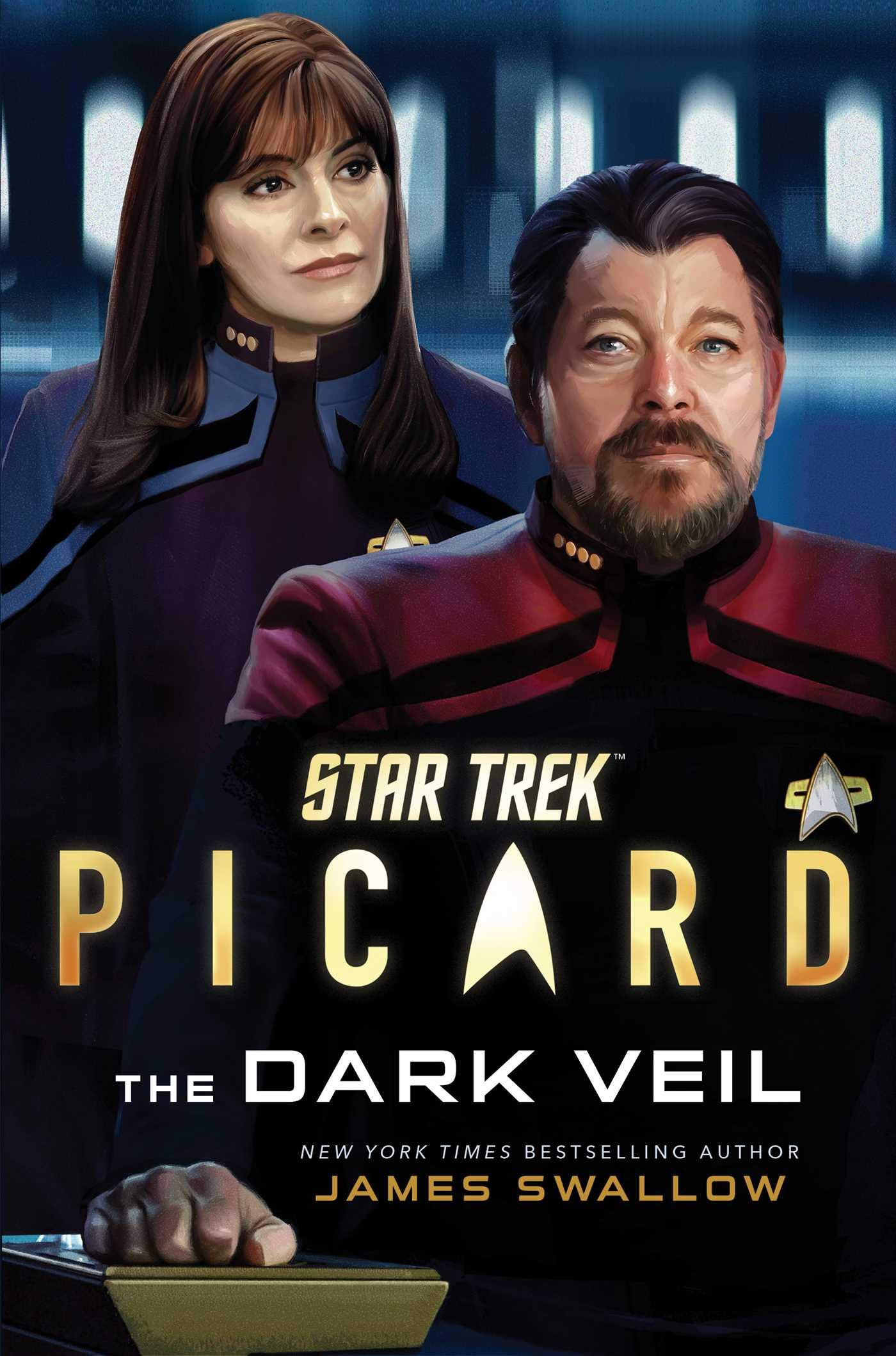
The second Star Trek: Picard novel is more successful as a story, but this is at the price of it being less successful as a prequel.

For those who kept up with post-series novels over the last twenty years (I haven’t), there is apparently much familiar here, as characters and elements are taken from the Titan novels. This explains why some characters seemed to be a bit glossed over, as they’re guest-starring here. And this is in the revised continuity, so it’s not entirely tied in with those.

This is 2386, a year after the synth revolt on Mars, and thirteen years before season 1 of Picard. Riker is captain of the USS Titan, and dealing with the Romulans. That had me thinking it would explain just why there’s a wrecked Borg cube in Romulan space, but no. It does tie in with Picard, but the threads are more tenuous, and in keeping with the Romulans, the real tie in does not show on the surface.

The good news is that it feels like a fairly strong Star Trek adventure. Seeking out new worlds and new civilizations. Encountering the unknown, and getting to know a bit more about ourselves. In general, the Romulans are well handled here, from the honorable and professional Captain Medaka to the Jazari. They’re a MacGuffin alien of the week in one sense, but given the length of a novel, Swallow does a good job giving a bit of depth, and are really well handled.

If you’re looking for explanations of the background of Picard, this novel will disappoint. It doesn’t more than hint at Riker and Troi’s decision to retire to a largely uninhabited planet, nor get at some of the bigger parts of the series, though it does borrow one to use as a natural part of the novel, though the explanations are all in the series itself. But it is a satisfying novel of Riker at his prime as an independent captain.

└ Tags: books, reading, review, science fiction, Star Trek
 Comment 

The Promise of Tomorrow

by Rindis on August 27, 2025 at 12:00 pm
Posted In: MMO

…And I’m back already to talk about patch 7.3 for Final Fantasy XIV.

Of course, some of what I’m looking forward to is still to come in 7.31 and 7.35. That’s really my biggest disappointments right there. No new Deep Dungeon, no new Hildibrand. Yet. (Also, no new society, but Smudge and I are behind on the last two, so we can wait.)

The part I had lost track of is that the new treasure dungeon came out with the patch. We went in last Monday.

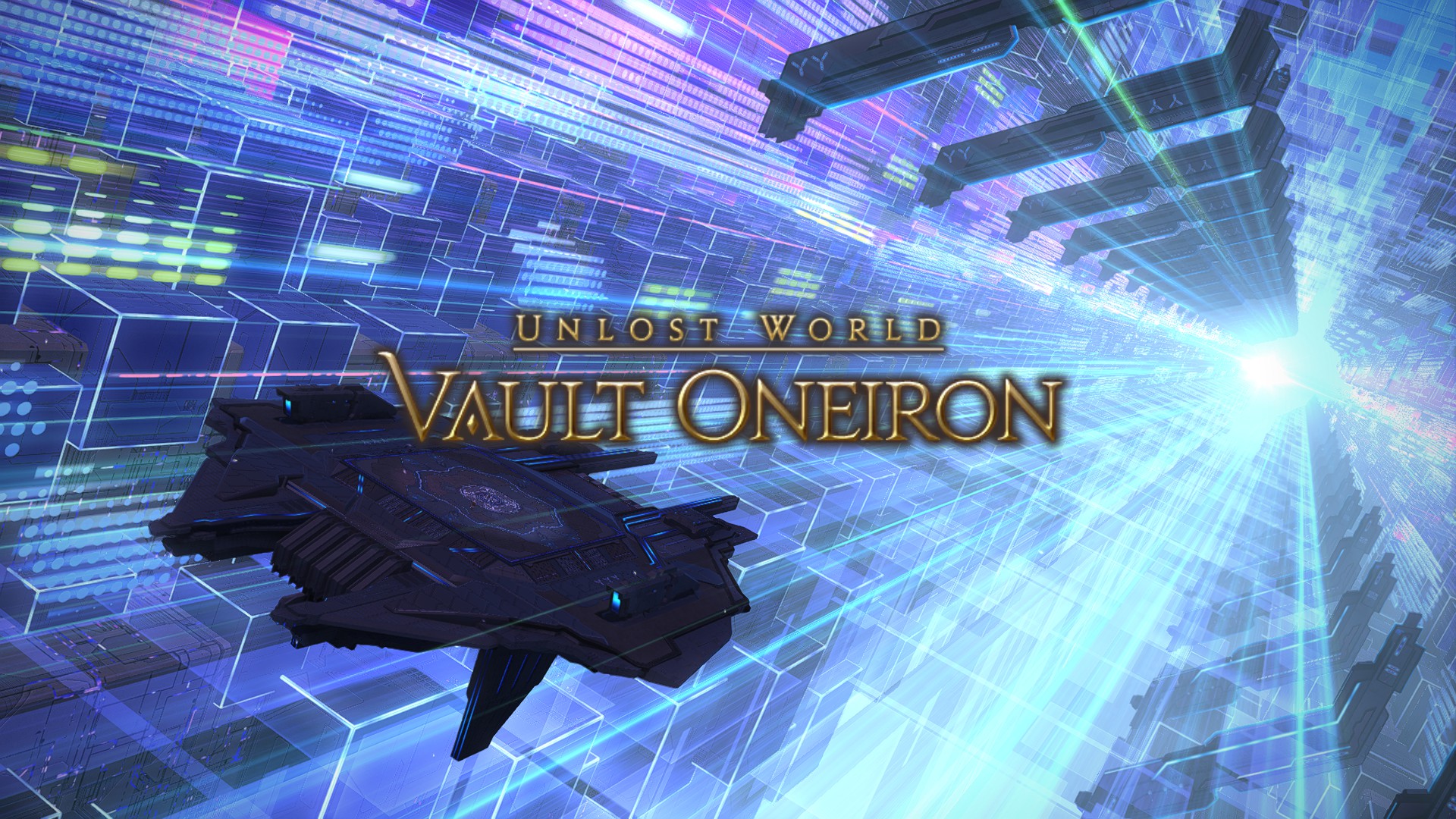
We got lucky. Two maps out of two got us portals to Vault Oneiron, and on the second try we actually got through all five rounds without being tossed out. We mostly got tougher encounters, and they were quite wild with extra adds nearly doing for us. I don’t know what the max ilevel is there, but I assume it’s higher than we’ve got, and this is still “tough mode”. At any rate, we’ve gotten to see it, and it lives up to the other roulette treasure dungeons; you can see what happened here.

There will be spoilers for 7.3 quests ahead!
↓ Read the rest of this entry…

└ Tags: Dawntrail, FFXIV, gaming, MMO
 Comment 

The Fate of the Day

by Rindis on August 23, 2025 at 12:00 pm
Posted In: Books

The second book of the Revolutions trilogy is a rarity for me. I actually read the first book early enough to be eagerly anticipating the release of the second.

In general, it has lived up to the anticipation. It does give me some feel of disjointedness, compared to the first book. The secondary reason for that is probably just my own memory of the first book cutting things out to make more sense of it.

The primary reason is of course that the war continues to expand. More people and more places are continually being drawn in, pulling you ever farther away from the nominal centers of gravity of Washington and the Continental Army, and the two Howes.

We start at one of those far-distant places on the fringe of events: France. The curtain rises on the court of Versailles, then moves over to Benjamin Franklin, ensconced in Paris, making a memorable impression, and helping slowly convince France that the war in America is worth intervening in, lastly, we go to Bordeaux, where an excitable young Lafayette is preparing to join the war personally.

French, and Spanish, involvement in the revolution is a continuing thread through the entire book. But, the full scope of this isn’t explored, only what is directly pertinent. We get a one-sentence notice of the loss of all French holdings in India. But there is more on the various campaigns going down into the Caribbean, and a bit on Spain’s desire to get a couple of treasure fleets in before risking any sort of action, and their desire to regain certain territories… which would turn into a problem later. Now, it’s more a passing mention.

The main action starts up at Ticonderoga, the fort successfully taken and held by the Continentals earlier. Now, there’s a new British army coming down from Canada, and the defenses are woefully ill-prepared. Compared to the desperate struggle a year ago, Fort Ticonderoga falls easily. The way is open to go down the Hudson River and join up with the forces already in New York.

This does not happen, for reasons given in almost any history of the war, as it’s one of the critical points of the war. Burgoyne is now at the end of a very long supply chain, and help is not coming from the south, as Howe is off in Pennsylvania, driving the rebels away from their capital of Philadelphia. The reasons for this… are hard to understand, since a link up was approved as part of the plan in advance, but so was the offensive out of New England, and no one seemed to really think about the fact that the two goals were at odds with each other.

Germain’s success turns into one of the two real rebel successes in this volume, with his side operations being beaten back, and then his stalled army finding itself sieged and forced to surrender. The other success is getting France to join in; overall even more significant, even if the immediate effects look like a number of missed opportunities and failed naval operations. The fact is that Britain now had to protect itself on both sides of the Atlantic, seriously hampering its naval position, and worry about the various sugar islands in the Caribbean, spreading troops afield just when they need to be concentrated in the colonies.

Covering from 1777 to 1780, the later parts of the book cover the switch to “Southern Strategy” by the British. With every move in the northern colonies stymied by Washington’s army, it is one of the few ways to conduct an offensive, especially with the shortage of troops with which to conduct an offensive. I’m used to hearing about the fall of Charleston (which is the end of this book) as the opening of the Southern Strategy, but here we get to see the seizure of Savannah the year previous. D’Estaing tries to retake it, but that is one of the missed opportunities. The real point is that taking Savannah is nearly synonymous with taking Georgia as a whole, and Charleston/South Carolina is just rolling up from that flank, and Washington’s army is a long ways away. Now, if the British can just get the Loyalists armed and organized, and pointed in the right direction….

Outside the military plans, maneuvers, successes, failures, and many excellently described battles, we also get to see the Continental Army start to turn into a real organization. Money is an ever-mounting problem, and that is gone into as well. But we see a disastrous supply situation at Valley Forge get reformed, and the troops start getting drilled. Both of these are because of characters who are generally remembered today, at least by any Revolutionary War buff, and Atkins does well with them, and everyone else he touches.

There is more than a bit of “middle book syndrome” going on here. It is nicely bookended by events with major repercussions, and plenty of importance happens in between. But the book does feel like it doesn’t quite gel into a whole. As mentioned at the beginning, that’s because the scope has widened, and while Atkinson is successfully keeping a lot of balls in the air, there’s a lot of balls to keep track of. Still, it’s an enjoyable read, and recommended to get more detail on a period of military stalemate.

└ Tags: books, history, reading, review
 Comment 

Peace Without Spain

by Rindis on August 19, 2025 at 12:00 pm
Posted In: Boardgaming

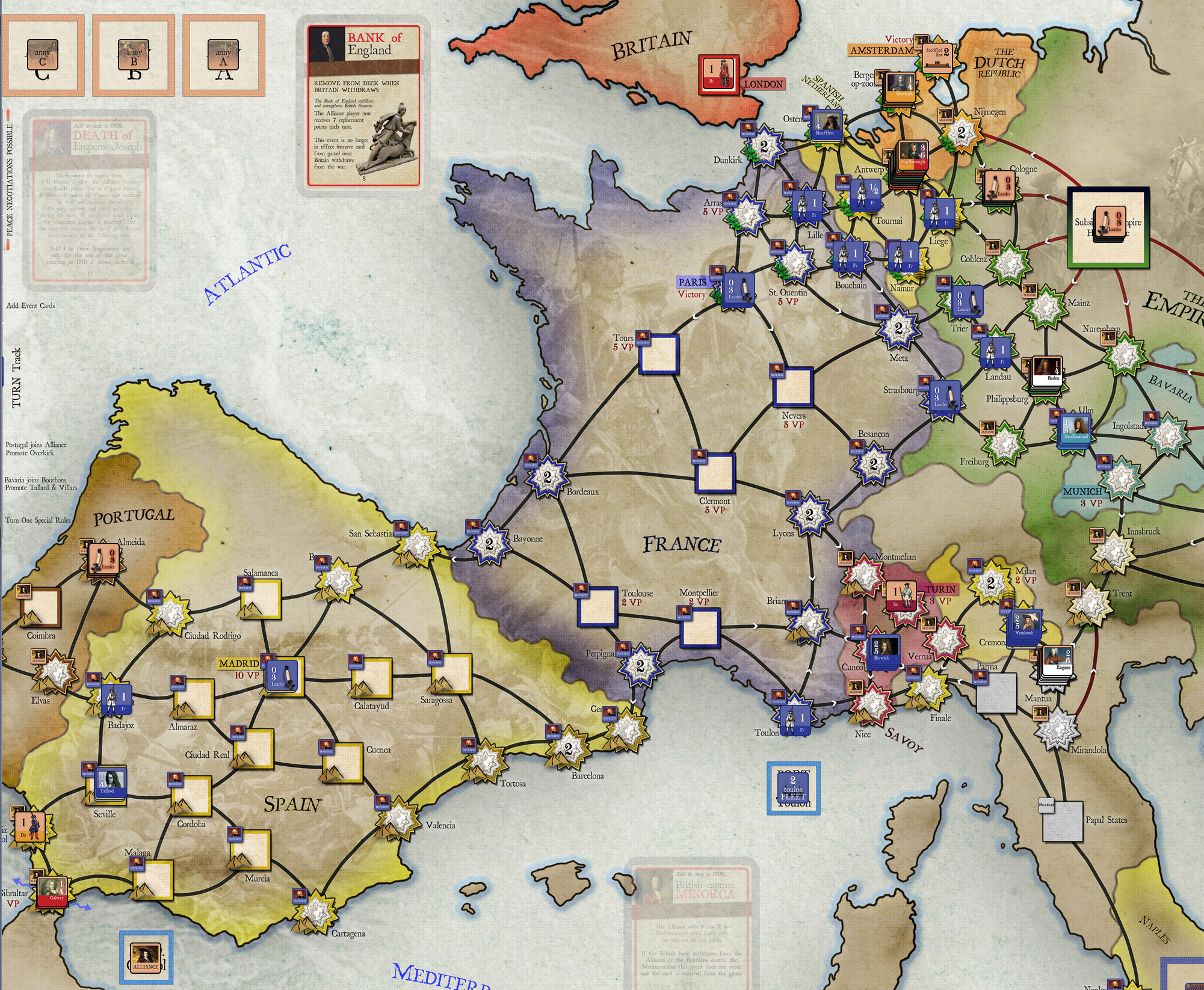
After a round of SFB, Mark and I went back to Compass Games’ No Peace Without Spain series for our Sunday games; in fact, we tried out the original game. It was our first time with this particular one, but we’ve played A Pragmatic War, and we went with the full game, which isn’t really much different than the two scenarios. Mark took the Bourbons, while I had the Alliance.

It’s fairly obvious from the VP track that the Alliance is expected to do well, but they do get off to a slow start. Added to that, the first year starts with an abbreviated campaign season, and I won initiative with a tied bid of ‘1’ action cards, which I used to attack Liege. Marlborough’s army had 9 dice to Boufflers’ 6, and I lost on a tie of 3 hits each. Mark replaced losses, I rallied parts of the army and sent reinforcements in. I missed the ‘no two actions with the same troops’ bit (we caught that for the vast bulk of the game), and hit Liege again, doing 4 hits to 3, and I tried a siege in the final round to come up just short. Mark did the two special Bourbon activities in the final round to take Trier and Ulm for free.

Mark took the initiative for 1703, and worked on defending the Spanish Netherlands. My plan was to send a small force to Spain to start distracting him there, while I tried to find a way to advance in the north. To that end, my first round was a sea move to Gibraltar (Cadiz might have been better, but did have a garrison), and sent a small army from the Empire home space to besiege Cologne. Mark maneuvered to cover the areas, and Baden moved to retake Ulm. However, my sieges were going poorly, taking Gibraltar after two 1/0 results, so I was down to a single damaged corps after taking it. The Bavarian army came back to drive me off of Ulm, but we got one hit each for a defensive victory, but I still failed that siege as I got Cologne.

Mark had sent a couple small armies towards Spain, and at the start of 1703 one of them besieged Gibraltar, while I sent a new two-corps army to besiege Cadiz. Marlborough went after Antwerp, and Mark intercepted with Villars, losing the battle 3 hits to 4. Tallard shifted to drive me off of Cadiz instead, and lost that 0 to 1 hit. While he refitted armies, Baden made another attempt on Ulm, but Max Emmanuel intercepted and defeated him, 2 hits each. Tallard defeated my Spanish army (1-0), leaving me a damaged corps to retreat into Cadiz right after I took it. An attempt to relieve Antwerp failed spectacularly, with a 2 to 6 loss for Villars, and forcing the loss of four corps. I only had a single “1” card left, so the only effect of the Famous Victory was to help with the modifiers as I took Antwerp. The only real Bourbon success of the turn was taking Cuneo after Savoy changed sides by event at the start of the turn.

Bank of England came up for events in 1705, adding an extra resource, and widening the gap to 4 to 7. With the previous year’s losses, Mark largely went for scattering garrisons around the frontier, instead of trying to defeat Marlborough’s army. A third two-corps army sailed to Spain, as Mark sent Berwick to besiege Mirandola. Baden made a third attempt on Ulm while Marlborough went for Ostend. Mirandola fell mid-turn, and the Austrian army of Italy fell back to Trent, rather than risk a battle in Mantua. Both Ostend and Ulm fell this time, and the Spanish Habsburg uprising happened, taking over the Catalonian coast.

With pressure growing in the alps, Eugene was appointed to the war council (event), taking him out of the game for a turn. My primary target for 1706 was Liege, and Mark took Verrua early. An advance into Spain was run off by a Bourbon army, but I did defeat him (1 hit each) after getting back to a defensible line of supply. I then counterattacked the disorganized army, and lost, 1 hit each. Mark took Mantua, and tried to push me out of Trent, but lost the battle with 1 hit each. My rolls for Liege were poor, and with three different 0/0 results, I could not take the city.

With a full four corps in Trent (rough terrain for a lower supply limit), I put both Baden and Starhemberg there for six dice, while Eugene took over the army in Ulm to get siege bonuses as I tried to secure Bavaria before Mark could get through the Alps. Spain continued in a stalemate, but gobbled more Bourbon attention after a surprise Allied victory of 3 hits (on 4 dice) to 1, and then a second battle destroyed two weakened corps (…but killed Galway). Eugene won a battle in Munich, which was taken at the end of the turn, just after a successful siege of Liege. Mark failed in a siege of Turin (…which was illegal, as Mark kept missing that a full corps in the strength 3 fortress meant it took five corps to invest the place).

Emperor Joseph died in 1708, but Eugene was already in a legal position for the event, and he moved on to take Bavaria out of the war by taking Ingolstadt. The French financial collapse widened the gap in resources, and we found Mark had just enough of the wealthy cities to keep the damage down to that. Both of us had hands that were nearly all “1” cards, so not a lot else happened. This was also the turn the deck was reshuffled, and we had gone through seven of the eight 1s, so we knew the next two years would see more activity.

With Italy stable, Eugene went west to siege Strasbourg, and one of my small armies went to Namur. Mark defeated another advance in Spain in battle, and in two rounds, Villars marched down from Dunkirk and beat Eugene away from Strasbourg before it could be taken. He headed north again, but Namur fell before he could arrive, and then Marlborough marched south to join the small army there. Turin was finally taken by the Bourbons.

The French financial crisis now reduced him to two resources, and a four card hand. My opening for 1710 was a siege of Bouchain, reinforcements sent to Eugene (for another try at Strasbourg), and another campaign into the interior of Spain. Mark tried for Montmelian, but the reduced Savoyard corps stuck outside the walls (a full one stayed in the fortress) ran off the Bourbon army. Villars attacked Eugene but was repulsed and killed. He did push me out of Trent with a command dispute to get rid of both leader dice. However, the siege of Strasbourg failed anyway, while I got Bouchain. VPs were at 15, so Mark tried negotiations with two concessions, which if accepted would still just land him in major Bourbon victory territory, but missed the die roll by one.

Both of us drew desertion and disease events for 1711 (one is part of the initial deck, the other is included from 1708 on), though Mark reduced two of my corps while only taking one loss himself. My initial move was to send two small armies to siege Dunkirk while Eugene made his third try at Strasbourg. Vendome (the best surviving Bourbon general) marched to relieve Dunkirk and completely whiffed on 7 dice, losing 0 to 2 hits. Marlborough started a siege of St. Quentin to take advantage of the lack of intact French army. Then Tallard’s army started marching out of Savoy, leaving confused as to where he was going, until it became clear he was headed for Strasbourg, and Eugene was defeated again. The siege of Dunkirk dragged on, but St. Quentin fell after one round, and Marlborough marched against the recovering Bourbon army in Arras, which avoided battle into Paris. I avoided a couple battles for the final Bourbon round, leaving me with a choice on a “1” card. I could have tried to take Arras for 5 VP, but needed a 6, and took the safe route and took Dunkirk (anything better than a 1; I rolled a 4).

VPs were up to 22, and Mark had a dilemma. The war was going further and further out of control, and with a good number of actions from me, a capture of Paris by the end of 1713 was looming. Offering one concession would, if taken, get a minor Bourbon win, but then I’d fight on without Britain for a turn, and unless he could get me below 20 VPs, I’d have a minor win. Mark ended up offering 3 concessions (-> 26 VP), for a near guaranteed peace (anything but a “1”), and got it, giving me a minor victory to eliminate the possibility of a major victory.

Afterword

The overall system is very good. The combination of lots of forts and the need to get a siege done over a few rounds puts the proper campaigning pressure on everyone. The results from the siege system also feel correct from what little I know. The direction of the war is glacial, as armies spar across large numbers of fortified spaces, and try to find enough attention to take them. A Pragmatic War got a bit overly fiddly for the various powers coming in at the start, and this was a lot smoother with just turn 1 special events, and Bavaria and Portugal to remember.

The Bourbons are in a hole that only gets deeper over time. Events will generally give the Alliance more resources, forcing the Bourbons to spend more time on replacement actions to keep their armies in good shape. Here, Mark suffered from me tending to hot dice in the big battles, and I could get at a couple of weakened armies, forcing corps to be lost, which was very expensive. At the start, they have control of the Mediterranean, and the 2 VP bleed per turn is an early worry for the Alliance. Mark tried to challenge control of the Med twice, but again couldn’t match my dice. He spent for the Toulon fleet a third time, but couldn’t afford the action to sail it.

As I mentioned above, my main strategy was to get a small army in Spain and use it to draw off forces and attention from the frontier with the Dutch. This worked well, though losing Galway caused a problem, since I ended up sending Overkirk to Spain, robbing Marlborough of his co-commander. I generally had a reserve three-corps army (with 0-3 leader) in the Empire home space, and with more actions (ha!), I would have loved to spend time with the various small armies in the area reducing the forts south of the active area to drive towards Metz. As it was, Eugene was a useful distraction, since if he had taken Strasbourg, there would only be one more fort between him and Paris (with an uncertain line of supply…).

While Mark had plenty to do finding replacements for his corps, I think he needed to find more ways to grab initiative and make me react. The progress in Italy was worrying, but the rough terrain of Trent and Innsbruck kept my garrison needs low. Early on, a drive towards Bohemia could have given me a lot of headaches, and needed to be tried. As it was, I built a fortified line in Phillippsburg, in case I needed to make a stand with what started as an inadequate army.

└ Tags: gaming, No Peace Without Spain
 Comment 
  • Page 19 of 318
  • « First
  • «
  • 17
  • 18
  • 19
  • 20
  • 21
  • »
  • Last »

©2005-2026 Rindis.com | Powered by WordPress with ComicPress | Hosted on Rindis Hobby Den | Subscribe: RSS | Back to Top ↑