Rindis.com

All my hobbies, all the time
  • Home
  • My Blog
  • Games
  • History

Categories

  • Books (503)
  • Comics (10)
  • Gaming (917)
    • Boardgaming (673)
      • ASL (154)
      • CC:Ancients (83)
      • F&E (78)
        • BvR – The Wind (26)
        • Four Vassal War (9)
        • Konya wa Hurricane (17)
        • Second Wind (5)
      • SFB (78)
    • Computer games (162)
      • MMO (77)
    • Design and Effect (6)
    • RPGs (66)
      • D&D (25)
        • O2 Blade of Vengeance (3)
      • GURPS (32)
  • History (10)
  • Life (82)
    • Conventions (9)
  • News (29)
  • Technology (6)
  • Video (49)
    • Anime (47)
  • Writing (1)

Patreon

Support Rindis.com on Patreon!
Become a patron at Patreon!

Other blogs:

RSS Inside GMT

  • Meet The Northern Wei: A Civilization of GMT’s Ancient Civilizations of East Asia  June 19, 2026

RSS Playing at the World

  • Playing at the World 2E V2 Arrives May 5, 2025

RSS Dyson’s Dodecahedron

  • Blog Updates June 20, 2026

RSS Quest for Fun!

  • The Expense Post May 24, 2026

RSS Bruce Heard and New Stories

  • Pain, Exhaustion, and Morale in D&D BECMI June 7, 2026

RSS Chicago Wargamer

  • The 2 Half-Squads - Episode 310: Cruising Through Crucible of Steel January 27, 2023

RSS CRRPG Addict

  • The Search for Freedom: Our Repeated Petitions June 20, 2026
SF&F blogs:

RSS Fantasy Cafe

  • The Leaning Pile of Books May 24, 2026

RSS Lynn’s Book Blog

  • Summer of Horror: Can’t Wait Wednesday: Sleepers in the Snow by Joanne Harris June 17, 2026
ASL blogs:

RSS Sitrep

  • Cardinal ASL Sins March 18, 2026

RSS Hong Kong Wargamer

  • FT114 Yellow Extract After Action Report (AAR) Advanced Squad Leader scenario April 16, 2025

RSS Hex and Violence

  • This still exists? March 25, 2025

RSS Grumble Jones

  • YouTube AAR for Critical Hit's Gettysburg Turning Point 1863 - ID4 At Will Fire June 16, 2026

RSS Desperation Morale

  • How to Learn ASL March 16, 2025

RSS Banzai!!

  • October North Texas Gameday October 21, 2019

RSS A Room Without a LOS

  • [Crossing the Moro CG] T=0902 -- Rough start July 18, 2015
GURPS blogs:

RSS Dungeon Fantastic

  • GMing Shortcuts in Felltower June 17, 2026

RSS Gaming Ballistic

  • B-Scale: Damage That Scales from Tardigrades to Kaiju June 5, 2026

RSS Ravens N’ Pennies

RSS Let’s GURPS

  • Review: GURPS Realm Management March 29, 2021

RSS No School Grognard

  • It came from the GURPS forums: Low-Tech armor and fire damage January 29, 2018

RSS The Collaborative Gamer

  • Thoughts on a Town Adventures System January 18, 2022

RSS Don’t Forget Your Boots

  • GURPS Supers Newport Academy #6: “Old Friends, New Again” June 7, 2026

RSS Orbs and Balrogs

  • Bretwalda - Daggers of Oxenaforda pt.4 - Fallen King May 27, 2017

The Book of Lost Tales (Part 1)

by Rindis on April 22, 2024 at 12:00 pm
Posted In: Books

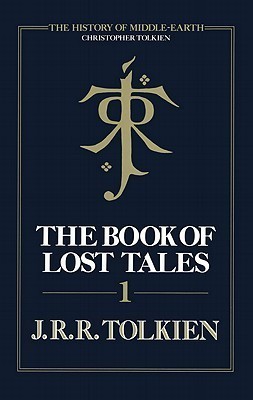
For the recent Tolkien Reader Day, I picked up the first of Christopher Tolkien’s ‘History of Middle Earth’ series.

It takes a bit of unpacking.

This is largely the earliest versions of some of the earliest stories. However, while the initial writing project of these was abandoned, most of these stories weren’t abandoned. Much was later rewritten, and cleaned up versions of that are in The Silmarillion. So, there’s not a lot truly new to the reader to unearth.

And yet, it’s not the same, and I found it largely more comprehensible than much of the comparable sections of The Silmarillion. That may be because Christopher Tolkien is there to hold my hand with lots of commentaries between stories.

And, liking history and process, seeing first/second drafts, and some history of the thinking behind these stories is of interest to me. Reading-wise, the main problem is “The Cottage of Lost Play” is a slog. After that, I found the narrated stories of the pre-history of the world, and the interstitial bits worked very well for me, and I actually enjoyed reading those parts.

I think one of the most interesting things is that all along, The Hobbit and LotR are supposed to be happening in some long-lost past of our world. But frankly, you can’t tell, there’s no real connection. Here, this conceit is still at the surface, and Eriol is just enough to tie this large structure to our Earth. Also, some of the echoes of Germanic and Nordic myth are stronger here, and it feels just a bit more connected those long-gone and overgrown signposts. In a real sense, LotR indeed has nothing to do with our past. I started in some of the same places (here), and then grew in its own direction, and became more than that simple concept.

In a general reading sense, it’d be hard to recommend this. Certainly not in any pure entertainment sense; stick with the later, polished works for that. But, there is enough magic here that if you’d like to take a look behind the curtain, this is a good exploration of the start of J.R.R. Tolkien’s quest.

└ Tags: books, fantasy, reading, review, Tolkien
 Comment 

A Daughter of No Nation

by Rindis on April 6, 2024 at 12:00 pm
Posted In: Books

The initial book of the Hidden Sea Tales comes to a very satisfying conclusion, but there’s a number of dangling threads.

Sofie gets to go back to Stormwrack, and pick up the investigation of this world which isn’t—and is—Earth. She’s been preparing for this, so now she’s in better shape (and was a fairly active woman already).

We get a decent amount of her investigations this time, sprinkled all throughout the book. But the plot still has other, more personal, ideas and takes precedence. Her (birth) mother is still imprisoned for… lets call it fraud, and much of the book is about getting to know her father better.

A lot of plot manages to hang off this one desire. Nothing is simple about it, and the strong points of the series are again on the very personal side. Cly has certain cultural expectations that don’t mesh well with an independent 20-something 21-century woman, and the two manage to be thoroughly infuriated with each other even while trying to reach out.

Adjacent to this part is Sofie’s work to get to study Stormwrack, which ends up as a continuation of the climax of the first novel. Cly suggests starting an office to bring the idea of forensics to Stormwrack to help out the judiciary system. This ends up driving a good chunk of this novel, especially towards the end.

The biggest failure here is that you don’t get as much a look at the internal politics of the Fleet, even though it’s important again. Most notably, the ending shows a rupture of the Cessation looming again, but the immediate drivers are all off screen. You don’t know who is making these confrontational decisions, but some have certainly been made. Short of that, it’s another very good book, but while I think there’s enough intro for a new reader, certainly go for Child of a Hidden Sea first.

└ Tags: books, fantasy, reading, review
 Comment 

The Unbound Empire

by Rindis on March 29, 2024 at 12:00 pm
Posted In: Books

The third “Swords and Fire” book wraps up the trilogy well. My objections from the first book persist, but are better here, as the story and politics have grown.

And all the strong points remain. There is a good mix of action and tension. A couple of beats are a little predictable, but mostly the calm parts of the book are undercut by waiting for the other shoe to drop, and wondering just what that shoe will be.

Amalia’s quest for better conditions for the mage marked in the empire is nearing completion (or at least a vote to see if she can change things). And the handling of this part is one of the places where the series and her has grown. Meanwhile, the series villain, Ruven, is still loose with a bevy nasty powers and the will to use them. The various things he has access to make it hard to see where things will go, as he has a lot of options. Perhaps a few too many, as he’s something of an always-prepared supervillain. But… it’s actually well handled, and he drives the action well.

And there is a lot of action. I flew through the book because there’s a lot of really page-turning bits in here. At the same time, the book does not become overburdened with action as it’s well spaced out. So, this is one of the better roller-coaster concluding books I’ve seen, and the series is certainly recommended.

└ Tags: books, fantasy, reading, review
 Comment 

Triumph and Illusion

by Rindis on March 21, 2024 at 1:44 pm
Posted In: Books

The final volume of Sumption’s history of the Hundred Years War does exactly what one would expect. Another eight-hundred pages on a bit more than twenty years of history. It’s excellent stuff as always, but I do feel like it’s a bit lacking. Sumption has always been light on the personalities of the people who haunt the pages of his history, and this more evident here, where both Charles VII and Henry VI are hard figures to understand.

Of course, his main strengths continue in this volume: Clear recounting of narrative history, and attention to the details of finance, recruiting, and wasted motion that inevitably rob large armies and successful campaigns of any ability to bring a large war to its close.

In particular, English finances are in poor shape thanks to all the borrowing Henry V had to do to finance his campaigns in France. However, he had finally converted England’s successes into a real treaty, and gotten a chance to set up an administration across much of northern France. This allowed for tax collection in France to pay for the war in France (well, only part of it, but that was the theory). At the same time, the rump Kingdom of Bourges has little political power, and less money. Once Charles VII is actually crowned, political capital recovers, which is used to re-impose disagreeable levels of taxation, and the financial situation reverses as England deals with declining revenues at home and abroad.

Indeed, the start of the book in 1422 sees both sides politically crippled. Henry V’s heir is eleven months old when he inherits the crowns of England and France, leaving a long regency. The top men are mostly competent, with the Earl of Gloucester being more of a bull in a china shop, but generally kept under control. The real problem is that as the situation grows worse, the main sticking point to negotiations are the English claim to the title “King of France”, and no councilor wants to have to explain to his King on his future majority how he lost that title. It’s something that needed doing (but may still have been insufficient), but since the King was too young to take the step himself, negotiating it away without him invites a treason charge later. And of course, when Henry VI does grow up, there’s no saving Lancastrian France, but there’s no talking him out of the title either.

Meanwhile, Charles VII’s court is still crippled by the internal divisions of the civil war that let England win much of northern France, and get the Duke of Burgundy in their camp. There are several more rounds of internal fighting and deposed councilors, which continue to waste the political strength of the administration in Bourges. But, even when unpopular, the men at the top are generally competent, and the internal fighting slowly winds down with factions largely swept away. This gives Charles VII the strength to go on the offensive, and erode the English position in many of the same ways as the English had done to the French for the last century, devastating areas, taking individual fortified posts by surprise and destroying the ability to generate revenues from the area (nor generate much of anything else…).

The primary dramatic moment comes early, with the English high-water mark. A controversial campaign has devolved into a punishing siege of Orleans, but despite being painfully overextended, the English are winning the battles. Money is nearly out, the garrison is dwindling, and court in Bourges is contemplating moving east to retain what they can there, but they’d be largely cut off from outside help from Scotland or Castile. Joan of Arc’s arrival turns things around, probably more from morale effects as anything else. After the English are defeated at Orleans, the self-confidence of both sides largely swaps, and the crowning of Charles VII just cements this development.

The secondary dramatic moment is the end, when the remaining English positions in Normandy fall in one vigorous campaign. After over a decade of continual losses and ever-deepening financial troubles, there’s precious little will left, and the entire area submits with very few people willing to put up with a siege over was has been an increasingly lost cause. For a denouement we get the end of Gascony, a sudden reversal as an English army actually gets there, and then that campaign’s collapse. We also see the start of the Wars of the Roses as factionalism in England deepens in the wake of failure.

The series weighs in at about 3580 pages of text covering one hundred twenty-five years. It is possible to go much deeper into the weeds than Sumption does, but outside of the things routinely studied of the war, you truly are in the weeds. In fact, the value of his books is all the things he covers from independent captains holding enemy countryside hostage to details of taxation and loans all put into a single framework. Its a truly amazing and readable series, enjoyable for anyone with an interest from start to finish.

└ Tags: books, history, reading, review
 Comment 

Mistress of the Empire

by Rindis on March 13, 2024 at 12:00 pm
Posted In: Books

First off, the electronic version of this book is in better shape than the previous. That had obviously been properly proofread, but there were still some major formatting problems with scene breaks and the like. Well, not even that’s a problem here. So the ebook is very solid.

As to the novel itself? Yes, it is also very good, and a worthy sequel to the first two. This one was conceived a little after the first two, and it shows with some sequelitis. The biggest problem is that with the title, and the trajectory of the first two, you know where this is going to end up from an early stage.

But the process of getting there is as well done as ever. Mara’s continuing struggle for reform and struggles with the Anasati are sharply curtailed with the Council of Mages, powerful, and outside the law, intervenes, and demands a halt.

This turns the narrative to a new struggle, with higher stakes, while the old struggles continue in the background, and this drives the rest of the plot.

In the end, I wasn’t as satisfied with it as with the earlier books. While the conflict is real, even with some time spent with some of mages to give their point of view, it all feels too impersonal.

On the other hand, the cast of major characters is better fleshed out and expanded. This ends up as the stronger point of the book, which makes up for a lot. Still, the entire Empire trilogy is excellent, and not to be missed.

└ Tags: books, fantasy, reading, review
 Comment 
  • Page 19 of 93
  • « First
  • «
  • 17
  • 18
  • 19
  • 20
  • 21
  • »
  • Last »

©2005-2026 Rindis.com | Powered by WordPress with ComicPress | Hosted on Rindis Hobby Den | Subscribe: RSS | Back to Top ↑