Rindis.com

All my hobbies, all the time
  • Home
  • My Blog
  • Games
  • History

Categories

  • Books (503)
  • Comics (10)
  • Gaming (917)
    • Boardgaming (673)
      • ASL (154)
      • CC:Ancients (83)
      • F&E (78)
        • BvR – The Wind (26)
        • Four Vassal War (9)
        • Konya wa Hurricane (17)
        • Second Wind (5)
      • SFB (78)
    • Computer games (162)
      • MMO (77)
    • Design and Effect (6)
    • RPGs (66)
      • D&D (25)
        • O2 Blade of Vengeance (3)
      • GURPS (32)
  • History (10)
  • Life (82)
    • Conventions (9)
  • News (29)
  • Technology (6)
  • Video (49)
    • Anime (47)
  • Writing (1)

Patreon

Support Rindis.com on Patreon!
Become a patron at Patreon!

Other blogs:

RSS Inside GMT

  • Foxes and Lions (Part 3): Military Matters, Captains, and Condottieri June 12, 2026

RSS Playing at the World

  • Playing at the World 2E V2 Arrives May 5, 2025

RSS Dyson’s Dodecahedron

  • Barrow of the Great Mothers June 16, 2026

RSS Quest for Fun!

  • The Expense Post May 24, 2026

RSS Bruce Heard and New Stories

  • Pain, Exhaustion, and Morale in D&D BECMI June 7, 2026

RSS Chicago Wargamer

  • The 2 Half-Squads - Episode 310: Cruising Through Crucible of Steel January 27, 2023

RSS CRRPG Addict

  • Yendorian Tales: Here There Be Dragons June 15, 2026
SF&F blogs:

RSS Fantasy Cafe

  • The Leaning Pile of Books May 24, 2026

RSS Lynn’s Book Blog

  • Booking Ahead/Weekly Wrap Up June 14, 2026
ASL blogs:

RSS Sitrep

  • Cardinal ASL Sins March 18, 2026

RSS Hong Kong Wargamer

  • FT114 Yellow Extract After Action Report (AAR) Advanced Squad Leader scenario April 16, 2025

RSS Hex and Violence

  • This still exists? March 25, 2025

RSS Grumble Jones

  • YouTube AAR for Critical Hit's Gettysburg Turning Point 1863 - ID4 At Will Fire June 16, 2026

RSS Desperation Morale

  • How to Learn ASL March 16, 2025

RSS Banzai!!

  • October North Texas Gameday October 21, 2019

RSS A Room Without a LOS

  • [Crossing the Moro CG] T=0902 -- Rough start July 18, 2015
GURPS blogs:

RSS Dungeon Fantastic

  • Rules & Rulings from Session 224 June 16, 2026

RSS Gaming Ballistic

  • B-Scale: Damage That Scales from Tardigrades to Kaiju June 5, 2026

RSS Ravens N’ Pennies

RSS Let’s GURPS

  • Review: GURPS Realm Management March 29, 2021

RSS No School Grognard

  • It came from the GURPS forums: Low-Tech armor and fire damage January 29, 2018

RSS The Collaborative Gamer

  • Thoughts on a Town Adventures System January 18, 2022

RSS Don’t Forget Your Boots

  • GURPS Supers Newport Academy #6: “Old Friends, New Again” June 7, 2026

RSS Orbs and Balrogs

  • Bretwalda - Daggers of Oxenaforda pt.4 - Fallen King May 27, 2017

Men to Match My Mountains

by Rindis on April 15, 2025 at 12:00 pm
Posted In: Books

This is an expansive history of about sixty years, across a fair amount of space.

It’s also a fairly limited history, largely confined to what “white people” were doing. This is, in large part, man-vs-nature history, with strange people coming into a strange place and having all sorts of adventures. This is entirely about the early exploration and expansion of Anglo-American culture across four states of the US. Stone does take time to note that there’s just no written sources available from the Chinese who worked on the railroads being built through here. And that objection would also hold true for a lot of the previous inhabitants of the region. And this is a flowing narrative history, not in the least bit technical and willing to go into the weeds of population levels and other non-written evidence.

Certainly, there is a lot to cover here as it is. A good chunk of the book is dominated by the various discoveries of gold and silver that dominate the initial settlement of the region. Places where a few men found something valuable, and instantly, or so it would seem, towns sprang up. Many of the immediate places would go away again when the strikes ran out, but not all, and of course, the mineral wealth built other places as well, most notably San Francisco. The development of the Bay Area is one of several threads running through the entire book.

Later portions deal with the railroads, and the chokehold the Southern Pacific had on much of California’s economy. One of the more amusing chapters near the end deals with the Santa Fe finally gaining access to southern California, and the subsequent free-fall of passenger ticket prices from $100 to $25 (with a dip all the way down to $1).

Much of the earlier parts of course deal with problems of individual expeditions and bands of settlers trying to cross the region at all. It isn’t a coherent account of things like the Oregon Trail at all (that one especially, as Oregon is out of Stone’s scope). But there is enough to contextualize a lot of these early struggles.

Organizationally, it is interesting that Stone very much sets his book only in modern California, Nevada, Utah, and Colorado. Events that take place outside these borders are barely touched on at all. The book is not formally divided up into these four states as well, but Stone does very much keep them in mind, and certainly groups things in accordance with those borders.
└ Tags: books, history, reading, review
 Comment 

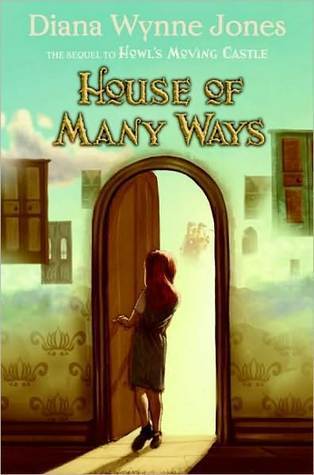
House of Many Ways

by Rindis on April 7, 2025 at 12:00 pm
Posted In: Books

The Howl’s Moving Castle series are all independent books; you can read them separately without any trouble. Howl and Sophie are secondary characters in this third and last installment, as the focus is squarely on a new character, and new locale.

Our first glimpse of Charmain is easily sympathetic, as she would much rather be buried in a book than having to deal with house-sitting for her great-uncle. A little too convenient is that Charmain serves as our proxy for being introduced to magic, as her part of the family stays well away from such stuff. Her great-uncle, on the other hand….

However, she spends a lot of the novel being grumpy and mean-spirited. She’s been tossed in over her head, which lends sympathy, but she’s also obviously making her own problems worse.

But, the writing (from her point of view) is engaging enough, and the plot moves briskly enough to keep it from turning into a real problem. And there are important things that she does tackle head-on, providing needed positive direction. Better yet, there’s plenty of sympathetic characters around, and while she is instantly fed up with the most prominent one, there are others she befriends, and since they’re at the heart of the main plot, that also shores things up.

The action itself moves in the typical, but I don’t know where we’re headed way of a DWJ novel. Also, as is common, just what the main plot is remains hidden for quite a while, though a primary motivator appears early and provides suspense while Charmain tries to figure out how to survive in a house that will provide most everything needed, but with little practical knowledge.

└ Tags: books, fantasy, reading, review
 Comment 

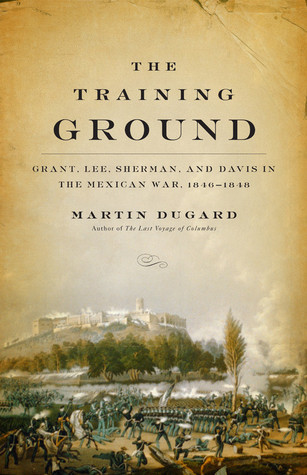
The Training Ground

by Rindis on March 30, 2025 at 12:00 pm
Posted In: Books

The main problem with study of the Mexican-American War is that it is severely overshadowed by the later Civil War. Instead of struggling against the problem, this book embraces it, tracing the careers of several prominent ACW generals through this earlier conflict. Unfortunately, there’s too little analysis here to say in just what ways their experiences were formative.

Worse, there’s a number of minor errors scattered throughout the book. My copy came from my dad, and there’s a number of penciled annotations of minor slip ups. A recurring one is Dugard’s uncertainty around artillery, seemingly confusing the various ways in which they were named. He also conflates metal percussion caps with metal cartridges (a very different animal). And there’s a couple of occasions where he seemingly confuses his own narrative and suddenly gives an unlikely location in the middle of things (talking about arrival in New Orleans… and then suddenly arriving in Saint Louis). And then there’s one huge error, where he correctly gives the transmission of yellow fever by mosquito, and then says it can become airborne after. It sounds like that may have been the theory in the 1840s, and Dugard did not read up actual transmission vectors.

Another problem is that its generally written at a popular history level, but people who don’t already know something of the principle characters of the book won’t get a whole lot out of this. So, it’s best for Civil War buffs looking to expand their horizons a bit.

Thankfully, that’s far from a rare breed, and there is a lot here. One of the best points of the book is that there are a number of good maps detailing much of the various battles covered. It is also the closest to being a military history of the three books on the war I’ve read recently.

The primary figure of the book is Grant. He was with one of the units that moved to become part of Zachary Taylor’s army at the start of the war, and was transferred to Winfield Scott’s army later, so he was present for almost all the major actions, and between his letters and and autobiography, left a fairly good record behind. Jefferson Davis is the second most prominent figure presented, then Lee, and Sherman is more of a footnote since his transfer to the Third Artillery got him to California… after everything had been settled there.

Plenty of other familiar names show up, and the introductory part is interesting for a view of the start of West Point, and filling out Grant’s early life. I’d known that he was originally named Hiram Ulysses Grant, and did not like the name. And that a ‘clerical error’ had him enrolled as Ulysses Simpson Grant, but I’d never seen anything on how that name came about, and Dugard gives the full story here.

Overall, I rather like The Training Ground better than A Country of Vast Designs and A Wicked War, despite the visible goofs causing concerns for ones I haven’t seen. It’s the only one of the three where the war itself comes in as a major focus, and describes the actions in it with far more detail than other two. But, it is again purely from the American point of view (Vast Designs does just a bit better there), and seems to get bored of the subject as it goes along, with far more detail given in the early parts and declining steadily later.

└ Tags: books, history, reading, review
 Comment 

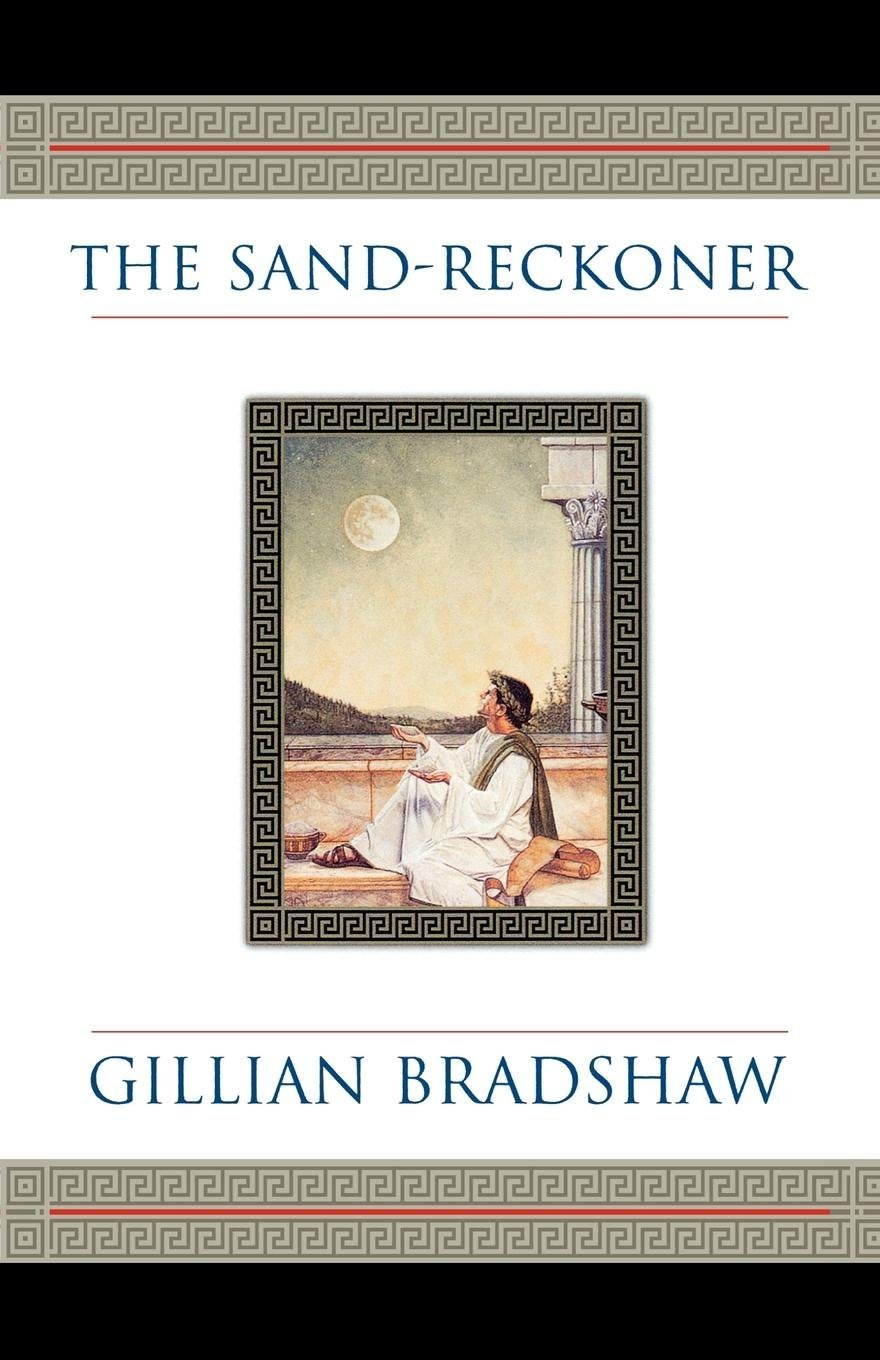
The Sand Reckoner

by Rindis on March 22, 2025 at 12:00 pm
Posted In: Books

Okay, lets start by setting expectations: The advertising blurb mentions ‘the life of Archimedes’, suggesting a big, dense, fictional biography via novel. No, this is a tight fairly plot-focused lighter novel taking place over maybe a single year (probably not that long).

As such, some of the most famous incidents of his life are outside the scope of the novel.

Overall, anything outside the central focus of the novel tends to be a bit simplified, and kept in relatively modern terms.

But, outside of that, this is up to Bradshaw’s usual quality. While the most famous incidents aren’t here, plenty is. There are eleven known texts by him that survive today, and bits of pretty much all of them are in here. (Since this is fairly early in his life, generally in the guise of ideas that he is starting to work out, and would presumably get formalized into his works later.) Archimedes himself is presented as unworldly, the son of a mathematician who is somewhere on the high-functioning side of the autism spectrum.

The central binding plot pillar of Syracuse being at war with Rome, and allied with her usual enemy Carthage is just one element of any that drags him into the world of practical machines—and and other grounded realities. The entire family setting around him is fiction—we just don’t know enough about him—but are essential parts of the plot. Also essential is his manservant and effective keeper when Archimedes can’t be bothered with things like money.

As with all her books, The Sand Reckoner is a very deeply character-driven book, and the cast of characters is a bit wider than normal while retaining all the charm and driven personalities of her other books. Like The Beacon at Alexandria, one of the central pillars of the book is the love of a subject. There it was medicine, here it is mathematics. And in both that love is part of the core of book, and help make it shine.

└ Tags: books, history, reading, review
 Comment 

A Wicked War

by Rindis on March 6, 2025 at 12:00 pm
Posted In: Books

This book gave me a bad impression early on when the introduction states, “All the land taken from Mexico, historians now acknowledge, could have been acquired peacefully through diplomacy and deliberate negotiation of financial recompense.”

That’s a rather big pill to swallow. David M. Pletcher did indeed make this argument in a 1975 book (footnoted in this text), but I’m not sure how many people would agree with him, especially in 2012, when this book was written. And in fact, in the main part of the book, when Greenberg gets to it, she acknowledges that just paying Mexico for a huge swathe of its territory was pretty much impossible. Sadly, there’s also no direct engagement with the contention implied in A Country of Vast Designs that Polk was attempting to get a peaceable settlement by playing the same game of brinkmanship that he pulled off with Great Britain over the Oregon Territory. (Admittedly, the other only came out four years before this book, which would be a fairly short turn around time to talk directly to that idea.)

What we do have is an attempt to look at the Mexican-American War through the viewpoints of five people. The problem is only two were directly involved (one killed in action, and one forced through the treaty of Guadalupe Hildago), two peripherally involved, and while Polk was central to the war, he was also physically a long way away from it. So, if you want to understand the actions of the war itself, this book isn’t a great place to go, and when it is talking about that, it’s actually detracting from central parts of her book.

Greenberg is much more critical of James Polk than Merry’s Country of Vast Designs (fine enough), but you also don’t get to know nearly as much about him here, and she could really have used a better look at just how disruptive Buchanan’s actions in the cabinet were.

John Hardin is the surprise star of the book. He was a successful Illinois politician, who’s falling out with Lincoln could have permanently derailed Lincoln’s career. But he gave up his position to support patriotic fervor and went to war. His regiment was shot to pieces at Buena Vista, and he returned home for a state funeral.

Nicholas Trist pretty much single-handedly held the peace process together, and against Polk’s orders produced a treaty that no one could refuse. Merry’s book is longer and more detailed in general, so his treatment of Trist is similarly more detailed there, but there’s plenty here too.

Henry Clay’s involvement in the book is about as outsized as his entire career was. While there’s a lot of attention on the personal side, he’s also part of the political anti-war movement that Polk stirred up with his heavy-handed actions against Mexico. I would have liked to see a bit more coverage on that, though what we get is good.

Abraham Lincoln is the least present of the five people focused on in the book, despite being one of the three to make the cover blurb. There’s no accounting for fame. That said, the end of the book very much leans on him, presenting a speech from Clay that Lincoln attended on his slow way east to take his seat in the House of Representatives. Lincoln had generally stayed away from the subject of the Mexican-American War, and had concentrated his political energies on economic matters. But after this point, he becomes one of the more fiery anti-war persons in the House, making some fame with his “Spot Resolutions” (if Mexico attacked Taylor’s army on American soil, show me the spot on which it happened). The stance may well have sunk what few chances Lincoln had in politics in the short term, but also seems the start of the more morally involved career we see later.

In all, this does add up to a fairly good book. The parts do generally weave together well, and there’s a lot here, even if a lot of it doesn’t get very well developed. If you’re interested in the war itself, look elsewhere, but this shows a lot of the tensions the war generated in the United States.

└ Tags: books, history, reading, review
 Comment 
  • Page 12 of 96
  • « First
  • «
  • 10
  • 11
  • 12
  • 13
  • 14
  • »
  • Last »

©2005-2026 Rindis.com | Powered by WordPress with ComicPress | Hosted on Rindis Hobby Den | Subscribe: RSS | Back to Top ↑