Rindis.com

All my hobbies, all the time
  • Home
  • My Blog
  • Games
  • History

Categories

  • Books (503)
  • Comics (10)
  • Gaming (917)
    • Boardgaming (673)
      • ASL (154)
      • CC:Ancients (83)
      • F&E (78)
        • BvR – The Wind (26)
        • Four Vassal War (9)
        • Konya wa Hurricane (17)
        • Second Wind (5)
      • SFB (78)
    • Computer games (162)
      • MMO (77)
    • Design and Effect (6)
    • RPGs (66)
      • D&D (25)
        • O2 Blade of Vengeance (3)
      • GURPS (32)
  • History (10)
  • Life (82)
    • Conventions (9)
  • News (29)
  • Technology (6)
  • Video (49)
    • Anime (47)
  • Writing (1)

Patreon

Support Rindis.com on Patreon!
Become a patron at Patreon!

Other blogs:

RSS Inside GMT

  • Foxes and Lions (Part 3): Military Matters, Captains, and Condottieri June 12, 2026

RSS Playing at the World

  • Playing at the World 2E V2 Arrives May 5, 2025

RSS Dyson’s Dodecahedron

  • Hollowshore Cairn June 17, 2026

RSS Quest for Fun!

  • The Expense Post May 24, 2026

RSS Bruce Heard and New Stories

  • Pain, Exhaustion, and Morale in D&D BECMI June 7, 2026

RSS Chicago Wargamer

  • The 2 Half-Squads - Episode 310: Cruising Through Crucible of Steel January 27, 2023

RSS CRRPG Addict

  • Yendorian Tales: Here There Be Dragons June 15, 2026
SF&F blogs:

RSS Fantasy Cafe

  • The Leaning Pile of Books May 24, 2026

RSS Lynn’s Book Blog

  • Summer of Horror: Can’t Wait Wednesday: Sleepers in the Snow by Joanne Harris June 17, 2026
ASL blogs:

RSS Sitrep

  • Cardinal ASL Sins March 18, 2026

RSS Hong Kong Wargamer

  • FT114 Yellow Extract After Action Report (AAR) Advanced Squad Leader scenario April 16, 2025

RSS Hex and Violence

  • This still exists? March 25, 2025

RSS Grumble Jones

  • YouTube AAR for Critical Hit's Gettysburg Turning Point 1863 - ID4 At Will Fire June 16, 2026

RSS Desperation Morale

  • How to Learn ASL March 16, 2025

RSS Banzai!!

  • October North Texas Gameday October 21, 2019

RSS A Room Without a LOS

  • [Crossing the Moro CG] T=0902 -- Rough start July 18, 2015
GURPS blogs:

RSS Dungeon Fantastic

  • Rules & Rulings from Session 224 June 16, 2026

RSS Gaming Ballistic

  • B-Scale: Damage That Scales from Tardigrades to Kaiju June 5, 2026

RSS Ravens N’ Pennies

RSS Let’s GURPS

  • Review: GURPS Realm Management March 29, 2021

RSS No School Grognard

  • It came from the GURPS forums: Low-Tech armor and fire damage January 29, 2018

RSS The Collaborative Gamer

  • Thoughts on a Town Adventures System January 18, 2022

RSS Don’t Forget Your Boots

  • GURPS Supers Newport Academy #6: “Old Friends, New Again” June 7, 2026

RSS Orbs and Balrogs

  • Bretwalda - Daggers of Oxenaforda pt.4 - Fallen King May 27, 2017

Starfleet Year One

by Rindis on December 15, 2023 at 2:19 pm
Posted In: Books

I got this at the same time as the two Enterprise Romulan War novels, but it was written noticeably before those. Those were done in 2009-11, after Star Trek: Enterprise was off the air and a lot more had been established. This was published as the series was getting going, and was written before that, and isn’t directly tied to it at all.

Apparently, it began as a serial, apparently appearing in the backs of the then-monthly publishing of Star Trek books at Pocket. So, the chapters are almost a sequence of short stories (the plot unifies as it goes on), that have been collected together. It also has its own cast of characters, and doesn’t lean on existing ones at all other than Dax.

As such, it has been somewhat overcome by events, though the concept is still a sound one, and you can change some details to save the general plot. The book covers the end of the Earth-Romulan war (which looks a lot different than in the later novels). Earth remains committed to strengthening ties to its other neighbors after the war (this is consistent), and wants to found a new fleet that everyone will be part of. Naturally, lead by humans, because it’s all their idea, but they’re trying to get as many aliens into the Federation and Starfleet as possible.

The real plot begins about a third of the way through with the idea that Starfleet is beginning with six ships taken from Earth Command, and soon, the first ship of a brand-new class, USS Daedalus (that’s her on the cover), will be commissioned and given to one of those six. These six captains fall into two rough camps, with external champions of each faction wanting to decide the direction of the new organization.

On one side are people from Earth Command, who see it purely as a regular military defense fleet, dedicated to nothing more or less than the defense of the new Federation. They derisively call the other captains ‘butterfly catchers’, who are backed by people who want to take the opportunity to explore, chart dangerous anomalies, and make scientific discoveries.

The bulk of the novel deals with the internal tensions of the new Starfleet from the point of view of the captains. It’s a good enough premise, and decently done in classic Star Trek action format. There were originally plans to do seven years of the beginnings of Starfleet, and I think with Enterprise to build off of now, it could still be a good idea to return to.
└ Tags: books, reading, science fiction, Star Trek
 Comment 

The Battle of Quatre Bras 1815

by Rindis on December 7, 2023 at 1:21 pm
Posted In: Books

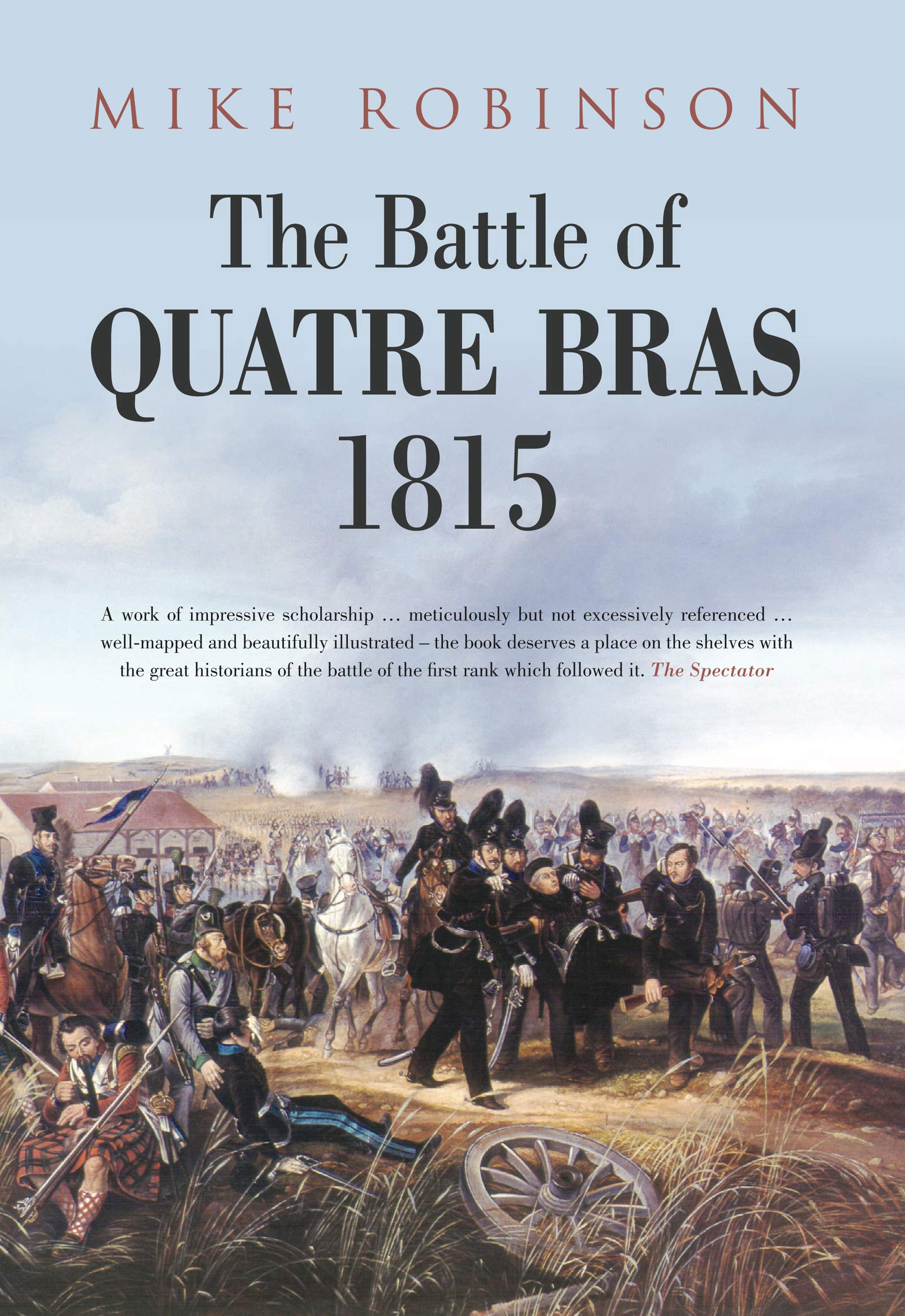
I will take Robinson at his word that there’s been no single work focused exclusively on the battle of Quatre Bras before in English. It seems unlikely that there’s nothing, but with the long shadow of Waterloo, it’s all too possible.

However, I was also surprised, and skeptical, when he said that his look through French sources did not turn up anything of help in writing the book. Having read it, I now wonder just what he was looking for.

Overall, this is an account of the battle using as many low-level primary sources as possible. I assume that Robinson’s trouble revolves around a lack of Frenchmen who survived the campaign, and desired to talk about it in writing. I would still think there’d be something, but perhaps not nearly enough to assemble a narrative from the French side.

What this means is that it is a very lopsided book. To Robinson’s credit, he does draw in a lot of sources from allied contingents, so this is not presented as just a an English show. However, everything is told from the British point of view. French forces are encountered the same way Wellington’s army did, as masses of men moving around, firing, charging, seriously challenging the allied army’s hold on the field, but no unit names or other specifics are given. What is actually going on in the battle is lost. Bédoyère’s conflicting orders aren’t even alluded to.

I found following the action very rough going in this book. I think it’s partly because the one-sided nature of the book, which aids a jumbled narrative. It got a lot of—limited—detail, and worth studying for anyone wanting to dive deep into the battle. But there is still yet to be a good one-book study of the battle as a battle.

└ Tags: books, history, reading, review
 Comment 

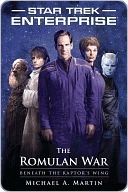
Beneath the Raptor’s Wing

by Rindis on November 17, 2023 at 12:00 pm
Posted In: Books

I actually like Star Trek: Enterprise. It had its problems, and plenty of problem episodes, and I’m not a fan of the Expanse story. But whenever the series dealt with the Vulcans and Andorians (especially), the series was at its best, and showing Earth’s initial influence on its neighbors was a good direction.

The apparent plans were that the fifth season would tackle the Earth-Romulan War mentioned in “Balance of Terror”. So, in a series of novels dealing with carrying the Enterprise storyline forward, that is an obvious, and attractive, subject.

The first problem is that it is more tied into the previous novels than you’d think. This starts off right after Kobayashi Maru, and everyone is still dealing with the aftermath of that book… which I haven’t read. Second, I am quite tired of in medias res openings that try to excite you with things that happen long after the start of the story. If the story’s good, it can be good from the start, trust me. And this one is so bad that you don’t even catch up to it until the next book! After that… the novel is a bit too ambitious. It covers a bit over a year with Star Fleet having to deal with a real shooting war that they’re not really ready for, and the Coalition of Planets’ mutual defense treaties buckle under. (Actually, the main problem is Vulcan staying steadfastly out of the war, and that’s not handled as well as it could have been.)

The novel is long, and goes for the ‘cast of thousands’ side of things, which works here. Far better than it would in a shorter format, such as weekly episodes, so Martin making good use of his opportunities here. It does mean this is a much slower read than most any other Star Trek novel you’re likely to run into. On the other hand, I think he needed to tighten up on tone and theme, and look more at how this war is shaping Star Fleet, and taking it ever further from it’s pure exploration roots.

One sub-plot I have definite troubles with is with Tucker. The plot itself isn’t a bad one, and certainly becomes important in the next book, but he just feels like a really unlikely choice for spy. Of course, this also flows out of a previous book (presumably Kobayashi Maru, but I don’t know). There’s a good attempt to explain why TOS’s bridge controls are so… “retro” compared to everything else, but I think we just have leave that to the side, since Strange New Worlds has overwritten that part. Unfortunately, one bit in that part would be… frankly, impossible, and I’m glad it’s just a one line mention. (There might be ways to make it work, but not as stated.)

Overall, it’s a good book, and a good delve into a period that we won’t see in any other way. There’s a bit too much sand in the concrete of the foundation, but it still stands well on it’s own, other than ending on a ‘to be continued…’ note as To Brave the Storm is directly tied into it.

└ Tags: books, reading, review, science fiction, Star Trek
 Comment 

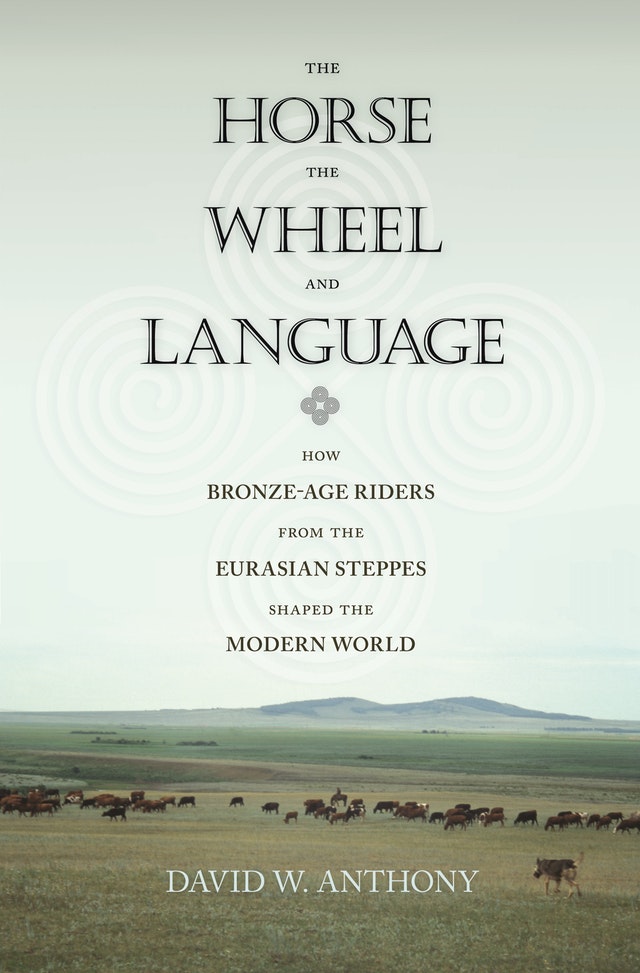
The Horse, the Wheel, and Language

by Rindis on November 9, 2023 at 12:00 pm
Posted In: Books

The problem with getting an idea of the origins of civilization is that no one that far back had yet started writing anything down. But, there are still clues we can gather in the absence of records. David Anthony tries to tie the main two together here.

He notes that there’s a lot of professional resistance to trying to tie historical linguistics to the physical artifacts found by archaeology. One problem he notes is the two disciplines use very different jargons, and both are specialized enough that there’s no one who’s fully qualified in both fields. Anthony himself is an archaeologist and admits his deficiencies, but from my passing knowledge of the subject, he seems well read enough on Proto-Indo-European to say intelligent things. What he has to say certainly seems intelligent to me.

The first part of the book sets the scene by going through the basics of why people think there was an actual Proto-Indo-European language, and what we can deduce from that small part of it we can reconstruct. He also tackles some limitations that I had not seen discussed before, which was nice. And then the general archaeology targeted in the likely time and region, finishing with work on trying to set bounds on the likely time period PIE existed in. He he gets into arsenical bronze, which I had not known of before (bronze made of copper and naturally co-ocurring arsenic). Also, the intellectual history of ordering prehistory ‘ages’, which I suppose I must have seen before at some point, but I had forgotten it all.

One point he goes into some different terminology used in Soviet, and now post-Soviet studies, though I wish he’d gone a little further with it. Naturally, the main part of the book has a lot of more detailed looks at the archaeological record in it. It can get a bit much on the minutiae, and certainly trying to digest all the archaeology of a broad area of land and time means things sort of fly by.

He and his wife have also done work on trying to figure out just when and where the horse was domesticated. There’s some limits to what they’re doing, but it’s a much better study of the subject than we’ve had before.

In the end, this is guesswork. However, its very well thought out guesswork based on what we do know. If you’re interested in early history, if you wonder just how one language group came to dominate much of the planet, this is a very interesting book. I do think he’s on the right track, and is as good of a guess as we’re going to have until continuing archaeological discoveries can say more.

└ Tags: books, history, reading, review
 Comment 

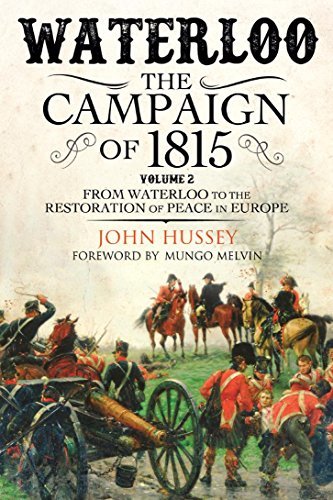
Waterloo: The Campaign of 1815 Part 2

by Rindis on November 1, 2023 at 12:00 pm
Posted In: Books

The second book of Hussey’s study of the Waterloo campaign starts with both armies struggling to deal with the aftermath of the large battles of June 16th. It starts with chapter 31, which shows how much this considered one study in two covers, though you could read either independently, I think.

At any rate, it picks up right where volume one left off, and continues much the same kind of analysis as before. It’s not quite the same, as circumstances have changed. Before, a lot of attention was paid to the initial planning for the upcoming campaign, and we’re now in the middle of it.

So, a fair amount of the book is spent dealing with everyone’s movements on June 17, and what they knew. I think we could use just a bit more focus on Grouchy here, and the French fumble of finding out where the Prussian Army is retreating to. But, it does actually get a lot of attention, especially Napoleon’s misapprehensions possibly diverting Grouchy’s attention in the wrong direction.

And of course, there is a quite thorough look and analysis of the Battle of Waterloo itself.

But we don’t end there. Instead, the book takes a look at the Allied advance on Paris, and path of the main remnant of the French Armée du Nord in front and to one side of the advance. This occasionally breaks up a bit more than I’d like, but there is a lot to cover, and Hussey certainly covers it well, most especially including Prussian and English disagreements to the fate of Paris. This is the main part that makes this book different than others, and as valuable as the planning analysis of the first book.

For anyone studying up on the Napoleonic period, this set is some of the most important books to get. There’s a lot of import here that gets missed elsewhere as everyone is eager to get to the action. But this is much more than that, and has a lot to say about the troubles inherent in fighting as a coalition.

└ Tags: books, history, Napoleon, reading, review
 Comment 
  • Page 23 of 96
  • « First
  • «
  • 21
  • 22
  • 23
  • 24
  • 25
  • »
  • Last »

©2005-2026 Rindis.com | Powered by WordPress with ComicPress | Hosted on Rindis Hobby Den | Subscribe: RSS | Back to Top ↑