
Rindis.com

All my hobbies, all the time
  • Home
  • My Blog
  • Games
  • History

Categories

  • Books (503)
  • Comics (10)
  • Gaming (917)
    • Boardgaming (673)
      • ASL (154)
      • CC:Ancients (83)
      • F&E (78)
        • BvR – The Wind (26)
        • Four Vassal War (9)
        • Konya wa Hurricane (17)
        • Second Wind (5)
      • SFB (78)
    • Computer games (162)
      • MMO (77)
    • Design and Effect (6)
    • RPGs (66)
      • D&D (25)
        • O2 Blade of Vengeance (3)
      • GURPS (32)
  • History (10)
  • Life (82)
    • Conventions (9)
  • News (29)
  • Technology (6)
  • Video (49)
    • Anime (47)
  • Writing (1)

Patreon

Support Rindis.com on Patreon!
Become a patron at Patreon!

Other blogs:

RSS Inside GMT

  • Meet The Northern Wei: A Civilization of GMT’s Ancient Civilizations of East Asia  June 19, 2026

RSS Playing at the World

  • Playing at the World 2E V2 Arrives May 5, 2025

RSS Dyson’s Dodecahedron

  • Blog Updates June 20, 2026

RSS Quest for Fun!

  • The Expense Post May 24, 2026

RSS Bruce Heard and New Stories

  • Pain, Exhaustion, and Morale in D&D BECMI June 7, 2026

RSS Chicago Wargamer

  • The 2 Half-Squads - Episode 310: Cruising Through Crucible of Steel January 27, 2023

RSS CRRPG Addict

  • The Search for Freedom: Our Repeated Petitions June 20, 2026
SF&F blogs:

RSS Fantasy Cafe

  • The Leaning Pile of Books May 24, 2026

RSS Lynn’s Book Blog

  • Summer of Horror: Can’t Wait Wednesday: Sleepers in the Snow by Joanne Harris June 17, 2026
ASL blogs:

RSS Sitrep

  • Cardinal ASL Sins March 18, 2026

RSS Hong Kong Wargamer

  • FT114 Yellow Extract After Action Report (AAR) Advanced Squad Leader scenario April 16, 2025

RSS Hex and Violence

  • This still exists? March 25, 2025

RSS Grumble Jones

  • YouTube AAR for Critical Hit's Gettysburg Turning Point 1863 - ID4 At Will Fire June 16, 2026

RSS Desperation Morale

  • How to Learn ASL March 16, 2025

RSS Banzai!!

  • October North Texas Gameday October 21, 2019

RSS A Room Without a LOS

  • [Crossing the Moro CG] T=0902 -- Rough start July 18, 2015
GURPS blogs:

RSS Dungeon Fantastic

  • GMing Shortcuts in Felltower June 17, 2026

RSS Gaming Ballistic

  • B-Scale: Damage That Scales from Tardigrades to Kaiju June 5, 2026

RSS Ravens N’ Pennies

RSS Let’s GURPS

  • Review: GURPS Realm Management March 29, 2021

RSS No School Grognard

  • It came from the GURPS forums: Low-Tech armor and fire damage January 29, 2018

RSS The Collaborative Gamer

  • Thoughts on a Town Adventures System January 18, 2022

RSS Don’t Forget Your Boots

  • GURPS Supers Newport Academy #6: “Old Friends, New Again” June 7, 2026

RSS Orbs and Balrogs

  • Bretwalda - Daggers of Oxenaforda pt.4 - Fallen King May 27, 2017

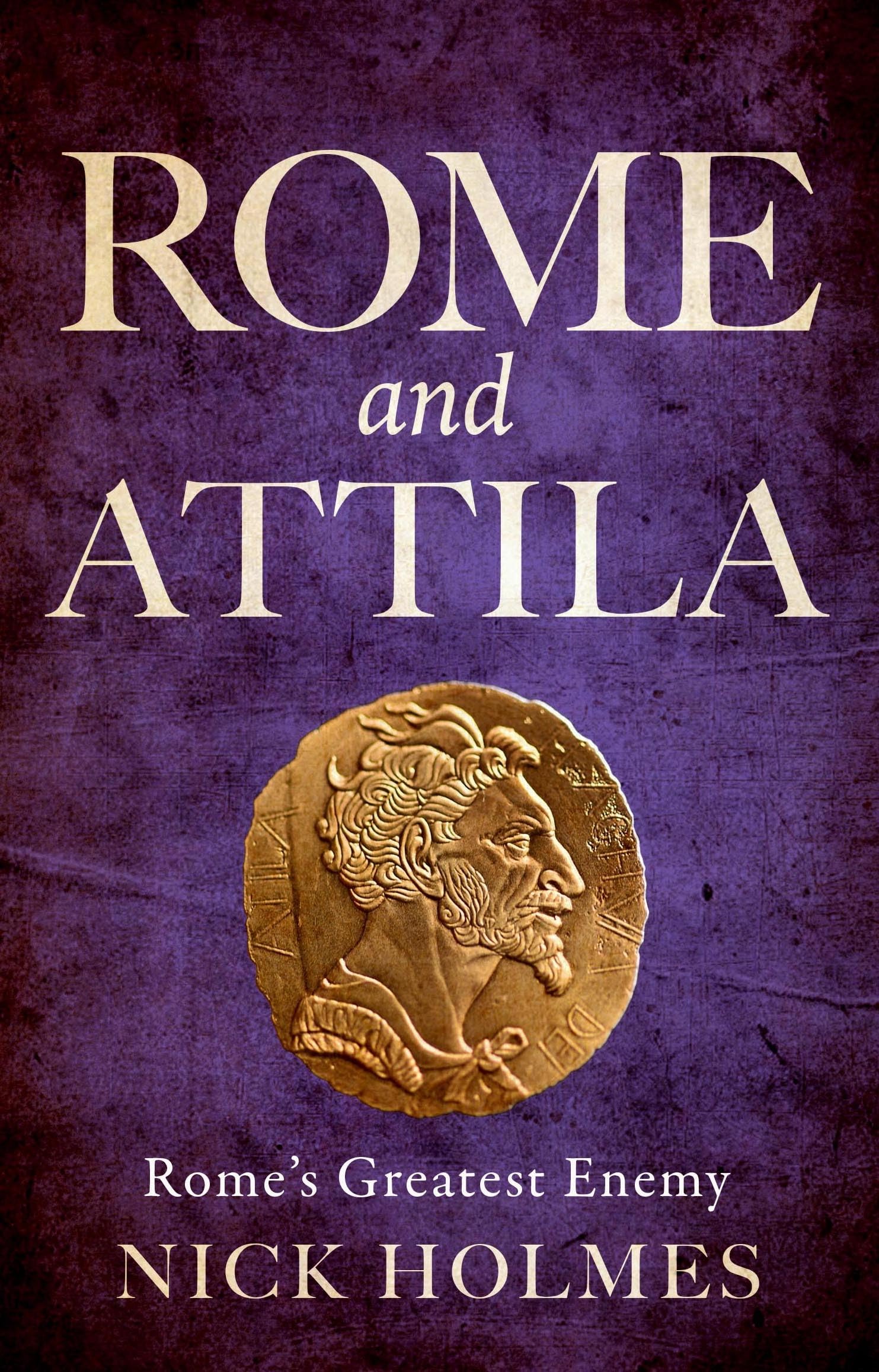
Rome and Attila

by Rindis on January 17, 2025 at 12:00 pm
Posted In: Books

The third of Nick Holmes’ books on the end of the Roman Empire covers from the sacking of Rome in 410 through the death of Attila in 453, and then the end of Western Roman administration in 476.

The good news is that the transition between The Fall of Rome and this book isn’t as repetitious as between the first two, and I don’t know of any books essential to the period that he’s missed out on this time.

The bad news is the transition does still have a lot of copy-and-pasted material that someone reading straight through will want to skip, and there’s no roadsigns to it. But it’s not as extensive, and seems broken up a little by new or rewritten material.

I am gratified to see Ian Hughes’ books (most notably Patricians and Emperors) show up in the notes. I have some problems with his books, but they are invaluable reconstructions of what was going on politically in the western Empire in this period. For anyone wanting more on the climatic battle between (effectively) Western Europe and Atilla, I recommend Osprey Publishing’s Catalaunian Fields AD 451 (Campaign #286). This is a detailed look at the campaign, and might have informed this book some, but is at a lower level than the bulk of the narrative.

On the other hand, Holmes has definitely fallen in love with one of his sources, Priscus’ History of Byzantium; or at least those pieces that survive. The actual work is lost to us, but it extensively quoted in other places, and he presents a translation of parts of those quotes put together at the end of his book. I admit I haven’t really read that part, but I certainly commend him for its inclusion.

Holmes does have his own thoughts on the importance of Atilla, and the tribute the eastern Empire was paying during this period. Even better, he has some thoughts on a military recovery in this period. I’d have to see something a little more finely argued, and some counter arguments to come to a real opinion, but he does make an interesting case. Overall, its a good addition to the series, and while I still say don’t read it immediately after the previous book, it’s still a great starting place on this bit of history.

└ Tags: books, history, reading, review, Rome
 Comment 

Lady Knight

by Rindis on January 9, 2025 at 12:00 pm
Posted In: Books

Tamora Pierce finishes off her second YA female knight series in great fashion here. There’s been a lot built up during the previous three books, and there’s a lot here. You can read this independently, but I recommend against it.

Most importantly, Kel is finally through training, and not before time, as all-out war is coming to Tortall. A strong king has emerged in Scanra, so actions are moving from unorganized raiding to organized raiding, and the occasional battle when Tortall’s army can catch a real force.

Worse, is the creation of magical ‘killing machines’ by a wizard up there, this is the main continuing bit from the previous novel, and the focus is largely on this. However, first, we get a taste of real military command. Which is defending an under-provisioned outpost, waiting. Knowing the enemy may show up soon.

Of course, the enemy does show up, and we get plenty of action. This also leads back into the central plot, which has even more action. If there’s any problems with Song of the Lioness and Protector of the Small it’s that the central points of ‘knights in training’ precludes a lot of action sequences. You get certainly get some, and Pierce does them very well, but they’re generally just part of the climax of the novel instead of being part of a roller coaster ride. Well, she more than makes up for it in this one.

It’s a good concluding novel with payoff for all the training, and plenty of new complications thrown in. This delivers on all the promises of the rest of the series. While I liked Song of the Lioness, I like this series more.

└ Tags: books, fantasy, reading, review
 Comment 

The Fall of Rome

by Rindis on December 24, 2024 at 12:00 pm
Posted In: Books

Holmes’ second book covers from the recovery of the Roman Empire from the Crisis of the Third Century to the sacking of Rome in 410.

Well, mostly. While the second book in a series, it is meant to be a stand-alone read as well. This means there’s some lead-in summary introduction. This is generally fine, but a lot of it is copy-and-pasted from book one, which makes it rough going if you read one directly after another. I can’t blame him, but some sort of guidepost to where that stops would have been good in my case.

But the main action is tracing the events that brought Alaric to Rome, three times, and led him to sack it.

Along the way, we see various people come and go, decisions made, and the slow crumbling away of authority in the western Empire, until the government is in northern Italy (Ravenna), and unable/unwilling to do anything for Rome when Alaric threatens it.

Holmes also sees this as the ‘true’ end of the Western Empire, rather than the later ending of central authority there. He’s not alone in that assessment, and you could make a very good argument (he doesn’t, really) that it is the end of the west’s reputation, and that the next fifty years were government without respect. Personally, I go with the “official” end of government, but that is entirely a personal preference.

So, this is the tale of the years leading up to the fall of the Western Roman Empire, well-told at a high level, with attention paid to more modern works, especially dealing with climate change. I think he missed another opportunity here. He does reference Peter Heather’s The Fall of the Roman Empire, but I think Holmes would have been better served to pay attention to his Empires and Barbarians, which looks at the Germanic migrations through the lens of modern migration studies.

So, another readable, informative book. If you have an interest in the later Roman Empire, but are not already well-read on it, this is a great place to start. But… maybe don’t read this right after the first book.

└ Tags: books, history, reading, review, Rome
 Comment 

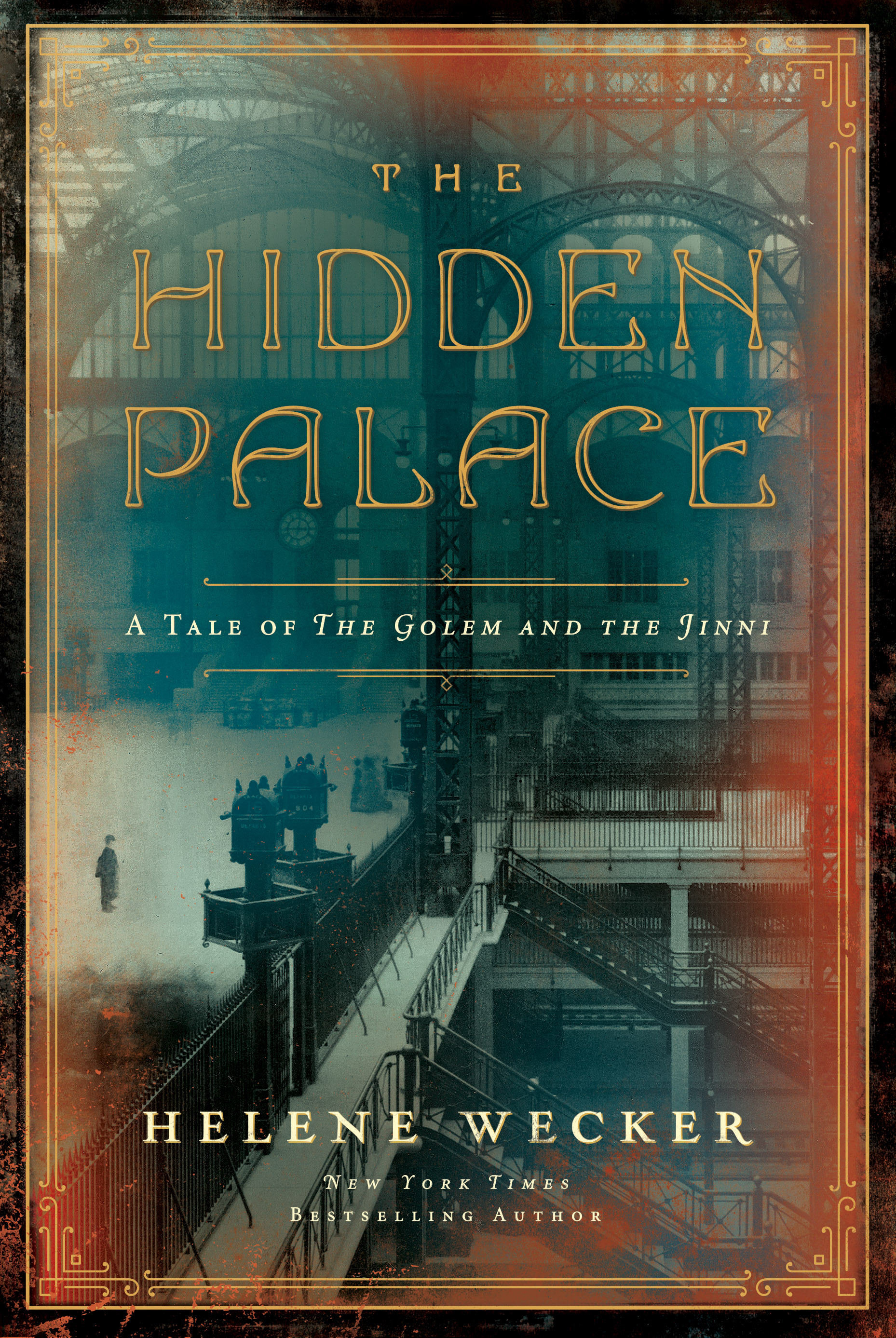
The Hidden Palace

by Rindis on November 26, 2024 at 5:40 pm
Posted In: Books

The Golem and the Jinni was a very good historical fantasy with a very character-driven focus.

It also had a very intricate plot with a lot of moving parts that don’t come into alignment until the end. That is still true in the sequel. We have our two main characters, the characters they touched before, a couple new ones… and a new golem and jinni. Just how they will fit in takes some time to be revealed, but it’s obvious that we’ve got some reflections of the main pair being set up.

And time is something this novel spends… pages with. It picks up about a year after the first book, with our happy-ending romance still stable, but they start growing apart as they struggle to hold their own identities, the identities they need in the human world, and their understanding of each other in balance. The last part of the novel is in 1915, but a lot of time is spent showing everyone changing through a decade and a half.

The climax of the novel is a bit like the first one: a cataclysm of magical shenanigans that draws attention, but keeps magic largely hidden from the modern world. The people at the center of it end up changed, but largely in less dramatic ways. The denouement is interesting, and seems like it could lead into a spin-off series. At the least, the door to more in this world is far more open than the end of the first book.

You could probably read this book first and pick up what’s going on. I don’t recommend it: The Golem and the Jinni is very good book and should not be missed. And this delivers the same degree of historical atmosphere, so don’t miss it either.

└ Tags: books, fantasy, history, reading, review
 Comment 

The Book of Lost Tales (Part 2)

by Rindis on November 2, 2024 at 12:00 pm
Posted In: Books

Despite having its origin in the same writing project as the first part, this is a fairly separate section and the break helps emphasize that.

In-fiction, the bulk of the stories here all intertwine even more than the first part. Out-fiction this is the part where the Tolkien’s writing project came apart, and for the most part we get drafts from separate (but related) notebooks, and papers inserted into the manuscripts. Part six is a delve into the overall scheme for the stories both before and after The Book of Lost Tales (not that this isn’t gone into elsewhere).

We get glimpses of Tolkien’s original thoughts that link elves to fairies, with elves fading, becoming smaller, and less substantial as the power of Men waxes. At various points Eriol, or Ælfwine (elf-friend) as he is later named, is hooked into actual history, early on before the Dark Ages, and later in the Eleventh Century.

All of this disappears later on, after further revisions take him further into his own lore, and away from a mythology that might have historically grown up on its own. This is for the best on many levels. The world and its stories are allowed to grow organically as they must, but there is also a racial snobbery lurking in these early versions where only the English have any true knowledge of the fay folk. The growth of the world also broadened its outlook. (If not as much as some may wish, it’s still a long step up from the Edwardian provincialism it started with.)

Similarly, Eärendil reveals the early roots of the stories. He comes up earlier, but part five is the forever unfinished (in any form) “Tale of Eärendil” which has its earliest seeds, with Eärendil being a Quenya name, but deriving from the Anglo-Saxon éarendil, and his story is decidedly a mythological-mode explanation of the evening star.

All this makes the later parts of the book scholastically interesting, though much of it is so fragmented between various drafts and outlines that pulling anything else out is challenging. Thankfully, Christopher Tolkien is a valuable docent, and guides us through these parts, helping us understand the ideas behind the later First Age.

The earlier parts of the book are far more complete, and would reappear later, and later versions are generally in the eventual Silmarillion. On their own, I found “The Nauglafring” also close its sources, echoing ideas of the Nibelungenlied. Personally, I found “Turambar and the Foalókë” very rough going, and “The Fall of Gondolin” only somewhat better, leaving “The Tale of Tinuviel” as one of the more engaging parts, which makes sense; there’s a lot of The Silmarillion that does not stick in my brain, but parts of the equivalent section do, so it’s a tale that certainly appeals to me more.

└ Tags: books, fantasy, reading, review
 Comment 
  • Page 14 of 93
  • « First
  • «
  • 12
  • 13
  • 14
  • 15
  • 16
  • »
  • Last »

©2005-2026 Rindis.com | Powered by WordPress with ComicPress | Hosted on Rindis Hobby Den | Subscribe: RSS | Back to Top ↑