
Rindis.com

All my hobbies, all the time
  • Home
  • My Blog
  • Games
  • History

Categories

  • Books (503)
  • Comics (10)
  • Gaming (917)
    • Boardgaming (673)
      • ASL (154)
      • CC:Ancients (83)
      • F&E (78)
        • BvR – The Wind (26)
        • Four Vassal War (9)
        • Konya wa Hurricane (17)
        • Second Wind (5)
      • SFB (78)
    • Computer games (162)
      • MMO (77)
    • Design and Effect (6)
    • RPGs (66)
      • D&D (25)
        • O2 Blade of Vengeance (3)
      • GURPS (32)
  • History (10)
  • Life (82)
    • Conventions (9)
  • News (29)
  • Technology (6)
  • Video (49)
    • Anime (47)
  • Writing (1)

Patreon

Support Rindis.com on Patreon!
Become a patron at Patreon!

Other blogs:

RSS Inside GMT

  • Foxes and Lions (Part 3): Military Matters, Captains, and Condottieri June 12, 2026

RSS Playing at the World

  • Playing at the World 2E V2 Arrives May 5, 2025

RSS Dyson’s Dodecahedron

  • Barrow of the Great Mothers June 16, 2026

RSS Quest for Fun!

  • The Expense Post May 24, 2026

RSS Bruce Heard and New Stories

  • Pain, Exhaustion, and Morale in D&D BECMI June 7, 2026

RSS Chicago Wargamer

  • The 2 Half-Squads - Episode 310: Cruising Through Crucible of Steel January 27, 2023

RSS CRRPG Addict

  • Yendorian Tales: Here There Be Dragons June 15, 2026
SF&F blogs:

RSS Fantasy Cafe

  • The Leaning Pile of Books May 24, 2026

RSS Lynn’s Book Blog

  • Booking Ahead/Weekly Wrap Up June 14, 2026
ASL blogs:

RSS Sitrep

  • Cardinal ASL Sins March 18, 2026

RSS Hong Kong Wargamer

  • FT114 Yellow Extract After Action Report (AAR) Advanced Squad Leader scenario April 16, 2025

RSS Hex and Violence

  • This still exists? March 25, 2025

RSS Grumble Jones

  • YouTube AAR for Critical Hit's Gettysburg Turning Point 1863 - ID4 At Will Fire June 16, 2026

RSS Desperation Morale

  • How to Learn ASL March 16, 2025

RSS Banzai!!

  • October North Texas Gameday October 21, 2019

RSS A Room Without a LOS

  • [Crossing the Moro CG] T=0902 -- Rough start July 18, 2015
GURPS blogs:

RSS Dungeon Fantastic

  • Rules & Rulings from Session 224 June 16, 2026

RSS Gaming Ballistic

  • B-Scale: Damage That Scales from Tardigrades to Kaiju June 5, 2026

RSS Ravens N’ Pennies

RSS Let’s GURPS

  • Review: GURPS Realm Management March 29, 2021

RSS No School Grognard

  • It came from the GURPS forums: Low-Tech armor and fire damage January 29, 2018

RSS The Collaborative Gamer

  • Thoughts on a Town Adventures System January 18, 2022

RSS Don’t Forget Your Boots

  • GURPS Supers Newport Academy #6: “Old Friends, New Again” June 7, 2026

RSS Orbs and Balrogs

  • Bretwalda - Daggers of Oxenaforda pt.4 - Fallen King May 27, 2017

The Crimean War

by Rindis on October 10, 2025 at 2:38 pm
Posted In: Books

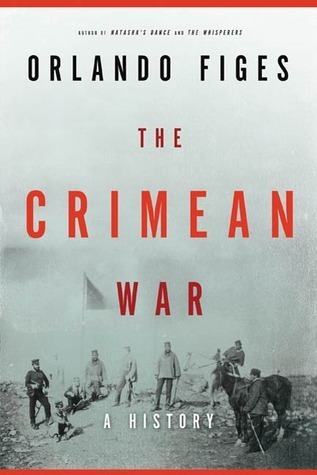
We begin in Jerusalem, where fights break out at the Church of the Holy Sepulchre over whether Orthodox or Catholic priests had priority for their rituals when both versions of the calculation of Easter fell on the same day in 1847.

Figes takes us from the immediate problems to the rising tensions that caused them, to an examination of Russia’s ideas as a defender of Orthodoxy. There is also a good chapter on the history of Russophobia in the west, which, despite his efforts, is hard not to see as to some degree justified. Russia did have ambitions outside its current borders, it did have a desire to “meddle” with the internal workings of the Ottoman Empire, and did largely have the political will to act on these desires. The practical ability to do so may have been lacking. And there’s the question of whether France and Britain weren’t engaged in exactly the same types of things, and I think Figes could have spent further valuable time looking at where Russia’s concerns came from western actions, justified or not, rather than mostly the opposite.

Add to this a look inside the Nineteenth Century Ottoman Empire, the political disturbance in Europe caused by start of the French Second Empire, and lots of diplomatic maneuverings, you start wondering if there’s going to be any space for the actual war in the book. Now, this is all extremely valuable background, especially given how little of it is likely background knowledge to any reader, and extremely well presented.

The roughly two chapters that are involved with the escalation of crisis into actual war is a good reflection of the complicated, messy, process that the entire conflict would be. There was no one unified policy headed to war. It was approached slowly, in steps, as various ministers and potentates work towards largely belligerent goals. Notably, Napoleon III wants a struggle over Middle East religion for an external distraction, part of the British cabinet is in the grip of extreme Russophobia, and Czar Nicolas I is dreaming of partitioning the Ottoman Empire.

Both during the early stage, and in the actual fighting, many plans are derailed by caution on the part of various advisors. Nicolas is talked out of trying to seize Constantanople before the western powers could react (given the history of that city, I wonder if that really could be done; getting there however seems likely). The more limited offensive near the Danube is still enough to draw France and Britain in, and have Austria nervously guarding her borders.

The latter is what decides the initial campaign of the war. Fighting bogs down with the siege of Silistria, British and French troops intervene, and promptly start losing men in unsanitary camp conditions. The threat that Austria might actually intervene if this keeps up near her borders is what prompts the Russian withdrawal. Nicolas had considered himself to be close to fellow absolutist Franz Joseph, and didn’t understand the threat Austria saw in a rising tide of Slavic nationalism.

Some British figures saw a chance to dismember parts of Russia while she was opposed by the rest of Europe, but this was an impossible idea. First, Russia was not a Europe-wide threat like France had been fifty years before, and without a lot more military expenditure than anyone envisioned, getting at Russia at all was a major undertaking. Britain of course largely saw events as a naval problem, and made a few tries in the Baltic, but good fortifications, timidity, and lack of resources ensured that could go nowhere. With Ottoman Turkey as a base, and French concerns in the Near East, British naval concerns resolve around the naval base of Sevastopol. Ironically, the general military plans are adapted from plans for a war against France (with Cherbourg being the primary objective).

One thing that shows well in this book is just how far the British Army has fallen. France has been fighting in Algeria, but Britain hasn’t done much fighting in decades, and her preparations and upper officer corps are a shambles. At all stages of the war, the French are much better prepared for campaigning, and they fall short of being able to manage effective operations all too often. If anyone is less prepared than the British, it’s the Russians. Most notably, their small arms haven’t changed since the Napoleonic Wars, and they are effectively out ranged and out shot by the newer Minié ball firing muskets of the western powers.

This, and a command structure even more dysfunctional than the western allies’ allow a very convincing victory at the Alma River, when the Russians should have had decisive advantages of terrain. There is a good examination of the Russian situation after this, with a very real sense that if the French and British armies had immediately pushed into Sevastopol itself, it would have fallen with no real defense. I don’t think anyone really contends this, but there is the question of whether such an advance was possible. Figes mentions various problems the armies had right after Alma, but a bit late, and not with any real analysis. It seems likely that something could have been done, and that may have been sufficient, but it is one of the imponderables of history.

Instead, the allied armies switch bases from Kalamita Bay to the south shore of Crimea east of Sevastopol, namely Balaclava and Kamiesch, where once again the French are better prepared, and have picked a better base of operations. One thing Figes does not stress enough that the investment of Sevastopol is not complete (at least not initially), and the Russians are free to send in reinforcements and build proper defenses. It’s kind of glossed over, but seems really important to me. No numbers are given for how much was moved in and when, and it is more alluded to, probably with no solid numbers available.

As the siege gets going, we have a pair of attempts by the Russians to get at the British base of supplies, and Figes takes time to discuss the one thing he knows everyone’s heard about, the Charge of the Light Brigade, and gives a good description of where things went wrong and how. After failing in the follow up of Inkerman, things settle down into a preview of WWI, with fortified positions and artillery dominating. Eventually, the port is taken, and largely destroyed (what hadn’t been already by the siege), and slowly, a peace process starts up. (This could have happened much earlier, but the British government had felt they hadn’t done anything worth the expenditure of money and men until that point—a feeling I can empathize with from several grand strategy games.)

Figes wraps up by judging how everyone did after the war, and gives the long-term victory to Russia. He has some very good points about Russia getting a lot of what she wanted after the war, including finally putting down some long-running resistance in the Caucasus. Nationalism continued to rise and dismembered parts of the Ottoman Empire and caused Austria to lose her Italian possessions. Russia managed to side with France, breaking her isolation, and sending England back into Splendid Isolation. I think much of this would have happened with or without the war, and so Russia did not come out of it as well as Figes implies. It showed all the involved powers where some major military limitations were, and it seems to me that Britain paid the most attention to… one of the lessons of the war. It spurred change from old system of buying commissions and promotions, and helped re-professionalize the army.

We end (or nearly so) in Jerusalem, where fights break out over who has priority in the Church of the Holy Sepulchre….

If you haven’t figured it out, I have some problems where Figes doesn’t seem to go far enough down certain avenues, but it is a very good and readable history, with plenty of background that is going to be desperately needed for most readers. There is plenty of reference to various primary accounts, occasional mentions the opinions of various prominent historians, and a clear discription of everything. I could have used some more maps, but there are a number of period photographs that help illustrate important bits.
└ Tags: books, history, reading, review
 Comment 

HMS Surprise

by Rindis on October 2, 2025 at 12:00 pm
Posted In: Books

The third Aubrey/Maturin novel takes does a good job getting the balls back in the air.

We start with Aubrey temporarily in command of a frigate watching Toulon as part of the Mediterranean blockade. Ordered back to Gibraltar, on the way he captures a French supply ship, and rendezvous with Maturin, who has continued his spying in Spain. He has been captured, and tortured, and is physically recovering for the bulk of the novel. But, the capture and the rescue of Maturin serve the needs of early action.

After that, we get a bit more on the social side. Aubrey is  in debt, again/still, which has his romance on hold. He escapes his creditors by getting command of HMS Surprise, and is ordered to deliver an ambassador to Kampong (on the Malay peninsula). This makes up the bulk of the book, with various nautical misadventures along the way. Of course ship-board life is a large part of this series, and O’Brian is not going to skimp on that. I appreciate this, but still find it a bit much.

Still, we get as far as India, and things bog down a bit again for various cross-purposes and social adventures there. In fact, it’s not long before heading home to England, and the action side of the plot suddenly comes to the fore again. As ever, this part is handled well, and after the carnage the novel slips into a steady current to the conclusion.

Now, don’t mistake me, all aspects of the novel work, and I enjoyed it. I do feel passage out towards the Indian Ocean drags on, but it’s also a good demonstration of the sorts of problems of sailing anywhere in the period. These books are good for giving a better appreciation of several aspects of the period at once. Also, HMS Surprise was a real ship (somewhat fictionalized here), and the ending action is based on the actual Battle of Pulo Aura (which I only know because I looked it up; but the outline was familiar to me).

└ Tags: books, historical fiction, reading, review
 Comment 

Caliban’s War

by Rindis on September 24, 2025 at 12:00 pm
Posted In: Books

Book two of The Expanse has the same outline structure. Bad things happen, a man becomes very single-focused obsessed with finding a missing person, he runs into James Holden, mayhem ensues.

Structurally, it is different. We do change viewpoint characters, but instead of two characters operating in different in-novel genres, we have four different viewpoints. This varies things out, they’re all grounded in more regular SF, just with their own knowledge and worries. Even better, we’re not on a fixed rotation between them, and the story is allowed to bounce between them far more naturally.

The inciting event here is a creature suddenly appearing and wiping out nearly everyone in two marine units on Ganymede. One Martian, one Terran. This isn’t well or easily understood at first, and shooting starts between the two sides, largely wrecking infrastructure on Ganymede. Which is also the breadbasket of the outer colonies. This drives a lot of just-off-screen action, as things break down, but the overall crisis is still developing and is much slower moving than the book; which is to say the next couple of lean years have yet to play out.

The monster is definitely related to the protomolecule, the MacGuffin from the first book. Everything else about it is mysterious, and finding just who is up to nasty shenanigans this time is the main driver of the plot.

So, yes, anyone who wants to say this is something of a repeat of the first book has a real good point to make. But there’s plenty of differences outside of the highest-level concept, and I find the cast of characters much better balanced this time. So, it feels a bit familiar, but it does much better.

└ Tags: books, reading, review, science fiction
 Comment 

Dreadnought

by Rindis on September 16, 2025 at 12:01 pm
Posted In: Books

This is a book where the subtitle is accurate and sums up the book far better than the title ever could: “Britain, Germany, and the Coming of the Great War”.

This is also Robert Massie at his best. Typically, he does a very good job following the life of one (Romanov) person, and showing the world around them. Dreadnought follows a much larger crowd through about sixty years. He handles all of this extremely well, keeping everything flowing, giving dozens of mini-biographies, and keeping the reader from getting confused.

His starting point is that in 1914 the King of England and the Emperor of Germany were closely related, and the House of Windsor was German to begin with. In the mid-1800s relations between Queen Victoria and relations were quite close to the various parts of the region of Germany. In those circumstances, Britain and Germany were unlikely to go to war. And yet that happened in 1914.

So, this is the story of how two countries went from a very close relationship to mutual suspicion and being on opposite sides of The Great War.

We start with a quick biography of Queen Victoria, her son (the future Edward VII), her daughter (“Vicky”) and her husband Frederick III of Germany. In what has to be the most spectacular mis-diagnosis of history, early detection of throat cancer is missed in Frederick, and he is already dying when he succeeds his father, and reigns for a little over three months.

This leaves us with Kaiser Wilhelm II, who would rule Germany until the end of WWI. An admirer of Britain, and especially desirous of grandmotherly approval, he has plenty of troubles he inherited, as well as many of his own making, and he falls in with von Tirpitz and both want a great German fleet which can show the world just how thoroughly Germany has arrived as a Great Power.

Of course, before that, Bismark enters the scene, and adroitly engineers a number of crises which unite Germany under Prussian control. Having gotten what he wants, his politics become much more conservative, looking to preserve peace in Europe. Knowing that any sort of agreement with France is now impossible, his priorities are propping up Austria-Hungary and making agreements with Russia, which is tough because those two are opposed on many subjects. (An interesting bit is Massie shows how the Kaiser and other hawks forced through a harsher peace in the Franco-Prussian War than Bismark wanted. He wanted to be able to deal with France afterward, like with Austria-Hungary.)

Once Wilhelm II removes Bismark as Chancellor, things slowly come apart, and that is kind of the central theme of the book, hidden under so many other elements. Russia and France come into alignment. And then Britain and France come to an agreement over their colonial problems and start drifting closer together. Germany wants a closer relationship with Britain, but is now building a nice modern navy. This is stated as being so they can protect their own commerce and colonies in a war, but is largely short-ranged heavy ships. The only thing the German navy can fight is the Royal Navy.

As the German navy expands, naval matters become more and more important. Part three (of five) is the shortest section of the book, and one chapter in there is pretty much all the attention the titular HMS Dreadnought gets. Still, he presents it all well, and the coming of Dreadnought is important to everything after, especially as the arms race between Britain and Germany takes all the attention. On the British side, wrangling over the budget as the bill for the Royal Navy goes up causes its own brand of chaos, but naval supremacy is the only position the government can take.

The last section, which covers from Agadir (1911) to the start of WWI is exceptionally good. It covers the naval discussions around trying to halt/slow down the arms race, and the London Conference during Balkan Wars, and finally the July Crisis.

Overall, Dreadnought runs to a bit over 900 pages, and is packed. There’s dozens of mini-biography, friendships, government maneuvers, notes between governments, and crises. Changing naval technology and changing attitudes. If you want Europe before WWI wrapped up and presented to you, this will do it. The main thing is Britain and Germany are the main players here, and don’t see much of what doesn’t matter to them. There is some talk of the British army and its change to a force that could properly support a land war in Europe, but not a lot of detail is gone into there.

└ Tags: books, history, reading, review
 Comment 

Love, Witches & Other Delusions

by Rindis on September 8, 2025 at 12:00 pm
Posted In: Books

This covers the second half of the initial anime season. (Or, much more properly, the anime covers this.)

It retains the format of being smaller stories stitched together. The book gives them as chapters, but they are separate stories, connected by a fairly short amount of time passing.

We start with the main pair, Kazuma and Aqua, still sleeping in a stable and winter is coming on. This is a powerful motivator. And then Kazuma ends up temping with a different party. You know, with regular adventurers who aren’t useless. And Kazuma ends up showing how tactics and smarts can overcome a lack of overall power.

The next story is good, but less overall relevant. The third story deals with getting a real place to stay. This one is decidedly better in the anime, thanks to some superb comedic timing. The fourth story also is a bit better in the anime for much the same reasons. Like with anything in this genre, it has a sexy side, and this one leans on that more than usual for the jokes. That said, this is comedy, not ero, so everything falls apart in the face of mistaken identity and bad timing.

And then the fifth story suddenly turns back to adventuring and another climatic encounter. This doesn’t really flow out of the previous stories, so it feels abrupt, even though things did get name-dropped ahead of time. Kazuma gets to be competent again, echoing the first story, but there’s a big cast of other people being competent as well. It works, but does feel a bit light for what’s going on.

Overall, the second half of the first book is better than this is overall, though it’s a lot of fun. The anime definitely took was was here, didn’t really change anything, and still punched up the humor a bunch. Very impressive.

└ Tags: books, fantasy, light novel, reading, review
 Comment 
  • Page 8 of 93
  • « First
  • «
  • 6
  • 7
  • 8
  • 9
  • 10
  • »
  • Last »

©2005-2026 Rindis.com | Powered by WordPress with ComicPress | Hosted on Rindis Hobby Den | Subscribe: RSS | Back to Top ↑