
Rindis.com

All my hobbies, all the time
  • Home
  • My Blog
  • Games
  • History

Categories

  • Books (503)
  • Comics (10)
  • Gaming (917)
    • Boardgaming (673)
      • ASL (154)
      • CC:Ancients (83)
      • F&E (78)
        • BvR – The Wind (26)
        • Four Vassal War (9)
        • Konya wa Hurricane (17)
        • Second Wind (5)
      • SFB (78)
    • Computer games (162)
      • MMO (77)
    • Design and Effect (6)
    • RPGs (66)
      • D&D (25)
        • O2 Blade of Vengeance (3)
      • GURPS (32)
  • History (10)
  • Life (82)
    • Conventions (9)
  • News (29)
  • Technology (6)
  • Video (49)
    • Anime (47)
  • Writing (1)

Patreon

Support Rindis.com on Patreon!
Become a patron at Patreon!

Other blogs:

RSS Inside GMT

  • Meet The Northern Wei: A Civilization of GMT’s Ancient Civilizations of East Asia  June 19, 2026

RSS Playing at the World

  • Playing at the World 2E V2 Arrives May 5, 2025

RSS Dyson’s Dodecahedron

  • Blog Updates June 20, 2026

RSS Quest for Fun!

  • The Expense Post May 24, 2026

RSS Bruce Heard and New Stories

  • Pain, Exhaustion, and Morale in D&D BECMI June 7, 2026

RSS Chicago Wargamer

  • The 2 Half-Squads - Episode 310: Cruising Through Crucible of Steel January 27, 2023

RSS CRRPG Addict

  • The Search for Freedom: Our Repeated Petitions June 20, 2026
SF&F blogs:

RSS Fantasy Cafe

  • The Leaning Pile of Books May 24, 2026

RSS Lynn’s Book Blog

  • Summer of Horror: Can’t Wait Wednesday: Sleepers in the Snow by Joanne Harris June 17, 2026
ASL blogs:

RSS Sitrep

  • Cardinal ASL Sins March 18, 2026

RSS Hong Kong Wargamer

  • FT114 Yellow Extract After Action Report (AAR) Advanced Squad Leader scenario April 16, 2025

RSS Hex and Violence

  • This still exists? March 25, 2025

RSS Grumble Jones

  • YouTube AAR for Critical Hit's Gettysburg Turning Point 1863 - ID4 At Will Fire June 16, 2026

RSS Desperation Morale

  • How to Learn ASL March 16, 2025

RSS Banzai!!

  • October North Texas Gameday October 21, 2019

RSS A Room Without a LOS

  • [Crossing the Moro CG] T=0902 -- Rough start July 18, 2015
GURPS blogs:

RSS Dungeon Fantastic

  • GMing Shortcuts in Felltower June 17, 2026

RSS Gaming Ballistic

  • B-Scale: Damage That Scales from Tardigrades to Kaiju June 5, 2026

RSS Ravens N’ Pennies

RSS Let’s GURPS

  • Review: GURPS Realm Management March 29, 2021

RSS No School Grognard

  • It came from the GURPS forums: Low-Tech armor and fire damage January 29, 2018

RSS The Collaborative Gamer

  • Thoughts on a Town Adventures System January 18, 2022

RSS Don’t Forget Your Boots

  • GURPS Supers Newport Academy #6: “Old Friends, New Again” June 7, 2026

RSS Orbs and Balrogs

  • Bretwalda - Daggers of Oxenaforda pt.4 - Fallen King May 27, 2017

The Nisibis War

by Rindis on May 1, 2019 at 12:00 pm
Posted In: Books

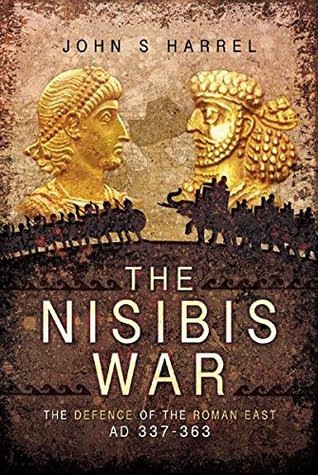
You’ve probably never heard of this war. There’s a good reason: John Harrel is the only one calling it that. This book covers what is usually considered two wars, neither of which seems to have any sort ‘official’ name. “Nisibis” was the name of a city that Rome had gotten in the previous peace deal with Persia (known as the Peace of Nisibis), and was the focus of much of the campaigning in this period, though not where the most decisive actions happened.

Considering that there is basically nine quiet years on the frontier between the two wars, I’m not sure considering them one war is justified. However, they are of a piece, with Shapur II campaigning to drive the Roman Empire out of Mesopotamia, so no matter how you look at it, studying them together is well justified.

This is a fairly in-depth study of the campaigning and the armies of the period, and definitely recommended for anyone interested in 4th Century military history. Given the state of knowledge of the period, I think he’s a bit too certain on some of his statements, but he does a good job of laying out his thinking for the state of the Roman army, it’s composition, and sources of replenishment. There’s a good number of maps, I found the symbology a little crude, but effective.

My main problem is the use of terminology, which kind of goes all over the place. For most Roman offices, he sticks with the Roman names, in italics as foreign words, which is fine. However, he then insists on translating comes and dux as ‘count’ and ‘duke’. That is where the English words come from, but those forms come with a lot feudal baggage that has nothing to do with the Roman offices, and they shouldn’t be translated like that. Also, oddly, he insists on giving place and unit names italics as foreign words, even though as proper nouns, that not the general practice. It makes for some highly distracted reading in places.

There is also some good discussion of Shapur II’s activities (including during the ‘lull’), and discussion of his strategic skill. Sadly, while he gives a good look at Emperor Julian (and a very good account of the entire retreat from Ctesiphon), he touches on Julian’s experience (and gives an account of his campaigns in Gaul), but doesn’t consider anything analogous to  Goldworthy’s assertion from In the Name of Rome that Julian’s being unused to the scale of operations (in men and distance) was the major Roman failing in 363, though he does touch on a similar idea.

└ Tags: books, history, reading, review, Rome
 Comment 

The Shattered Stone

by Rindis on April 23, 2019 at 12:00 pm
Posted In: Books

The Children of Ynell series was originally published from 1977 to 1981, and was the first time I got involved in a series that wasn’t finished yet. In fact, I never did get the final book in a series I greatly enjoyed at the time.

The Shattered Stone is the first two of the five books of the (retitled) series, and certainly the ones I remember more strongly. They really affected me when I was young, and I’ve carried a memory of them and the author’s name for decades now as I occasionally think to hunt for copies. Make no mistake, these books deserve to be much better known than they are. They’re reasonably ‘adultish’ YA fantasy novels that are basically epic fantasy, though the focus is entirely on individuals.

The Ring of Fire introduces the world, focusing on a small town and and nearby village. It is largely a tale of growing up, and realizing your parents can’t or may even not want to solve everything. It starts out jumping between two viewpoint characters, which I didn’t remember, which I think is because Zephy takes over the entire book as it goes; Thorn is still there and important, but he slides out of being a viewpoint character. It’s not a pretty setting with a repressive (false) religion, and other methods of control while Zephy is the irrepressible free spirit, and her internal struggles do a lot to make the book. Things get worse, naturally, but at the same time, she and a few stumble into something of the truth, and features about the only religious experiences that have ever had any power for me.

The Wolf Bell, surprisingly, happens centuries earlier. Many dimly known, or distant past events are either recent, or just happening at this point. Most notably, the town of Burgdeeth that is the setting of most of the first book is just being built during this one. I’m not sure if this was planned from the start, or if Murphy decided to explore the ‘back story’ or what. Though it does make some sense to come second, as it would spoil a lot of the early-book reveals of the first book to read this first. That said, they’re only tenously connected books, and one does not really lean on the other. Also, the amount of magic available is much higher here, along with a consistently higher amount of action. On the other hand, the major characters aren’t quite as sympathetic, though this is presumably on purpose, as Ramad is impossibly mature for his age (and needs to be), and his mother is ruled by a strong selfish streak.

I don’t recall much of the next two books, so I can’t say where it goes from here, or how these two fit within the whole, but I remember that they are more dependent on these two than the second one is.

└ Tags: books, fantasy, reading, review
 Comment 

The Roman Empire and the Silk Routes

by Rindis on April 17, 2019 at 12:00 pm
Posted In: Books

This basically a follow-on to McLaughlin’s study of trade across the Indian Ocean. Despite being almost the same size, it feels like an appendix to it.

Whereas his former book spent a lot of time giving specifics of particular trade goods and where Romans were going to get them and trying to get an idea of the overall Roman budget, this is more of a jumbled history of some of the land area between Rome and China. He starts off with a discussion of what Rome had to get from China, which is interesting.

The obvious part is silk, and he goes into the difference between ‘domesticated’ silk, and ‘wild’ silk, where the latter uses threads from cocoons where the larvae ate it’s way out, cutting the strands. Chinese ‘domesticated’ silk is so good because it has extremely long single strands to work with. At any rate, the lesser version was produced in many places, including the Greek island of Cos. More surprising is the assertion that Chinese steel was superior to what Rome could produce, so high-quality steel was an import. I’d like to see some sort of study of the history of metallurgy to check that. The most surprising part is indications that Rome was exporting silk to China. It wouldn’t have been much, but the Roman world had access to some brilliant dyes that China did not, so dyed silks left the Empire again.

Most of the rest of the book takes a look at various areas and regimes along the northern trade routes that made up the Silk Road(s). He starts with China’s troubles with the Xiongnu (Huns!), which started China exploring to the south of their territory looking for potential allies against them. This eventually gets them to Bactria… but just as the post-Alexandrian nation there is dissolving into fragmented city-states.

There is some look at the Chinese economy, but it’s not nearly as well developed, and most of the book he seems to try to avoid discussing their currency. (“Han revenues: 12,300 million cash”, without saying cash what.) At one point near the end he does define the wushu, which seems to be the currency base for his calculations. He spends some time discussing the differences between revenue collection between the two, which could probably stand to be more in depth, though I’d have to spend a fair amount of time thinking about it to make sense of everything he does have there.

All that is basically the ends of the book. In between, there’s a discussion of various regions in between, their contacts with other areas, trade routes through, but mostly little on the actual trade itself. It makes for a good history of central Asia from ~200 BC to ~100 AD, also with some helpful notes on the geography involved, but it doesn’t integrate them with each other very much except for a time line given in the front. So, it’s nowhere near as useful as The Roman Empire in the Indian Ocean, though it is interesting, and good books on this region are rare.

└ Tags: books, history, reading, review, Rome
 Comment 

Francis I

by Rindis on April 11, 2019 at 12:00 pm
Posted In: Books

Frieda’s biography of Francis I is certainly on the popular history end, and is well written and accessible. Moreover, not only did I find it accessible, but it gave me some desire to get back to Here I Stand, which covers the period, and includes much of what she goes into.

However, she does not deliver on her promises in the subtitle or the introduction. Freida mentions she first got interested in Francis by seeing his symbol (a flame-wreathed salamander) everywhere in buildings while doing research. This shows the impact and involvement he had on France at the time, all the projects he had some sort of hand in. And not much of this really shows in the main part of the book. Similarly, she does not really show how he determined the course of France in the Renaissance, which would earn him the title of ‘maker of modern France’.

Coverage of the period in general also suffers, with very little attention paid to the rising religious tensions in France. (In fact, if not for the Affair of the Placards, you might not realize the Reformation is happening at all.)

She is much more successful in showing Francis as a person, and some of the court around him. She also shows how much of his reign was defined by his continual rivalry with Emperor Charles V, and how it affected the future Henri II. Francis I is largely known as a poor king and person for some very good reasons, but Frieda does a very good job of rounding out his personality and accomplishments, and while this book isn’t a great look at the early 16th Century in France, it is a good look at Francis himself, and is recommended as a deeper look into the person.

└ Tags: books, history, reading, review
 Comment 

Off Armageddon Reef

by Rindis on April 3, 2019 at 12:00 pm
Posted In: Books

David Weber is a good author with a few glaring weaknesses. Sadly, all of that is readily apparent in this novel.

The basic setup is that humanity gets to the stars, runs into an alien race apparently intent on wiping out everything other than itself, and after a tough war, looses. Earth, and all of the colonies, are destroyed, leaving one fleet with a last-ditch plan to start a new colony somewhere out of the way, avoid technology, and tell-tale high-energy emissions that will give the new colony away.

The prologue for all of this is excellently done, but is big and detailed enough that you’d think the point of the series is the buildup of Safehold to where it can try for a round two against the aliens.

Apparently not, it’s all set up for a long series of novels with lots of Age of Sail-style action. Not necessarily a bad thing, and let’s be honest, it’s Weber’s first love. But after all the initial high-tech setup, and the fact that that is the supposed end goal, I was hoping for a thick novel that deals with, shall we say, an inflection point in Safehold’s history, and then the next one could be a couple generations later, and so on, back to actually revisiting that prologue.

Inside of what we do have here, we Merlin, who’s basically Superman. As a high-tech android with the personality of a dead Earth naval officer, he’s got everything you can ask for: super strength, lightning reflexes, a library full of banned scientific knowledge… and a lack of allies. Actually, he does find those, and of course, war and action result.

The world building that surrounds this is excellent. That’s always been one of Weber’s strengths, and it is on display here, and is one of the primary reasons to read this. The plot is fairly strong as well, though it’s not really an 800-page plot; the book doesn’t need as much trimming as some other reviews say, but it does need some overall tightening up. If you want some lower-tech space opera, definitely read this, and I certainly plan on going on with the series eventually, but I can’t give it much more than a weak recommendation for particular audiences.

└ Tags: books, reading, review, science fiction
 Comment 
  • Page 57 of 93
  • « First
  • «
  • 55
  • 56
  • 57
  • 58
  • 59
  • »
  • Last »

©2005-2026 Rindis.com | Powered by WordPress with ComicPress | Hosted on Rindis Hobby Den | Subscribe: RSS | Back to Top ↑