
Rindis.com

All my hobbies, all the time
  • Home
  • My Blog
  • Games
  • History

Categories

  • Books (503)
  • Comics (10)
  • Gaming (917)
    • Boardgaming (673)
      • ASL (154)
      • CC:Ancients (83)
      • F&E (78)
        • BvR – The Wind (26)
        • Four Vassal War (9)
        • Konya wa Hurricane (17)
        • Second Wind (5)
      • SFB (78)
    • Computer games (162)
      • MMO (77)
    • Design and Effect (6)
    • RPGs (66)
      • D&D (25)
        • O2 Blade of Vengeance (3)
      • GURPS (32)
  • History (10)
  • Life (82)
    • Conventions (9)
  • News (29)
  • Technology (6)
  • Video (49)
    • Anime (47)
  • Writing (1)

Patreon

Support Rindis.com on Patreon!
Become a patron at Patreon!

Other blogs:

RSS Inside GMT

  • Foxes and Lions (Part 3): Military Matters, Captains, and Condottieri June 12, 2026

RSS Playing at the World

  • Playing at the World 2E V2 Arrives May 5, 2025

RSS Dyson’s Dodecahedron

  • Cyberstyle 8.5 June 13, 2026

RSS Quest for Fun!

  • The Expense Post May 24, 2026

RSS Bruce Heard and New Stories

  • Pain, Exhaustion, and Morale in D&D BECMI June 7, 2026

RSS Chicago Wargamer

  • The 2 Half-Squads - Episode 310: Cruising Through Crucible of Steel January 27, 2023

RSS CRRPG Addict

  • The Search for Freedom: Undistinguished Destruction June 13, 2026
SF&F blogs:

RSS Fantasy Cafe

  • The Leaning Pile of Books May 24, 2026

RSS Lynn’s Book Blog

  • Booking Ahead/Weekly Wrap Up June 14, 2026
ASL blogs:

RSS Sitrep

  • Cardinal ASL Sins March 18, 2026

RSS Hong Kong Wargamer

  • FT114 Yellow Extract After Action Report (AAR) Advanced Squad Leader scenario April 16, 2025

RSS Hex and Violence

  • This still exists? March 25, 2025

RSS Grumble Jones

  • AAR Slides for Schwerpunkt SP96 Husum Hotfoot June 5, 2026

RSS Desperation Morale

  • How to Learn ASL March 16, 2025

RSS Banzai!!

  • October North Texas Gameday October 21, 2019

RSS A Room Without a LOS

  • [Crossing the Moro CG] T=0902 -- Rough start July 18, 2015
GURPS blogs:

RSS Dungeon Fantastic

  • GURPS DF Session 224, Felltower 141 - Second GFS exploration June 15, 2026

RSS Gaming Ballistic

  • B-Scale: Damage That Scales from Tardigrades to Kaiju June 5, 2026

RSS Ravens N’ Pennies

RSS Let’s GURPS

  • Review: GURPS Realm Management March 29, 2021

RSS No School Grognard

  • It came from the GURPS forums: Low-Tech armor and fire damage January 29, 2018

RSS The Collaborative Gamer

  • Thoughts on a Town Adventures System January 18, 2022

RSS Don’t Forget Your Boots

  • GURPS Supers Newport Academy #6: “Old Friends, New Again” June 7, 2026

RSS Orbs and Balrogs

  • Bretwalda - Daggers of Oxenaforda pt.4 - Fallen King May 27, 2017

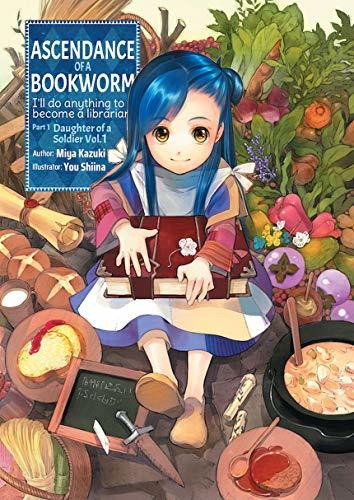
Ascendance of a Bookworm, Part 1: Daughter of a Soldier, Vol 1

by Rindis on April 7, 2026 at 12:00 pm
Posted In: Books

The “part 1, volume 1” bit may be a bit confusing. There is a big website in Japan for posting web novels (Shousetsuka ni Narou). Basically, a non-fanfic version of things like AO3. It is basically the testing ground for light novel publishing there. So, Miya Kazuki refused to have her story cut down to fit into the standard light novel format (which have a typical, short, page count), and this is just the first part of the first storyline. I think it’d be best to let stories like this one escape that straitjacket and just be published in a format that lets it be the length it needs to be. That goes for the English editions as well.

But, as it is, this comes to a decent resting place, but isn’t a real complete story. It is also isekai, a genre that is so much the backbone of Shousetsuka ni Narou publishing that it has been memeing itself for nearly a decade now.

Myne is a sickly little girl in a fantasy city. She has good parents, but they are lower class, and don’t have any means to do more than try to take care of a girl who has barely made it to five-years-old.

She dies. Just after the opening of the book, she dies.

But, just before that, a young woman in modern Japan dies in an earthquake, and her spirit ends up inhabiting Myne just has her spirit gives out. What is afflicting Myne is discussed right near the end of this book, and is more a spiritual problem, and Urano’s much stronger personality has fewer problems, though recurrent fevers are a theme of the book.

And, of course, our protagonist is now in a sickly five-year-old body, and deprived of the one thing she was obsessed with: books.

This is a typical European Middle Ages style fantasy world. There’s no printing, most people are illiterate, and writing, much less books, rare.

Much of this book is about (new) Myne getting her feet under her: Getting healthier, learning a little bit about the world she’s now in (vegetables, for instance, are completely different here, in form as well as name), and starting to see the outside world. There’s also a lot of failures to produce books.

It takes a bit, but Myne is coming into her own, as things she knows help out in her new life; such as the general method to make shampoo. From her parents’ perspective, she’s a special needs child that is suddenly showing flashes of genius. Already knowing her, this isn’t immediately obvious to them, but other people are noticing by the end of the book.

I came to this from the anime based on the novel series. The anime Ascendance of a Bookworm is very good and a recommended watch. From this, I can say the novels are also recommended. However, it does take a little to get going/interesting as we get through the initial struggle, and the world starts opening up, and I can say as it goes things get more developed, and more interesting. The writing is not the best, but that is more likely J-Novel Club’s translation (no translation house is paying for great translators these days).

└ Tags: books, fantasy, reading, review
 Comment 

Ghost, Thunderbolt, and Wizard

by Rindis on March 30, 2026 at 12:00 pm
Posted In: Books

This is basically three works under one cover, as the sections on the three most well-known Confederate Ranger leaders are all independent of each other. There’s no general section on rangers, or their employment by less-successful leaders to tie things together, either. The most we get is a short introduction that mentions the CSA’s 1862 Partisan Ranger Act and a short description of its provisions.

The careers of Mosby, Morgan, and Forrest overlap quite a bit in time, and the latter two in place, so we get some repetition of external pressures in the narratives which are basically three separate works under one cover. That’s not too bad, but not the best either. More notably, all three, and Mosby in particular, are constant recounting of events and incidents without letup so it is hard to keep straight.

I would have liked to see more analysis and theorizing. Early in Mosby’s career, Black gives a description of a few things Mosby did, and then says ‘it seems someone else was already operating in the area’, and gives a similar sequence of events, but a few days earlier. To me, that sounds like perhaps someone miscounted days when writing down a proper report. But Black refuses to even speculate on that, or do anything other than assume they must be separate incidents because of the dates given.

There is some analysis given, but usually as asides in his narrative instead of breaking out a section to really sit back and chew things over. Union cavalry was largely ‘going by the book’ written in the Napoleonic era, and trying to charge to engage with sabers. As the war went on, experience and better leaders changed this, but Black never goes into how many troops had official equipment of what weapons, and what exceptions to this are known.

Of course, he is focused entirely on the Confederate side, but even here he doesn’t break down just what the Confederate cavalryman was supposed to be equipped with, and just what someone like Forrest would be working with. He does go into some depth with Mosby being very clear that he considered the saber and other melee weapons useless, and was entirely reliant on revolvers for arms (though there’s a couple of incidents that show some of his men also using cavalry sabers—probably after emptying their guns). On the subject of all the troops these various partisan ranger units tied down trying to find them and protect lines of supply from them, he’s better, but since the Union perspective isn’t a real focus, we only get incomplete accounts of what the most effective measures were, and just how back area protection of supply lines changed over time.

Unless you’re really interested in the subject, the writing isn’t up for carrying the narrative. It’s not bad, but it isn’t up to properly organizing all the constant parade separate incidents that are much like incidents directly surrounding it. (Mosby’s section is by far the worst offender here… and is the first part of the book.) The book description floats the idea that these units were forerunners to modern ranger and special forces units, but there’s no real discussion of how that might be so in the book.

└ Tags: ACW, books, history, reading, review
 Comment 

The Dragonbards Trilogy

by Rindis on March 22, 2026 at 12:00 pm
Posted In: Books

Shirley Rousseau Murphy’s second YA epic fantasy series sprawls less than Children of Ynell/World of Ere did, but doesn’t really reach the highs of that series.

That probably has to do with the choice of main character. Teb is closer to Ramad and a good main character, but he’s also a bit central casting for YA epic fantasy. Young (fair enough), male (fine), dispossessed nobility (trope). And with the usual bevy of main character traits; driven, loyal, charismatic. I still greatly prefer the free-spirit Zephy from Ring of Fire.

The trilogy is not directly related to the earlier series, but both mention the idea after each life you get reborn in a new world, so presumably they’re both in the same ‘multiverse’ that concept implies. Instead of time travel, we do get (generally off-screen) universe-hopping as the there is a place that connects to countless other worlds.

The good guys get magical powers again, the titular bards bond with dragons (presumed borrowing from Pern here, but this is a pure ‘destined’ bond—there is one particular dragon for a bard and vice versa, and if they never meet…). And bardic magic lets them show people the past… and gives them an instinctual knowledge of that past.

The bad guys look generally human (pale skin, etc), apparently don’t age, and psychically feed off of pain and suffering. They’re not shown as having any redeeming features, though they are fully intelligent. A nice, safe, “other” that is easy to see as evil. (And to be fair, there’s not going to be any good way to live with that.) There are other evil creatures from other worlds, which threw this one out of balance, but they’re the ones currently in charge. They also see wiping out knowledge of the past as part of how to cement their power. There’s some good themes that could be explored with that, but we don’t really get past the surface level.

We also have a number of intelligent animals (foxes, cats, and otters are the main ones mentioned). There’s non-intelligent ones too, and they are by no means anthropomoric/furry in form. They’re animals, but they are intelligent and can speak. This is more of a borrowing from Narnia, but I don’t think they’re meant to be larger than their non-intelligent cousins like they are there.

Nightpool (book 1) has an in medias res opening, but we go back to the initial part after the first chapter. (This is something I’ve grown to dislike.) And the book is largely Teb’s growth towards an active (young) adult, ready to work towards a defeat of the people who have taken his kingdom. This, of course, ends up as a side effect of the series as a whole, as the scope quickly encompasses the entirety of this battered world. (At some point during the initial campaigns of evil, something caused the sea levels to rise, leaving islands and small continents where large continents were. This is never explained.)

It is a much more cohesive story than Children of Ynell, and much more compact in time. But, we lose some of the themes that helped Ring of Fire be so good. Generally, this is good YA fantasy that feels even older than it is (more of a ’60s-’70s feel than mid-’80s), with some good character-focused writing. But past that, it isn’t all that special either.

└ Tags: books, fantasy, reading, review
 Comment 

Terrible Swift Sword

by Rindis on March 14, 2026 at 12:00 pm
Posted In: Books

It is difficult for a general history to maintain a central thesis and remain informative, and be entertaining. One of Catton’s gifts is that he does it quite well here.

Terrible Swift Sword picks up in the immediate aftermath of First Bull Run. Like The Coming Fury, it covers a bit more than a year of time (leaving the third book to do some heavy lifting). Overall, the focus remains on events and personalities, and gives good attention to many aspects of the war.

But from the first, it is obvious that Catton has something more to say. The particular period of time is chosen precisely because it is that period where the war aims of Lincoln shifted, clarified, and eventually expanded.

Lincoln, and most everyone else, would have been happy for the war to end quickly and with as little disruption to the country as possible. And the longer it went on the more disruption must inevitably follow.

Naturally, the biggest, most unavoidable disruption is to slavery. Lincoln disclaims any changes to slavery as a war goal, and has to override various field commanders who take matters into their own hands. But anywhere the Union army goes, slaves start showing up looking for protection. And the proximate cause of the war was the Republican promise to not let slavery extend into all the territories (an argument the South lost by the act of seceding). And one of the threads through the book is the move towards a bigger effect on slavery, and the book therefore ends shortly after Anteitam and the initial Emancipation Proclamation.

Along the way, we get all the major moves. We also get the smaller ones. Catton gives a good account of Island Number 10, which is too often overshadowed by Shiloh. We also see Lee’s first command in future West Virginia, and his time in charge of the coastal defenses south of Virginia. We of course also get the initial Union forays there. And we get some real sidelights. One entire subchapter is spent on smuggling and other activities transferring goods from the North to the South… and vice versa. He doesn’t try to get at any real numbers, but Catton points out that there had been one national economy at work, and suddenly declaring a border didn’t suddenly wipe out all the dependencies between the two. All the profiteering and such was inevitable when confronted with that reality.

Again, Catton does a great job covering the various parts of the war, and giving attention to all the major movements and the secondary ones as well. Combine this with especial attention to the tribulations of the government and McClellan, and that ever present pressure of what the government and the war is going to do about slavery, and you have a good book on a critical year of the ACW. Combine that with Catton’s excellent writing, and you have a great general-reader introduction to the subject.

└ Tags: ACW, books, history, reading, review
 Comment 

The Motion Picture

by Rindis on March 6, 2026 at 12:00 pm
Posted In: Books

There’s a lot of different things to go into here.

First, this is a novelization of the first Star Trek movie. I do generally enjoy the film, but I’m certainly nowhere near agreeing with the people who celebrate it. It looks great, it sounds great, and we really need more stories the philosophical side of the franchise. But, it is a two-hour version of a plot used in TOS, and production was troubled.

It is interesting to see how work on the proposed Phase II series influenced this. For the series, they were not going to get Leonard Nimoy, and William Shatner was asking for more money. So, there was going to be a new Vulcan science officer, who, not being half-human, would not be struggling to reconcile his divided nature, but would honestly struggle to understand humans. But they did get Leonard Nimoy for the film, Spock was back, and the new character, Sonak, is killed in a transporter accident. A new first officer, William Decker, would be in the first season of Phase II, and take over as Captain of the Enterprise if they couldn’t afford Shatner after that. He doesn’t survive the movie either. The Phase II cast would be rounded out by returning characters plus a new sexy alien (because Roddenberry never saw sexy shenanigans he didn’t like). Lieutenant Ilia also doesn’t survive, returning us to the original series cast.

All three new character concepts are revived and show up in The Next Generation a decade later as Data, Riker, and Troi.

Naturally, the novelization does go into more details than even a relatively long movie can. Most notably, we get internal thoughts and feelings of various characters, mostly Kirk, who is the the usual viewpoint character of the novel. This does help a lot, as much of the story is more ‘thinky’, and the script just doesn’t find good ways to externalize a lot of feelings in dialogue.

There are two other Enterprise casualties in the novel: Security Officer Phillips is killed/imaged by Vejur during the initial encounters, and apparently this was cut in the movie. Much more notably, there’s the unnamed woman who also dies in the early transporter accident. In the novel, this is filled out, and she is Vice Admiral Lori Ciana, aid to Admiral Nogura (who stays off-screen in the movie and the novel). It’s nice to fill that out a bit, give a more personal cast to the tragedy, but the motivation for why she was there is briefly wondered about and then tossed aside without answer.

So: okay plot, with some good, and needed, fleshing out.

Writing-wise, the novel is good. Mostly because of the inherent shortcomings of the plot, this will never be a high recommendation from me. I also haven’t seen the later versions of the film, but the novel is an improvement over the original cut. (Other than missing out on Goldsmith’s score, and the lingering beauty shots of the USS Enterprise. No matter what you think of that last—and I enjoy it—it sure beats coming out of First Contact and not being sure what the Enterprise-E even looks like.)

There have been suspicions that the novel was ghost written by Alan Dean Foster. This would be logical: He did work on a treatment of the movie, has written a number of movie adaptations, and ghost wrote the novelization of the original Star Wars movie for Lucas. But, people have looked at the prose and determined that is not true, and it is written by Roddenberry himself. I’m not nearly good enough to have an independent opinion, but it does feel like it matches what Roddenberry would consider important. Considering that this is his only long prose work, it might well have been polished by Foster with Roddenberry as the main author.

A final small warning: The 40th Anniversary ebook edition has a complete (and not well formatted) listing of all the various Star Trek books from Pocket, and this takes up the last quarter of the book. I was starting to think the last few chapters must be really long, but it’s just that so much space is taken by advertising everything else.

└ Tags: books, reading, review, science fiction, Star Trek
 Comment 
  • Page 3 of 93
  • «
  • 1
  • 2
  • 3
  • 4
  • 5
  • »
  • Last »

©2005-2026 Rindis.com | Powered by WordPress with ComicPress | Hosted on Rindis Hobby Den | Subscribe: RSS | Back to Top ↑