

Rogue Elements
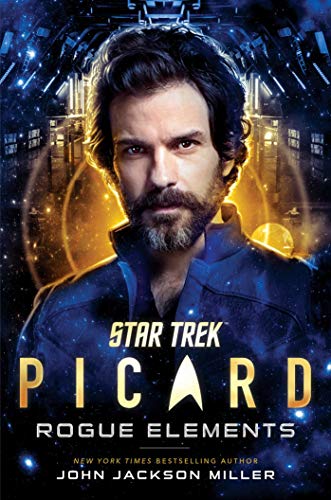 The third Picard novel finishes up the initial run of prequels of the series (the fifth novel is a fourth prequel…). And it is easily the best of the lot.
Following in the trend of The Last Best Hope, I was expecting this to be full version of the background that eventually spills out during later parts of season one, where Rios was executive officer of the USS Ibn Majid, and has is career wrecked after the ship encounters a pair of androids.
Instead, we get a much looser story centered around how he got the La Sirena. Which is at least as logical a choice, and one we haven’t gotten anything on before.
It works well, and the story turns into a sprawling mess ranging from action, to the good ol’ Traveller campaign premise of making payments every month (only ever alluded to), to caper. It works because there is a bigger story than the La Sirena serving as a backbone for all this.
The main MacGuffin of the novel is the “actuality”, a particularly high-fidelity holographic recording. Particularly, some done by a particular artist that are exceptionally ingenious, and deservedly sought after. That comes a bit later of course, since we start with just getting the ship, and then complications start setting in. Overall, the plot structure is sound, and very well done.
Along the way, we get a lot of call outs to various parts of Trek lore, ranging from TOS to characters reappearing from TNG episodes, and events from The Undiscovered Country. These all naturally flow into the novel better than I would have thought if told beforehand. Miller takes a common premise (tramp freighter captain), adds a few things we know are coming (the emergency holograms), gets Rios going with a bit of action, hands him a problem (a debt that he can’t ignore—no matter how hard he tries), and then starts layering in the plot twists. Rios gets to grow past the immediate trauma of losing his Star Fleet career, and Miller keeps an air of fun the entire way.
Discussion ¬